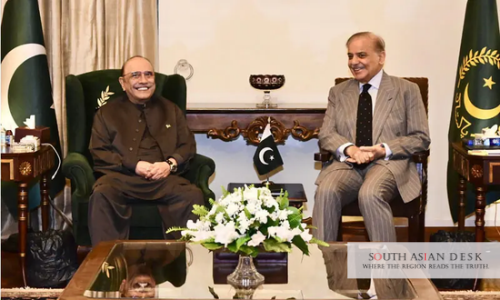
Pakistan warns Iran to rein in its Yemeni Houthi allies after the group stepped up attacks on Saudi Arabia, in what Saudi, Pakistani and Iranian sources described as a coordinated effort to stop the crisis from spiralling further. A satellite image reviewed by Reuters appeared to show damage at Saudi Arabia’s King Khalid Airbase, which the Houthis claimed to have struck on September 8. The Saudi government’s media office did not immediately respond to a request for comment on the strike or on Pakistan’s message to Tehran.
Why Pakistan Warns Iran Over the Houthi Threat to Saudi Arabia
Pakistan’s decision to press Iran directly reflects years of careful balancing between Riyadh and Tehran, a position that has become harder to sustain as Houthi attacks on Saudi territory have intensified. A Pakistani diplomatic source told Reuters that Islamabad has an agreement with Saudi Arabia but remains hopeful the situation will not reach the point where Pakistan has to step in militarily, adding that a diplomatic solution is still being pursued. Saudi officials have already met senior Pakistani and Turkish military representatives in Riyadh to coordinate a response, and the three countries agreed that any deployed troops would operate strictly from Saudi territory rather than entering Yemen itself.
Houthi Attacks on Saudi Arabia Escalate
The latest round of Houthi attacks on Saudi Arabia has been more intense than previous exchanges, with the group’s military spokesman, Yahya Saree, saying it had responded to what it called Saudi aggression in Yemen with a barrage of ballistic missiles and drones that caused significant damage. Saudi Arabia has warned of a major retaliation in response, and officials in the region say the risk of the fighting spreading beyond Yemen’s borders is now higher than at any point in recent memory, a concern that helped prompt Pakistan’s direct warning to Tehran.
The Makkah Joint Defense Agreement Looms Over the Crisis
Central to Pakistan’s warning is the Makkah Joint Defense Agreement, a pact signed last month by Pakistan, Saudi Arabia and Turkey that commits the three countries to treat an attack on any one of them as an attack on all three, a principle its supporters have compared to NATO’s collective defence clause.
Pakistani Defence Minister Khawaja Asif said on Pakistani television that any spillover of the Yemen conflict into Saudi Arabia would leave no ambiguity about the pact’s application. “An aggression on one country will be considered an aggression on all three countries,” Asif said, adding that unprovoked aggression or spillover into Saudi Arabia would definitely make the agreement operational. Pakistan’s defence ministry, foreign ministry and military did not respond to a Reuters request for comment on the specifics of the warning delivered to Iran.
Pakistan’s Limits: Defensive Support, Not Combat in Yemen
Despite the strong language from Islamabad, Pakistani officials have been careful to define the limits of any military role. A second Pakistani source said no decision had been made to join retaliatory strikes against the Houthis, stressing that the country’s pact with Riyadh is defensive in nature and confined to protecting Saudi territory. Under that arrangement, Pakistani forces could offer military, technical, ground or air support within Saudi Arabia itself, the source said, but would not take part in combat operations on foreign soil, ruling out any direct Pakistani involvement inside Yemen for now.
Iran’s Denial Meets Conflicting Reports
Iran’s public response to Pakistan’s warning has been to distance itself from the Houthis’ actions. A senior Iranian official told Reuters that Iran does not control the Houthis, pushing back on any suggestion that Tehran could simply order an end to the attacks.
That official position stands in contrast to accounts from two other Iranian sources, who said Tehran had instructed the Houthis to step up their strikes on Saudi Arabia, offering additional funding, weaponry and coordination from Islamic Revolutionary Guard Corps personnel deployed in Yemen. Reuters has not independently verified the competing accounts, and the gap between Iran’s official denial and the claims of its own sources underscores how difficult it has been for outside powers, including Pakistan, to establish a single, reliable picture of who is directing the escalation.
A Region on Edge
With Saudi Arabia already vowing a firm response and Pakistan signalling that its defence commitments could be triggered if the fighting spreads beyond Yemen, regional diplomats say the coming weeks will test whether quiet diplomacy can contain the crisis. One analyst noted that Pakistan’s leadership is still trying to appease all sides involved, but cautioned that this posture could shift quickly if the Houthis widen the geographic scope of their attacks inside Saudi Arabia. For now, Pakistan warns Iran through diplomatic channels rather than military ones, leaving the Makkah Joint Defense Agreement as a warning rather than an active commitment, at least until the next attack forces the question again.
Published in SouthAsianDesk, September 10th, 2026
Follow SouthAsianDesk on X, Instagram and Facebook for insights on business and current affairs from across South Asia.