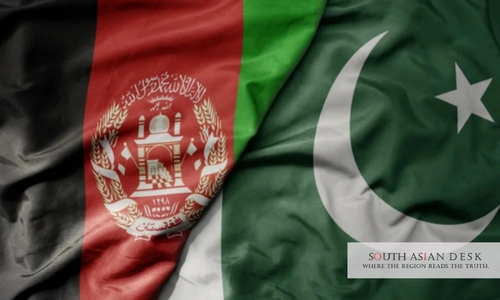
Pakistani airstrikes on Afghanistan on Thursday, 1 October, killed nine people and injured 11 others, according to the Afghan Taliban government, amid an escalation in fighting between the two neighbours. Taliban spokesperson Zabihullah Mujahid said on social media platform X that the strikes destroyed three houses in Kunar and Helmand provinces, and that women and children were among the dead. Reuters, which reported the claims, said it could not independently verify them, and Pakistan’s military had not responded to a request for comment at the time of its report. Pakistani airstrikes on Afghanistan kill nine, Kabul says +2
Details of the Strikes in Kunar and Helmand Provinces
Mujahid condemned the attack as an act of aggression and a crime that violated all accepted principles. Reuters described the latest violence as an escalation after three months of relative calm, although Pakistan had carried out strikes inside Afghanistan on 21 and 24 September, as outlined below. jposttheprint
Pakistani Airstrikes on Afghanistan Follow a Series of Recent Strikes
The latest Pakistani airstrikes on Afghanistan came within days of two other rounds of strikes. After the strikes of 21 September, Pakistan’s Information Ministry said 28 militants had been killed, while Afghan authorities said at least three civilians had died and four others had been wounded. Mujahid promised an “appropriate response” to those strikes. NBC Newsamu
On 24 September, Pakistan said its air force had struck 10 locations in Afghanistan that were being used to launch and store drones, some of which had been used against Pakistan a day earlier. Information Minister Attaullah Tarar described the strikes as precise, calibrated and proportionate, and limited to military objectives linked to attempted attacks against Pakistan. Kabul said those strikes killed four civilians. The Afghan foreign ministry also summoned Pakistan’s chargé d’affaires in Kabul after the bombardment of border provinces. Pakistan air strikes kill 4 civilians in Afghanistan, Kabul says +3
The pattern extends further back. In late June, the United Nations Assistance Mission in Afghanistan (UNAMA) said airstrikes in Paktya, Paktika and Kunar had killed at least 28 civilians and injured 49. Pakistan, for its part, said 25 militants had been killed in strikes in those areas. thestatesmandawn
Competing Accounts of Cross-Border Attacks
The two governments continue to offer sharply different accounts. Islamabad accuses Kabul of harbouring militants who stage cross-border attacks, a charge the Afghan Taliban government denies, saying militancy is Pakistan’s internal problem. Pakistani officials have presented their strikes as an exercise of the right to self-defence. Before the strikes of 24 September, Pakistani officials said Afghan Taliban forces had fired eight drones and shelled Pakistani border posts. Casualty figures on both sides remain difficult to verify independently. Pakistani airstrikes on Afghanistan kill nine, Kabul says +2
The Afghan Taliban government has offered a different reading of Pakistan’s motives. Mujahid said after the strikes of 21 September that Pakistan’s military had acted to divert attention from security failures inside the country, and he said the attacks would not go unanswered. Kabul has therefore presented the strikes as a pretext rather than a response to a genuine security threat, a characterisation that Islamabad rejects.
Diplomatic Outlook
The dispute behind the Pakistani airstrikes on Afghanistan centres largely on the Pakistani Taliban, formally known as Tehrik-e-Taliban Pakistan (TTP), which has stepped up its attacks on Pakistani security forces since the Afghan Taliban returned to power in 2021. A ceasefire brokered by Qatar and Turkey followed deadly border clashes in October 2025 that killed around 70 people on both sides, but several rounds of talks in Doha and Istanbul failed to produce a lasting agreement, and Pakistan’s demand that Kabul act against the TTP remained a sticking point
The strikes came despite recent diplomatic efforts by Turkiye and Qatar to ease tensions between Islamabad and the Taliban. Earlier reporting noted that the September escalation threatened international mediation efforts. The latest Pakistani airstrikes on Afghanistan add to that pressure, and a response from Pakistan’s military to the casualty claims is awaited. Further cross-border attacks by either side would test the prospects for any negotiated settlement. amuNBC News
Follow SouthAsianDesk on X, Instagram and Facebook for insights on business and current affairs from across South Asia.