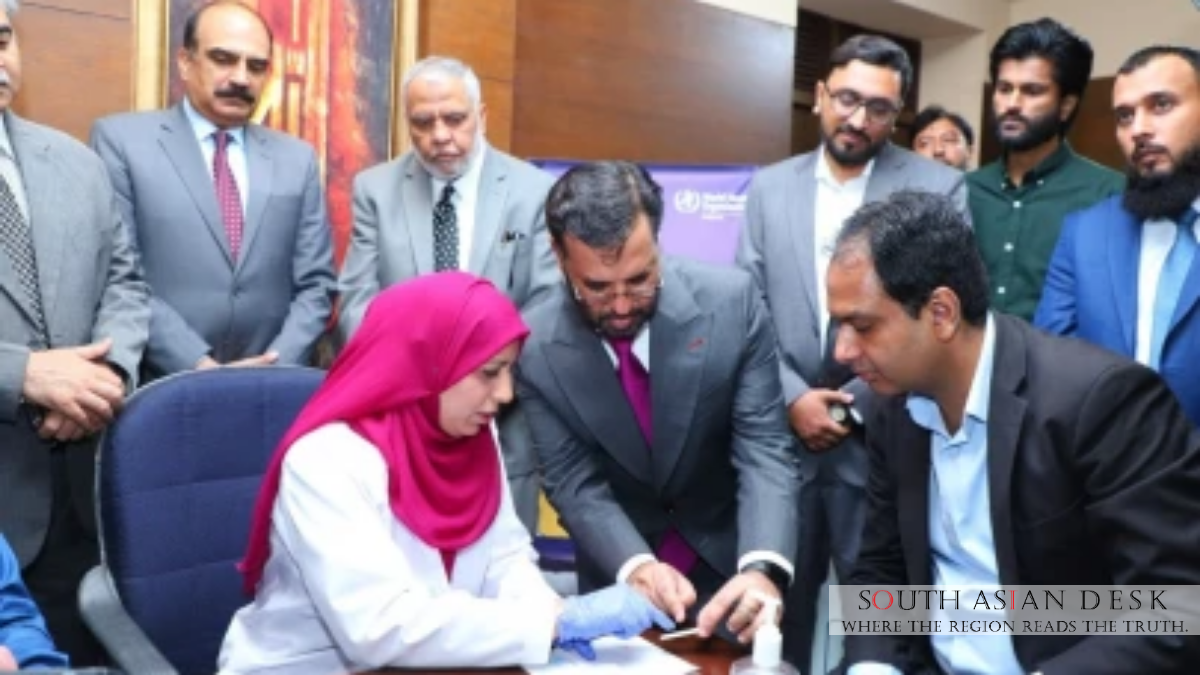
On May 13, 2026, Pakistan’s Ministry of National Health Services, in collaboration with the World Health Organisation (WHO), launched a comprehensive program to eliminate Hepatitis C by 2030. The initiative, known as the Prime Minister’s Hepatitis C Elimination Programme, aims to reach 1.6 million people in the Islamabad Capital Territory over the next six months as part of a broader national effort.
The program was inaugurated at a ceremony in Islamabad, marking the beginning of a phased rollout that will eventually cover more than 164 million people across Pakistan. It focuses on large-scale screening, early diagnosis, and free treatment to curb the spread of Hepatitis C. Federal Minister for Health Syed Mustafa Kamal described the initiative as a historic and revolutionary step, highlighting the Rs67 billion investment as one of the largest public health programs in the country’s history.
Minister Kamal emphasized the significant burden of Hepatitis C in Pakistan, where nearly 10 million people are affected. He noted the alarming fact that only one in three affected individuals globally is aware of their condition. With around 110,000 new infections annually in Pakistan, primarily due to unsafe medical practices, the program seeks to shift the healthcare system from a sick-care approach to preventive healthcare.
The initiative draws inspiration from Egypt’s successful elimination campaign and involves nationwide screening supported by the National Database and Registration Authority to ensure transparency. The program offers free Hepatitis C screening and treatment, aiming to prevent, detect, and provide life-saving care to those who test positive.
According to estimates, the program could save Rs1.3 billion in treatment costs and over Rs2 billion in hospitalization costs over the next five years. By 2030, the return on investment is projected to be $8 for every $1 invested. The WHO’s support, along with insights from pilot phases, positions Pakistan to achieve the global goal of eliminating Hepatitis C as a public health threat by 2030.
Published in SouthAsianDesk, May 14, 2026
Follow SouthAsianDesk on X, Instagram and Facebook for insights on business and current affairs from across South Asia.