The Panjgur dam design has come under scrutiny in the Senate, where members of a parliamentary panel questioned how the proposed project would affect local communities, date palm orchards and long-established water arrangements in Balochistan. The concerns were raised on Tuesday at a meeting of the Senate subcommittee on problems confronting underdeveloped areas, held at Parliament House in Islamabad under the chairmanship of Senator Jan Muhammad Buledi.
The session was convened to review progress on development work in the province, including implementation of the Aghaz-i-Haqooq-i-Balochistan Package and the filling of the province’s reserved quota in federal government jobs. A major portion of the discussion, however, was devoted to the dam and its proposed canal network.
Concerns Over the Panjgur Dam Design
Senator Buledi questioned why the existing irrigation system and its potential vulnerability had not been properly assessed before the project was planned. He said public funds spent on development schemes should deliver tangible benefits to local communities rather than create additional difficulties, and he suggested that the government consider building small dams as an alternative to large ones.
National Party MNA Pullain Baloch echoed the point, arguing that development projects in Balochistan should primarily serve local residents and must not damage their livelihoods, agricultural resources or economic activity. He called for a comprehensive assessment of how a canal linked to the dam would affect nearby settlements and farmland.
In response, officials of the planning division told the Senate subcommittee that the Panjgur dam design would be reviewed and that suggestions would be sought from the irrigation department.
Pressure on the Karez Irrigation System
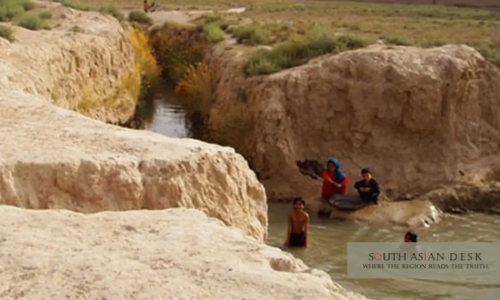
Briefing the committee, the project director explained that Panjgur once had 118 traditional Karez, the underground channels that carry groundwater to fields, and that these irrigated roughly 6,000 acres of agricultural land. The introduction of solar-powered water extraction systems has since affected the Karez irrigation system, with 72 channels already impacted. Water flows in 34 of them have fallen by more than 50 per cent over the past two years.
The figures illustrate why lawmakers are keen to understand how a large new structure would interact with an already strained network. Balochistan irrigation depends heavily on such local systems, and any further disruption could leave farming households with fewer options.
Revised Plans and Pending Costs
According to the project director, the dam has been designed to irrigate approximately 25,000 acres. It would stand 33 metres high, with a 30-kilometre canal on its left side and a 9.8-kilometre canal on the right.
To protect thousands of date palms and areas of farmland from potential damage, the original open-canal plan has been revised to use a pipeline-based water supply system. The revised Panjgur dam design has been finalised, although a cost estimate from China is still awaited, which means the overall expense of the pipeline system remains undetermined.
Wider Review of Balochistan Irrigation Projects
The subcommittee also examined the Gish Kaur dam project. Members sought a report from the Water and Power Development Authority on its possible effect on downstream agriculture connected with Kech Kaur, as well as the potential reduction in water reaching the Mirani dam.
On the question of federal employment, Senator Buledi said the Establishment Division had informed the committee that complete records of appointments of candidates from Balochistan in federal institutions were not available. The subcommittee directed the division to submit a comparative report covering appointments, vacant positions and allocated quotas.
Federal Minister for Planning Ahsan Iqbal said the development of Balochistan was closely linked to the country’s overall progress, and that the government had committed itself to accelerating work in the province.
The outcome of the planning division’s review will now be closely watched in Panjgur, where the balance between new water infrastructure and the protection of traditional irrigation remains the central question for the project.
Follow SouthAsianDesk on X, Instagram and Facebook for insights on business and current affairs from across South Asia.
Read More: