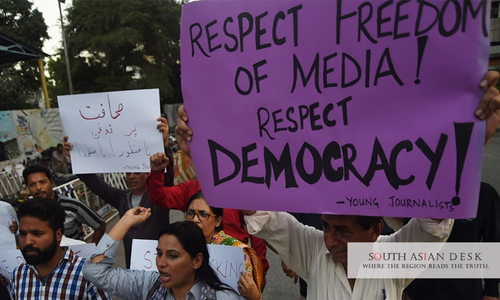
The state of press freedom in Pakistan has come under renewed pressure after nine local and international rights organisations wrote to Prime Minister Shehbaz Sharif on Friday, warning of what they described as a rapidly deteriorating climate for journalists and calling on his government to withdraw recently introduced restrictions on foreign media.
The signatories, including the Committee to Protect Journalists (CPJ), Reporters Without Borders (RSF) and the Human Rights Commission of Pakistan (HRCP), said authorities were increasingly relying on the country’s cybercrime legislation to pursue reporters, while also restricting coverage in Azad Kashmir and placing pressure on broadcasters.
Pakistan’s Standing on the World Press Freedom Index
The letter arrives against a backdrop of poor global rankings for the country. Pakistan sits 153rd out of 180 nations on the RSF’s 2026 World Press Freedom Index, placing it in the lowest of the index’s five categories. RSF has said the media in Pakistan continues to face repeated waves of restriction as authorities attempt to control, and at times suppress, journalistic content.
In their letter, the groups stated that journalists in Pakistan have disappeared, faced detention and criminal investigations, been barred from reporting in certain regions, and lost their jobs as a result of pressure from government and law enforcement agencies.
Concerns Over the Foreign Media Facilitation Guidelines
Central to the groups’ demands is the withdrawal of the information ministry’s Foreign Media Facilitation Guidelines, 2026, which the letter characterised as draconian. Under these guidelines, international correspondents and Pakistani citizens contributing to foreign outlets, including web based and social media platforms, must obtain a no objection certificate before undertaking official assignments, particularly for work outside Islamabad, Lahore and Karachi.
The rules also permit authorities to suspend accreditation for conduct deemed contrary to Pakistan’s ideology, sovereignty, security or public order, and require foreign outlets, along with those who assist them, including sources and local fixers, to register with the ministry.
PECA and the Use of Cybercrime Law Against Reporters
The rights groups also criticised the government’s use of the Prevention of Electronic Crimes Act, commonly referred to as PECA Pakistan, along with investigations carried out by the National Cyber Crime Investigation Agency against members of the press. They pointed specifically to the June 5 arrest of Sohrab Barkat over a YouTube report on protests in Azad Kashmir, a case in which internet services in the region were suspended the same day and only partially restored weeks later. Barkat was subsequently released on bail on June 15.
The letter further cited the dismissal of veteran journalist Munizae Jahangir from Aaj TV on July 22, which the groups said followed pressure from the authorities, alongside the 15 day suspension of Geo News’ broadcast licence on June 28 and the blocking of Al Jazeera’s website on August 2 following government criticism of the channel’s coverage of Kashmir.
Calls to Account for Missing and Attacked Journalists
The groups also asked the government to provide information on independent journalists Razi Tahir and Muhammad Saif, who they said were seized and taken to an undisclosed location on August 1, and urged authorities to bring to justice those responsible for a June 7 attack on Bahawalpur based reporter Mian Zahid Owaisi.
“Maintaining public order and national security, and preventing the spread of alleged false information, must not become open ended grounds for suppressing public interest reporting,” the letter said.
Government Response Remains Limited
As of Friday, the information ministry had not issued a formal response to the letter. However, Information Minister Attaullah Tarar had earlier stated, in a post on X marking World Press Freedom Day in May, that the government remained committed to a media environment that is free, responsible and vibrant.
The renewed appeal from CPJ, RSF, HRCP and their co-signatories underscores growing international concern over press freedom in Pakistan, and places further pressure on Islamabad to reconcile its stated commitments to a free press with the regulatory measures and enforcement actions that journalists and media organisations say are narrowing the space for independent reporting in the country.
Published in SouthAsianDesk, September 12th, 2026
Follow SouthAsianDesk on X, Instagram and Facebook for insights on business and current affairs from across South Asia.