Puri Rath Yatra dates are determined by the Jagannath Temple’s centuries-old ritual calendar, but a branch of ISKCON has begun celebrating on different dates, igniting controversy. On July 17, 2026, the temple holds its annual Rath Yatra, while ISKCON’s global events often align with local convenience, creating a rift in traditions.
Puri Rath Yatra dates: Historical Significance of Rath Yatra
The Jagannath Temple’s ritual calendar, established over centuries, dictates the timing of the Rath Yatra as a sacred observance tied to lunar cycles and temple traditions. Historical records indicate the festival’s origins in the 12th century, with its dates meticulously preserved through temple chronicles and oral traditions.
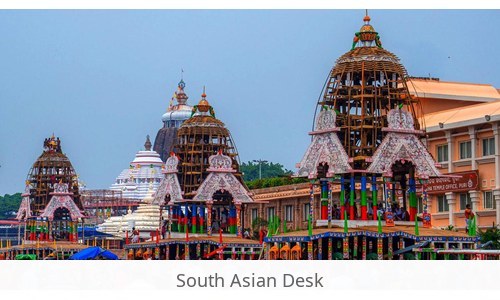
The event remains a cornerstone of Odisha’s cultural heritage, drawing millions of devotees annually. The Rath Yatra, which involves the deities Jagannath, Balabhadra, and Subhadra being pulled on massive chariots through the streets of Puri, is not merely a religious event but a symbol of the region’s historical and spiritual continuity.
The temple’s adherence to its ritual calendar reflects a deep-seated commitment to preserving the practices of the 12th-century Ganga dynasty, which founded the temple complex. This calendar is maintained by a lineage of priests and scholars who interpret astronomical data and lunar phases to determine the precise date, a process that has remained largely unchanged for generations.
ISKCON’s Role in Globalizing the Festival
ISKCON, an international organization founded in the 1960s, has adapted the Rath Yatra for global audiences, often aligning celebrations with practical considerations such as international travel schedules and local weather patterns. While this approach has expanded the festival’s reach, it has also sparked debate over the preservation of traditional practices. The organization cites logistical benefits for its global events, though critics argue this diverges from the temple’s centuries-old customs.
ISKCON’s version of the Rath Yatra, which began in the 1970s, has since become a hallmark of its outreach efforts, with events held in cities like New York, London, and Sydney. These celebrations often occur on dates that align with the local community’s convenience, such as weekends or holidays, to maximize participation.
However, this adaptation has led to a growing divergence between the temple’s traditional schedule and ISKCON’s globalized approach, raising questions about the authority of the original ritual calendar and the role of modern interpretations in religious practice.
Community Reactions and Identity
Local residents and religious leaders in Puri have expressed concerns that the date divergence challenges the temple’s spiritual authority and undermines the festival’s cultural authenticity. Community leaders emphasize the Rath Yatra’s role in reinforcing regional identity, with some advocating for a unified celebration to preserve its historical integrity. Meanwhile, ISKCON representatives maintain that their approach reflects a modern interpretation of the tradition.
The controversy has sparked broader discussions about the balance between tradition and adaptation in religious practices, particularly in a rapidly globalizing world. For many in Puri, the Rath Yatra is not just a religious event but a cultural touchstone that binds the community to its past. The shift in dates, they argue, risks fragmenting this connection and diluting the festival’s significance.
At the same time, ISKCON’s efforts to make the event accessible to a wider audience have been praised by some for their inclusivity and innovation, though others see this as a departure from the core principles of the tradition.
Broader Implications for Religious Practices
The tension between the Jagannath Temple and ISKCON highlights a larger issue in contemporary religious practices: the challenge of maintaining authenticity while adapting to modern contexts. This conflict is not unique to Puri but reflects a global trend where religious institutions face pressure to reconcile tradition with the demands of a changing world.
In India, where religious festivals often serve as both spiritual and economic drivers, such disputes can have significant implications for tourism, local economies, and interfaith relations. The Rath Yatra, in particular, is a major draw for pilgrims and tourists, contributing substantially to Odisha’s economy. The divergence in Puri Rath Yatra dates could potentially affect the coordination of events, the flow of visitors, and the overall experience of the festival for participants. As such, the resolution of this dispute may require a nuanced approach that respects both the temple’s historical practices and the practical needs of a globalized audience.
Follow SouthAsianDesk on X, Instagram and Facebook for insights on business and current affairs from across South Asia.
Sources
- Dates with devotion: The division in Puri’s Rath Yatra celebrations – thehindu.com
- Knowledge Nugget: Jagannath Rath Yatra begins. What makes this festival unique? – indianexpress.com
Image: th-i.thgim.com