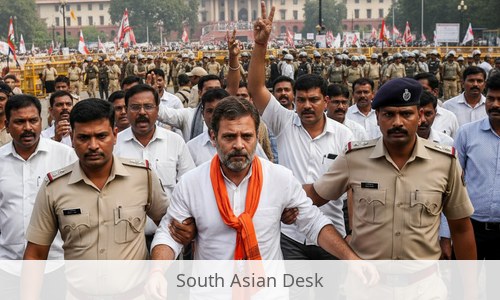
On October 7, 2026, Rahul Gandhi, the Leader of Opposition in the Lok Sabha, was detained by Delhi Police during the protest demanding the resignation of Chief Election Commissioner Gyanesh Kumar over alleged irregularities in the revision of electoral rolls. The demonstration, organized by the Congress party and supported by the broader INDIA bloc coalition, took place near the Election Commission office in Delhi. Priyanka Gandhi Vadra and other Congress MPs participated in the event, which highlighted growing concerns about electoral integrity as India approaches the India elections 2026.
Rahul Gandhi protest: Political Implications
The protest underscores deepening tensions between the opposition and the ruling government over electoral processes. Voter sentiment appears increasingly focused on transparency in voter roll management, with allegations of irregularities potentially influencing electoral outcomes. Analysts note that such demonstrations may galvanize opposition support ahead of the 2026 general elections, though the ruling party has dismissed the claims as politically motivated. The Delhi Police detention of Gandhi and other participants has further intensified scrutiny of the Election Commission’s practices.
The electoral roll irregularities at the center of the protest have sparked debates about the credibility of India’s electoral system. Critics argue that unaddressed issues in voter roll revisions could undermine public trust in the democratic process. The Gyanesh Kumar resignation demands, while not yet fulfilled, have become a focal point for opposition parties seeking to challenge the Election Commission’s authority. As the India elections 2026 approach, these controversies are likely to shape voter perceptions and campaign strategies.
Government Response
The ruling government and the Election Commission have responded to the allegations with firm denials. Officials from the Election Commission stated that the revision of electoral rolls is a routine process conducted in accordance with established protocols. They emphasized that any discrepancies identified during the review are being addressed through standard verification mechanisms. The government has also criticized the opposition for what it describes as “unfounded accusations” aimed at destabilizing the electoral process ahead of the 2026 elections.
Role of the INDIA Bloc
The INDIA bloc, a coalition of opposition parties, has positioned itself as a key force in challenging the ruling party’s electoral strategies. The bloc’s coordinated actions, including this protest, aim to consolidate opposition unity and pressure the Election Commission to address voter roll concerns. However, critics argue that the coalition’s focus on electoral issues may overshadow broader policy debates, potentially limiting its appeal to a wider electorate. As India elections 2026 approach, the bloc’s ability to sustain momentum on this issue will be critical.
The Delhi Police detention of Rahul Gandhi and other protesters has also raised questions about the balance between law enforcement and political dissent. While authorities cited “unauthorized assembly” as the reason for the arrests, opposition leaders have called for an independent investigation into the incident. This development could further polarize public opinion and test the government’s commitment to upholding democratic principles.
Broader Implications for Electoral Integrity
The electoral roll irregularities highlighted during the protest have reignited discussions about the need for reforms in India’s electoral system. Experts suggest that greater transparency in voter roll management, coupled with stricter oversight mechanisms, could help prevent similar controversies in the future. The Gyanesh Kumar resignation demands, though unmet, reflect a growing demand for accountability within the Election Commission.
As the India elections 2026 draw closer, the outcome of this protest and its aftermath will likely influence the political landscape. The INDIA bloc‘s ability to maintain pressure on the Election Commission and the ruling party will be a key determinant of its effectiveness in shaping the electoral narrative. Meanwhile, the Delhi Police detention of high-profile figures like Rahul Gandhi may serve as a reminder of the challenges faced by opposition movements in navigating legal and political constraints.
Follow SouthAsianDesk on X, Instagram and Facebook for insights on business and current affairs from across South Asia.
This report focuses on Rahul Gandhi protest and the verified developments surrounding it.