retail inflation June 2026 has surged to 4.38% in South Asia, driven primarily by a significant increase in food prices, according to The Hindu and The Indian Express. This marks the first time in 16 months that inflation has exceeded the 4% threshold, raising concerns among policymakers and economists about its implications for consumer behavior and economic stability.
The rise in inflation follows a prolonged period of subdued price growth, with the previous 16-month span characterized by retail inflation rates consistently below the 4% mark.
The current uptick reflects broader macroeconomic pressures, including supply chain vulnerabilities and shifting global commodity dynamics, which have historically influenced regional price trends.
retail inflation June 2026: Impact of Rising Food Prices
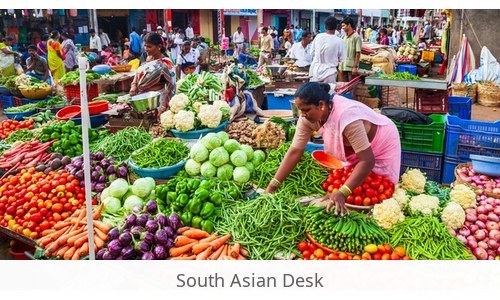
Food inflation, measured by the consumer price index (CPI), reached 5.32% in June 2026, up from 4.78% in May 2026, as reported by The Hindu. This surge in food prices is expected to influence household spending patterns, with consumers potentially shifting allocations toward essential goods and reducing discretionary purchases.
The Indian Express notes that such trends could exacerbate existing economic pressures, particularly for lower-income households reliant on staple food items. The volatility in food prices is attributed to a combination of factors, including erratic weather patterns affecting agricultural output, rising input costs for fertilizers and energy, and disruptions in domestic and international supply chains.
These pressures are compounded by the region’s heavy dependence on imported food commodities, which are subject to global market fluctuations.
Policymakers face mounting pressure to address inflationary pressures while balancing growth objectives. Central banks may consider adjusting monetary policy tools, including interest rates, to curb inflation without stifling economic activity.
However, the effectiveness of such measures will depend on broader macroeconomic conditions and global commodity price dynamics. For instance, a tightening of monetary policy could dampen investment and consumer spending, potentially slowing economic growth. Conversely, maintaining accommodative policies risks further inflationary pressures, particularly if global food prices remain elevated.
This balancing act is critical for maintaining macroeconomic stability in a region where retail inflation June 2026 has become a focal point for economic discourse.
Historical Trends in Inflation
The current inflation rate of 4.38% represents a notable shift from the past 16 months, during which retail inflation remained below the 4% mark. Historical data reveals that inflation spikes often coincide with periods of geopolitical uncertainty, supply chain disruptions, or currency depreciation. For instance, similar inflationary pressures were observed in 2022 amid global energy price shocks and pandemic-related supply constraints.
The 2022 episode was characterized by sharp increases in energy costs, which had a cascading effect on transportation and manufacturing sectors. In contrast, the current inflationary cycle is driven primarily by food price volatility, highlighting a shift in the composition of inflationary pressures. This distinction underscores the need for targeted policy interventions focused on agricultural productivity, supply chain resilience, and subsidies for essential commodities.
The divergence in inflation drivers between 2022 and 2026 also reflects changing global economic conditions, including the gradual recovery of energy markets and the persistent challenges in food security.
Government Response to Inflation
Governments across South Asia have initiated measures to mitigate inflationary pressures. In India, the Ministry of Consumer Affairs has announced plans to increase food grain procurement and expand public distribution systems to stabilize prices. Similarly, Pakistan has introduced temporary import duty reductions on essential food items to ease domestic supply constraints. These measures aim to address immediate supply-side bottlenecks while providing relief to vulnerable populations.
However, the effectiveness of these measures remains to be seen, as global food prices are influenced by factors beyond national control, such as climate change impacts on crop yields and international trade policies. Central banks are closely monitoring inflation trends and may adjust monetary policy in response to evolving economic conditions.
The challenge lies in coordinating fiscal and monetary policies to ensure that retail inflation June 2026 is brought under control without undermining growth prospects. This requires a nuanced approach that considers both short-term stabilization measures and long-term structural reforms to enhance food security and economic resilience.
Follow SouthAsianDesk on X, Instagram and Facebook for insights on business and current affairs from across South Asia.
Sources
- Retail inflation inches up to 4.38% in June: Government data – thehindu.com
- After 16 months, retail inflation crossed 4% in June; food inflation at 5.32% – indianexpress.com
Image: th-i.thgim.com