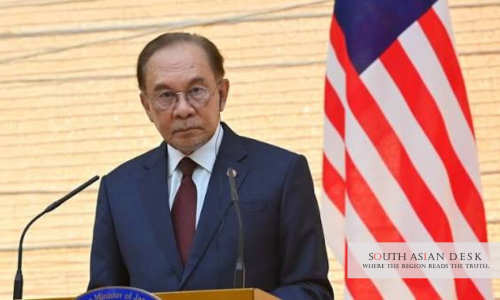
Rohingya repatriation has moved a step closer to reality after Myanmar agreed to take back 300,000 refugees currently sheltered in Bangladesh, along with another 5,000 living in Malaysia. The announcement was made by Malaysian Prime Minister Anwar Ibrahim on Wednesday, following what he described as months of careful negotiation with Myanmar’s military-led government.
Speaking to local voters in Chennah, Anwar said the breakthrough was the direct result of sustained diplomatic engagement rather than public pressure alone. “That is why it is important to maintain good relations with Myanmar. They have now agreed to take back 5,000 Rohingya from Malaysia and 300,000 Rohingya from Bangladesh to Myanmar,” he said, according to Malaysian daily The Star. “Why? Because we negotiated. These matters require careful diplomacy.”
Why Myanmar’s Military Government Agreed to the Deal
For years, Myanmar’s military government refused to accept returning Rohingya, leaving Bangladesh and Malaysia to shoulder the burden of hosting one of the world’s largest stateless populations. Anwar acknowledged this history directly, noting that earlier calls to send refugees back had gone nowhere because Naypyidaw simply would not receive them. “People say, ‘Send them back, send them back.’ But where do we send them? Previously, Myanmar did not want to receive them,” he said. “So we had to place them in designated locations.”
The shift appears to be the outcome of quiet, sustained talks rather than a single dramatic event. Malaysia, which chairs ASEAN this year, has positioned itself as a regional coordinator on the Rohingya crisis, working alongside Indonesia, the Philippines, and Thailand to press Myanmar for both humanitarian access and a workable return process.
The Scale of Rohingya Refugees in Bangladesh
Bangladesh currently hosts well over a million Rohingya refugees in camps across Cox’s Bazar, the largest refugee settlement in the world. According to Bangladesh’s foreign ministry, the government has already shared verification data on more than 829,000 individuals with Myanmar authorities across six phases of the process. As of January 2026, Myanmar had completed verification of roughly 354,751 people, of whom about 253,964 were confirmed as former Myanmar residents eligible for return.
Despite this progress on paper, officials in Dhaka have repeatedly cautioned that repatriation cannot begin in earnest while conflict continues inside Myanmar. Bangladesh’s foreign minister told parliament that the government still regards a safe, voluntary, and dignified return as the only sustainable solution, and that diplomatic, legal, and humanitarian efforts will continue with international backing, including support for the ongoing genocide case brought by The Gambia against Myanmar at the International Court of Justice.
Anwar Ibrahim’s Warning on Public Order
Alongside the repatriation announcement, Anwar made clear that Malaysia’s patience with disorder linked to the refugee community has limits. He said he had already instructed the country’s Inspector-General of Police to act firmly against Rohingya individuals disrupting roads and public spaces, a warning that followed a recent incident in which more than a hundred Rohingya left a shelter in Penang and gathered outside the UNHCR office in Kuala Lumpur.
“I have already warned them, and yesterday I instructed the Inspector-General of Police that I do not want Rohingya disrupting roads and public places,” Anwar said. “This is Malaysia. They cannot disturb us. The police will take action.” He also urged the Rohingya community more broadly to respect local laws and avoid disrupting businesses, traffic, or residential areas, warning that continued disturbances would only harden public sentiment against them.
What Comes Next for Rohingya Repatriation
Anwar did not offer a timeline for when the transfers might begin, and Bangladeshi officials have been careful not to overstate the announcement given the fragile security situation inside Rakhine State. Even so, the commitment marks a notable shift in tone from Myanmar’s military government, which has resisted large-scale returns since the 2017 crackdown that first drove hundreds of thousands of Rohingya across the border into Bangladesh.
For now, Malaysia says it will keep working through ASEAN channels and its bilateral relationship with Bangladesh to push the process forward, while continuing humanitarian outreach to Myanmar. Whether this latest agreement translates into an actual movement of people, rather than another verification exercise that stalls at the border, will depend heavily on whether conditions inside Myanmar stabilize enough to make a safe and voluntary return possible.
Published in SouthAsianDesk, July 30th, 2026
Follow SouthAsianDesk on X, Instagram and Facebook for insights on business and current affairs from across South Asia.