The Sunsari communal clash has left one person dead and more than twenty others injured in Nepal’s southeastern district that borders India’s Bihar state, prompting local authorities to impose indefinite restrictive orders across several market areas. The violence, which broke out late on Sunday night, has once again put a spotlight on Nepal India border tension in a region that serves as a vital transit and commercial corridor between the two countries.
What Triggered the Violence in Devgunj
According to police accounts, the clash began around 10:15 pm in the Kaptangunj area of Devgunj rural municipality, when members of two religious communities who were holding separate programmes in the same locality got into a dispute. The immediate spark was a disagreement over the volume of a loudspeaker and a DJ sound system. A group of youths was travelling through a predominantly Muslim neighbourhood with music playing loudly as part of festivities linked to Shrawan Monday, when locals asked them to lower the volume. Tensions between the two groups escalated quickly, and the situation soon turned into stone pelting and physical confrontation.
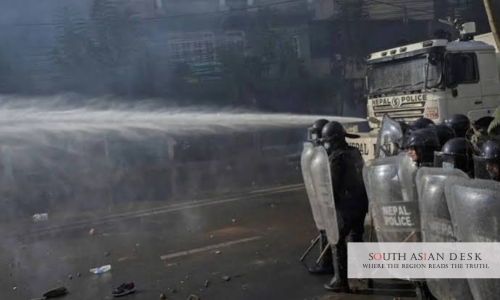
Security personnel from the Nepal Police and the Armed Police Force were deployed to bring the situation under control, but the crowd did not disperse easily. Police eventually fired several rounds in an effort to restore order, and in the process, one man identified as 30 year old Om Prakash Mehta of Dewanganj lost his life. Officials said the display of religious flags by both sides further inflamed passions before the violence spiralled out of hand. This episode of Devgunj violence Nepal has quickly become one of the more serious communal incidents reported in the district in recent years.
Injuries and Casualties Reported
Officials from the Koshi Province Police Office in Biratnagar confirmed that at least 24 people were injured in the clashes, a number that includes both civilians and members of the security forces. Among the injured were ten personnel from the Nepal Police, five from the Armed Police Force, and nine civilians. One inspector from the local police office suffered a head injury that required stitches while trying to control the crowd. The injured have been admitted to hospitals in Biratnagar and Sunsari for treatment, and officials say some remain under observation.
Restrictive Orders Imposed Across Sunsari
Following the violence, the Chief District Officer of Sunsari issued restrictive orders covering five market areas in the district, namely Harinagara, Bhutaha, Kaptainganj, Ghuski and Dewanganj. The orders, which form part of the wider response to the Sunsari communal clash, took effect from 7 am on Monday and will remain in force until further notice. Under the terms of the order, any gathering of more than four people, along with demonstrations, public meetings, rallies and sit ins, has been strictly prohibited in the affected areas.
The district administration has warned that anyone found violating the restrictive orders Sunsari has put in place could face a fine of NPR 500, imprisonment of up to one month, or both penalties together. To reinforce the curfew and prevent further clashes, around 211 security personnel have been deployed in and around the affected market areas, with additional reinforcements on standby in case tensions rise again.
Nepal India Border Tension and Regional Impact
Sunsari sits in Nepal’s Koshi province and shares a long, porous border with India’s Bihar state, making it an important corridor for trade, transit and daily cross border movement. Incidents of unrest in this belt tend to draw quick attention on the Indian side as well, given how closely the two regions are linked economically and socially. Past episodes of communal friction in Nepali border towns, including in Nepalgunj and Birgunj, have similarly led to a Koshi province curfew or curfews elsewhere, and at times tighter monitoring of movement across the frontier by Indian security agencies stationed in bordering districts of Bihar and Uttar Pradesh.
While there has been no official confirmation yet of any parallel security measures being taken on the Indian side of the border in response to this particular incident, authorities in neighbouring Bihar districts have in the past stepped up patrolling and conducted flag marches as a precaution whenever communal tension has flared up in Nepal.
Restoring Calm in the Affected Areas
Local officials say their immediate priority is to restore normalcy and prevent any retaliatory incidents in Devgunj and the surrounding market towns. Community leaders from both sides have been urged to hold peace talks under the supervision of the district administration, and additional police checkpoints have been set up on key routes leading into the restricted zones.
The Sunsari communal clash has reignited concerns about how quickly local disputes over noise, religious displays or minor social frictions can escalate into serious law and order challenges in border districts. For now, the restrictive orders are expected to stay in place until the administration is confident that the situation has stabilised and there is no immediate risk of further violence.
Published in SouthAsianDesk, July 27th, 2026
Follow SouthAsianDesk on X, Instagram and Facebook for insights on business and current affairs from across South Asia.