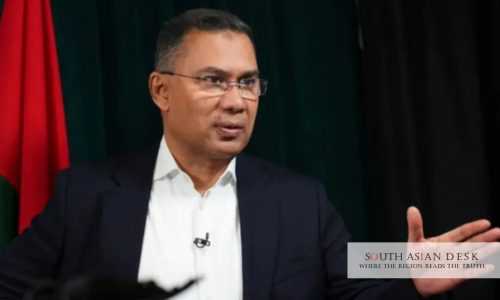
A possible Tarique Rahman India visit has become one of the most closely watched questions in South Asian diplomacy this year. New Delhi has invited the Bangladesh prime minister to visit ahead of the BRICS summit in Delhi, scheduled for 12 and 13 September, and has been pressing for a standalone bilateral trip beforehand. Yet, weeks after the invitation was extended, Dhaka has still not confirmed whether Rahman will travel, and the uncertainty says a great deal about how strained, and how important, the relationship between the two neighbours has become.
Why India Wants a Tarique Rahman India Visit
India’s eagerness for a Tarique Rahman India visit stems from a mix of strategic anxiety and economic necessity. Since Rahman took office, relations between Dhaka and New Delhi have been tense, largely over the presence of former prime minister Sheikh Hasina in India. India has nonetheless taken visible steps to signal goodwill.
When former Bangladesh prime minister Khaleda Zia, Rahman’s mother, died earlier this year, External Affairs Minister S Jaishankar travelled to Dhaka carrying a condolence message from Prime Minister Narendra Modi. India also appointed Dinesh Trivedi, a former Union minister and a Bengali speaker with decades of experience in West Bengal politics, as its High Commissioner to Dhaka, a deliberate choice intended to build rapport with the new administration.
Early in August, India’s external intelligence chief, Parag Jain of the Research and Analysis Wing, led a delegation to Dhaka for security discussions. Trivedi met Rahman shortly afterwards and formally invited him to the BRICS outreach session in Delhi. For India, securing Rahman’s presence would not only validate its BRICS chairmanship but also demonstrate that it retains diplomatic influence over its eastern neighbour at a moment when that influence is being tested.
The Sheikh Hasina Extradition Dispute
No issue looms larger over India-Bangladesh relations than the Sheikh Hasina extradition dispute. Hasina has lived in India since 5 August 2024, when mass protests forced her from power. Bangladesh’s International Crimes Tribunal has since convicted her, and Dhaka has sent multiple formal extradition requests to New Delhi, none of which have been acted upon. Bangladeshi officials have described India’s continued shelter of Hasina as an act of unfriendly behaviour, while India has said only that it has noted the tribunal’s verdict.
The dispute escalated further after Hasina held a virtual press conference from New Delhi on 5 August, alongside her son Sajeeb Wazed Joy. Bangladesh’s foreign ministry called the event an insult to the country’s sovereignty and said a “propitious environment” would need to be created before Rahman could visit India, explicitly tying the trip to progress on extradition. Rahman raised the extradition question directly with Trivedi during their meeting, alongside a separate request concerning three suspects held in West Bengal in connection with the killing of a student activist in December 2025.
India has reportedly agreed to extradite those three individuals, a gesture that Delhi hopes will ease the broader impasse, even if Hasina’s own case remains politically untouchable for now.
Countering China’s Growing Footprint
A further reason behind India’s push for a Tarique Rahman India visit is unease over Beijing’s expanding role in Bangladesh. Notably, Rahman chose China, not India, for his first overseas trip after taking office, a four-day visit that produced memorandums of understanding on maritime infrastructure, river management and transport corridors. China has also been invited to invest in a river conservation project on the Teesta, which flows close to India’s Siliguri Corridor, the narrow strip of land connecting the Indian mainland to its seven northeastern states and often referred to as the Chicken’s Neck.
Indian officials and regional leaders have voiced concern that deepening China-Bangladesh ties, including a Chinese-built submarine base at Pekua and earlier submarine sales to Dhaka, could translate into strategic leverage close to one of India’s most sensitive geographic points. Analysts note that while China can fund infrastructure through its Belt and Road Initiative, it cannot replace India as a neighbour with which Bangladesh shares more than 4,000 kilometres of border and 54 rivers. Encouraging Rahman toward Delhi is therefore as much about limiting China’s reach as it is about repairing bilateral ties.
Water, Energy and Trade on the Table
Beyond security concerns, practical matters are driving both sides toward dialogue. The 1996 Ganga water-sharing treaty has lapsed, and its renewal is central to Bangladesh’s agricultural and drinking water needs, particularly in its southwestern districts. Energy cooperation, expanded visa facilities and the withdrawal of trade restrictions imposed on Bangladesh’s textile and food-processing exports in May 2025 are also understood to be on the table.
A Tarique Rahman India visit would give both governments the opportunity to negotiate these issues together rather than through fragmented diplomatic channels, which is precisely the outcome India is hoping to engineer.
Will Tarique Rahman Travel to Delhi?
As of late August, Rahman’s trip remains unconfirmed. Bangladesh’s foreign ministry has said the BRICS invitation was addressed to the country rather than to Rahman personally, leaving open the possibility that Dhaka could send a lower-level delegation instead. Some regional analysts argue that Rahman is deliberately prolonging the uncertainty to appease domestic constituencies wary of appearing too close to India, particularly given that he spent more than seventeen years in exile in London after being convicted in absentia on charges linked to money laundering and an alleged assassination plot against Hasina.
Whether or not the visit ultimately takes place, the manoeuvring around it illustrates how central Bangladesh has become to India’s regional strategy. A confirmed Tarique Rahman India visit would offer both countries a rare chance to address extradition, water sharing, trade and security in a single sitting. Its continued postponement, on the other hand, would suggest that the fallout from Hasina’s ouster still has room to run, and that Delhi’s patience with Dhaka’s hedging may eventually be tested.
Published in SouthAsianDesk, August 30th, 2026
Follow SouthAsianDesk on X, Instagram and Facebook for insights on business and current affairs from across South Asia.