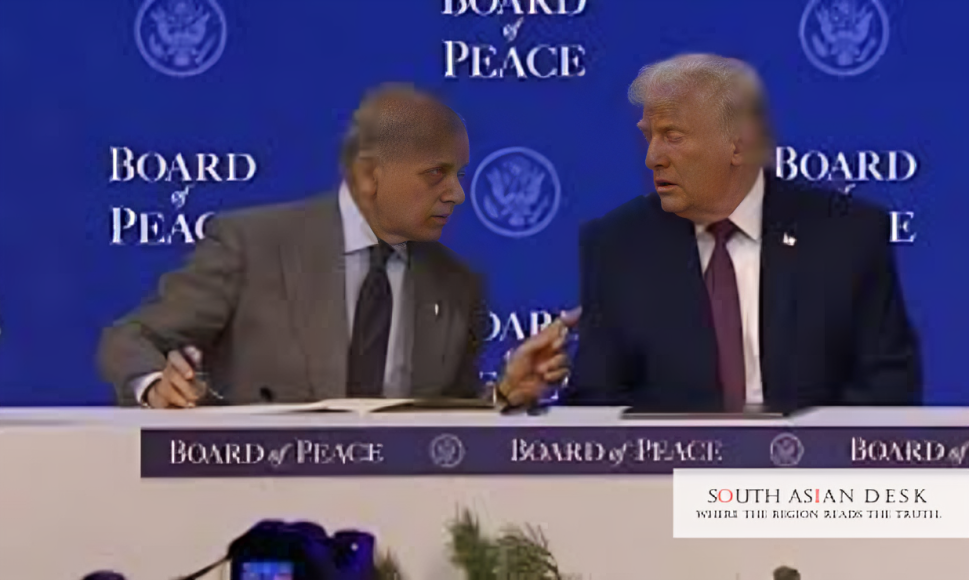
United States President Donald Trump has ratified the charter for the Trump Board of Peace, designating 26 countries as founding members, including Pakistan. The initiative, launched to oversee Gaza’s reconstruction, expands to global conflict resolution.
Islamabad, 29 January 2026 – United States President Donald Trump signed the charter establishing the Trump Board of Peace as an international organisation during a ceremony at the World Economic Forum in Davos on 22 January. The board announced 26 founding members on 28 January via its official X account, including Pakistan, to support ceasefire efforts in Gaza and broader peace-building.
The Trump Board of Peace holds significance for South Asia, where Pakistan’s participation underscores its commitment to Middle East stability. As a Muslim-majority nation, Pakistan joins other regional powers in addressing humanitarian crises that resonate with South Asian diaspora communities and foreign policy interests.
Board Of Peace Founding Members
The Board of Peace founding members comprise 26 nations spanning multiple regions. The list includes Argentina, Armenia, Azerbaijan, Albania, Bahrain, Belarus, Bulgaria, Cambodia, El Salvador, Egypt, Hungary, Indonesia, Jordan, Kazakhstan, Kosovo, Kuwait, Mongolia, Morocco, Pakistan, Paraguay, Qatar, Saudi Arabia, Turkiye, the United Arab Emirates, Uzbekistan and Vietnam.
These countries were selected for their potential contributions to peace efforts. The announcement followed invitations from President Trump, with several nations confirming participation through official channels. For instance, Pakistan’s Prime Minister Shehbaz Sharif attended the signing event in Davos, posing with Trump during the ceremony.
The Trump Board of Peace charter, ratified by Trump as inaugural chairman, outlines a structure involving an executive board and specialised committees. Members of the founding executive board include US Secretary of State Marco Rubio, Special Envoy Steve Witkoff, former British Prime Minister Tony Blair, Trump’s son-in-law Jared Kushner, World Bank President Ajay Banga and others.
Pakistan Trump Board Of Peace Role
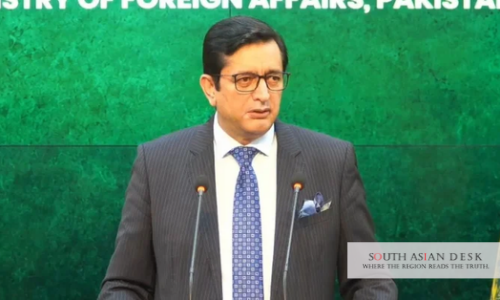
Pakistan accepted the invitation to join the Trump Board of Peace on 21 January, as per a statement from the Ministry of Foreign Affairs. The decision aligns with Pakistan’s efforts to support the Gaza peace plan under United Nations Security Council Resolution 2803, adopted in November 2025.
The ministry stated: “Pakistan would like to announce its decision to join the Board of Peace as part of its ongoing efforts to support the implementation of the Gaza Peace Plan.” It expressed hope for a permanent ceasefire, increased humanitarian aid and Gaza’s reconstruction.
Pakistan joined alongside seven other Muslim-majority countries, Egypt, Jordan, the United Arab Emirates, Indonesia, Turkiye, Saudi Arabia and Qatar in a joint statement. The ministers welcomed Trump’s invitation and committed to the board’s mission as a transitional administration.
This move came after cabinet approval in Pakistan. Prime Minister Shehbaz Sharif’s presence at the Davos event highlighted Islamabad’s active engagement. Pakistan’s involvement in the Trump Board of Peace could enhance its diplomatic influence in Middle East affairs, given historical ties to Palestinian causes.
Trump Gaza Peace Board Origins
The Trump Gaza peace board originated from Trump’s 20-point plan to end the Gaza conflict, announced in September 2025. Phase two, launched on 15 January 2026, focused on demilitarisation, technocratic governance and reconstruction.
United Nations Security Council Resolution 2803 endorsed the plan, authorising the Trump Board of Peace to oversee implementation. The board’s mandate expanded beyond Gaza to address global conflicts at risk.
During the ratification ceremony, Trump described the initiative as opening a path to hope and dignity for Gazans. Special Envoy Steve Witkoff stated: “We have achieved a peace deal in Gaza. We have brought the hostages home. And maybe most importantly, we have created a sense of hope for what the future can bring in Gaza and all other places where the Board of Peace will operate.”
High Representative for Gaza Nickolay Mladenov added: “Who would’ve thought two years ago that we would be sitting here with this group of countries, with this leadership, giving the people of Gaza a new chance? For too long, Gazans, Palestinians and Israelis have lived with conflict, with death, with destruction. Now, the page turns.”
Chief Commissioner of the National Committee for the Administration of Gaza Dr. Ali Sha’ath thanked Trump for efforts to advance regional peace, emphasising the need for follow-through.
The Trump Board of Peace includes a Gaza Executive Board with 11 members, overlapping with the founding executive board. It handles on-ground operations, including governance and investment.
Notable absences from the founding members include Canada, the United Kingdom, France, Germany and Italy. Trump rescinded Canada’s invitation earlier. Russia’s President Vladimir Putin indicated interest but has not confirmed.
Background
The Trump Board of Peace builds on Trump’s previous Middle East diplomacy, including the Abraham Accords. The Gaza conflict, escalating since 2023, prompted the initiative after a ceasefire agreement.
United Nations involvement via Resolution 2803 provides legitimacy. The board’s structure incorporates international business leaders and diplomats, aiming for efficient reconstruction.
Pakistan’s foreign policy has long supported Palestinian self-determination. Joining the Trump Gaza peace board fits this stance, potentially aiding humanitarian efforts through Pakistan’s experience in disaster response.
Data from the United Nations indicates over 40,000 deaths in Gaza since 2023, with 90% of infrastructure damaged. The board targets rebuilding with international funding, though specifics on contributions remain unclear.
What’s Next
Implementation timelines for the Trump Board of Peace include initial meetings in February 2026. Focus will shift to Gaza’s demilitarisation and aid distribution.
Pakistan plans to sign formal documents soon, per its ministry. The board may invite additional members, expanding its global reach.
Challenges include securing funds and ensuring compliance. Analysts predict the Trump Board of Peace could influence other conflicts, such as in Ukraine or the South China Sea.
The Trump Board of Peace represents a pivotal step toward sustained international collaboration on peace initiatives.
Published in SouthAsianDesk, January 29th, 2026
Follow SouthAsianDesk on X, Instagram and Facebook for insights on business and current affairs from across South Asia.