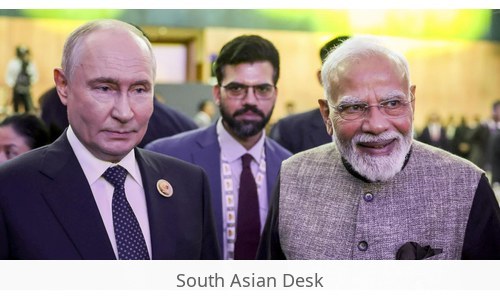
A Trump Modi G7 summit bilateral has been confirmed for next week’s Group of Seven meeting in Évian-les-Bains, France, with senior US administration officials revealing on Saturday that Prime Minister Narendra Modi is among a select group of leaders President Donald Trump will meet individually on the sidelines of the 15–17 June summit.
The confirmation places India at the centre of one of the most consequential G7 gatherings in recent memory, with the war in Iran, the near-closure of the Strait of Hormuz, the ongoing conflict in Ukraine, and a broad economic agenda all competing for space on a tightly scheduled programme.
Officials said Trump would meet separately with the leaders of Egypt, Qatar, the United Arab Emirates, France, and India. No formal bilateral with Ukrainian President Volodymyr Zelenskyy has been confirmed, though officials acknowledged the two leaders could meet on the sidelines. Trump is expected to arrive in France on Monday and meet French President Emmanuel Macron upon arrival before proceeding to working sessions with G7 leaders.
Modi at the Table as Trump Modi G7 Summit Takes Shape
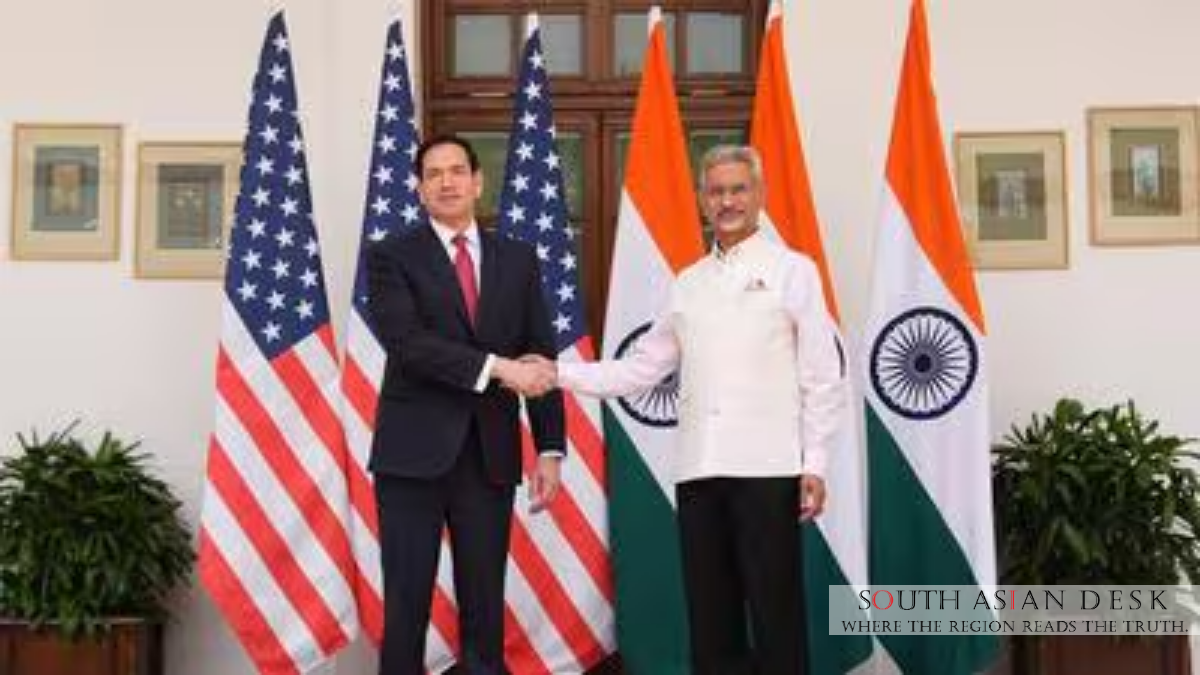
The inclusion of Modi in the bilateral schedule is significant and comes at a moment of acute strain in India-US relations. Three Indian seafarers were killed this week in US military strikes on commercial vessels off the coast of Oman, prompting India’s External Affairs Minister S Jaishankar to lodge a formal protest with Secretary of State Marco Rubio and New Delhi to summon the US Charge d’Affaires.
The Modi bilateral offers both sides a senior-level opportunity to manage the fallout. Washington has been pressing India to comply with its naval blockade of the Strait of Hormuz and halt the import of Iranian oil, a trade New Delhi regards as consistent with its own independently assessed national interests. The G7 encounter is unlikely to resolve that tension, but it provides a forum for direct engagement at the highest level.
India also carries substantial weight in the other agenda items Washington will press at the summit. On critical minerals, a key discussion point for the meeting, India is both a significant consumer and a potential partner in building supply chains that reduce dependence on Chinese-controlled processing capacity.
Iran Shadows the Entire Summit
The war with Iran, launched when the United States and Israel conducted joint strikes on 28 February, has disrupted global energy markets and commerce on a scale not seen in decades. The Strait of Hormuz, through which approximately 20 per cent of the world’s oil and liquefied natural gas passes, has been effectively closed since the strikes triggered Iranian retaliatory action and a US naval blockade.
A fragile ceasefire has been in place since 8 April, but speculation heading into the summit is intense over whether a broader Memorandum of Understanding between Washington and Tehran may be imminent, or whether the ceasefire could once again break down.
One senior US official pointed to an emerging framework under which Iran would reopen the strait, to be followed by coordinated demining operations involving US and allied naval forces. “That’s something we can do. We have the capacity to do it,” the official said.
Trump’s bilateral partners from the Gulf region, Qatar’s Emir Sheikh Tamim bin Hamad Al Thani, UAE President Mohamed bin Zayed Al Nahyan, and Egyptian President Abdel Fattah el-Sisi, are all parties whose influence over Tehran and regional stability will be central to any durable arrangement. Officials said discussions with those leaders would cover Gaza, Iran, and broader regional stabilisation.
Steven Cook, a senior fellow at the Council on Foreign Relations, said developments involving Gaza, Iran, and Lebanon would shape the political environment at the summit even where they do not appear as formal headline items on the agenda.
Ukraine and NATO
The war in Ukraine is expected to remain one of the summit’s most immediate geopolitical preoccupations. Senior US officials reiterated ahead of the summit that ending the war in Ukraine remains one of Trump’s highest foreign policy priorities, though efforts to broker a peace deal have appeared to stall since the outbreak of the Iran conflict in February.
Trump will participate in a working session with Zelenskyy in France, though officials did not confirm a formal one-to-one meeting. European allies will arrive hoping for US reassurances about the future of the transatlantic relationship, following reports of planned reductions in American air and naval assets and troop deployments.
NATO, though not formally on the G7 agenda, is expected to feature heavily in bilateral conversations, particularly with the NATO summit in Ankara, Turkey, scheduled for next month. Max Bergmann of the Center for Strategic and International Studies said the G7 could serve as an important venue for aligning allied positions before the Ankara gathering. Rachel Ellehuus, a former senior US defence official, noted that the debate within the alliance had shifted from the question of whether European members should bear more of the burden to the more practical question of how quickly that capacity can be built.
One administration official acknowledged the limits of American reach, saying that the United States cannot lead in every single region of the world simultaneously.
The Broader Economic Agenda
Beyond the immediate crises, officials said Trump planned to raise issues including economic growth and development, supply chain resilience, illegal migration, and artificial intelligence. Critical minerals, essential to advanced technologies and a sector in which China currently holds dominant processing capacity, will feature in discussions as G7 nations seek to coordinate strategy.
The gathering at Évian-les-Bains, a French lakeside resort town on the Swiss border with tight security in place amid expectations of significant protests, will run from 15 to 17 June. For India, the Modi-Trump encounter will be watched closely both for any signal of de-escalation over the Hormuz dispute and for the broader trajectory of a partnership that remains strategically vital to both countries despite the current friction.
Published in SouthAsianDesk, June 14, 2026
Follow SouthAsianDesk on X, Instagram and Facebook for insights on business and current affairs from across South Asia.