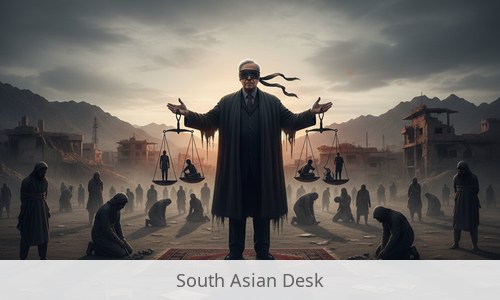
UN warning Afghanistan stability has become a central concern for global leaders as the United Nations issues a stark warning about the deteriorating situation in Afghanistan. The UN Secretary-General’s report underscores widespread human rights violations in Afghanistan, the absence of an inclusive government, and the deepening Afghanistan humanitarian crisis. These factors are fueling regional security challenges in South Asia and threatening to destabilize the broader geopolitical landscape.
Dateline: June 30, 2026
The United Nations issued a stark warning about the deteriorating situation in Afghanistan, highlighting widespread human rights violations, the absence of an inclusive government, and the deepening humanitarian crisis. The report, released by the UN Secretary-General, emphasizes that these issues are not isolated to Afghanistan but have far-reaching implications for regional security in South Asia. The findings underscore the urgent need for international attention and action to address the escalating crisis.
UN warning Afghanistan stability: Civilian Casualties
The UN documented 399 civilian casualties in Afghanistan from April 1 to June 30, including 57 deaths and 342 injuries. These figures highlight the ongoing violence and its severe impact on the civilian population. The report attributes the rising casualties to persistent conflict and the absence of an inclusive government structure, which has left the country vulnerable to further instability. The UN warning Afghanistan stability is not merely a call for action but a dire reminder of the human toll of the crisis.
The documented casualties include both direct and indirect impacts of conflict, such as displacement and lack of access to basic services. The UN emphasizes that the lack of a functioning government has exacerbated the situation, allowing extremist groups to operate with relative impunity. This has led to a cycle of violence that disproportionately affects civilians, particularly women and children, who are often the most vulnerable in such scenarios.
Regional Implications
The ongoing crisis in Afghanistan poses significant challenges for regional security in South Asia and humanitarian efforts. Neighboring countries and international actors are closely monitoring the situation, as the instability threatens to spill over into broader geopolitical dynamics in South Asia. The UN emphasizes that sustained international engagement is critical to mitigating the humanitarian and security risks associated with the crisis.
The Afghanistan humanitarian crisis is compounding regional tensions, with refugee flows and cross-border violence exacerbating existing conflicts. The lack of a stable government in Afghanistan has created a vacuum that extremist groups have exploited, leading to increased cross-border attacks and the displacement of thousands of people. This has placed additional strain on neighboring countries, which are already grappling with their own economic and security challenges.
The UN Secretary-General Report
The UN Secretary-General report highlights the urgent need for international attention and action to address the humanitarian crisis in Afghanistan. It details systemic human rights violations in Afghanistan, including restrictions on freedom of expression, gender-based violence, and the persecution of minority groups. The report also underscores the economic collapse, with food insecurity and lack of access to healthcare worsening the Afghanistan humanitarian crisis.
The report notes that the economic collapse has left millions of Afghans without access to basic necessities, including food, clean water, and medical care. The lack of a functioning government has led to a breakdown in public services, with many hospitals and schools operating at a fraction of their capacity. This has created a humanitarian emergency that requires immediate international intervention.
Civilian Casualties Afghanistan and the Humanitarian Toll
The UN’s documentation of civilian casualties in Afghanistan from April to June 2026 reveals a grim reality. The figures include both direct and indirect impacts of conflict, such as displacement and lack of access to basic services. The UN warning Afghanistan stability is a call to action for the international community to address the root causes of instability, including the absence of a functioning government and the rise of extremist groups.
The humanitarian crisis in Afghanistan is a direct consequence of these factors, requiring coordinated efforts to provide aid and restore stability. The UN has called for increased humanitarian assistance to be delivered to affected populations, including food, medical supplies, and shelter. However, the lack of a stable government has made it difficult to coordinate these efforts, as aid organizations face significant challenges in accessing conflict-affected areas.
Conclusion
The situation in Afghanistan remains a critical concern for the international community, with the UN warning of worsening human rights violations and instability. The absence of an inclusive government and the economic collapse have created a humanitarian crisis that requires immediate attention. The regional implications of this crisis are far-reaching, with neighboring countries and international actors needing to work together to address the challenges posed by the instability in Afghanistan.
Published in SouthAsianDesk, June 30, 2026.
Follow SouthAsianDesk on X, Instagram and Facebook for insights on business and current affairs from across South Asia.