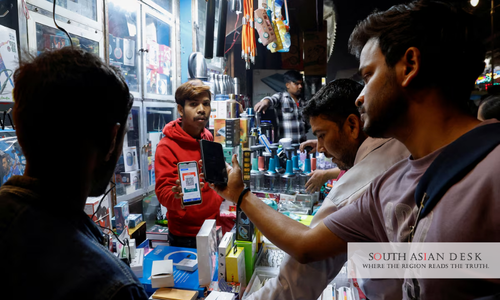
UPI global expansion took centre stage on Tuesday as Prime Minister Narendra Modi urged India’s fintech industry to widen the reach of the Unified Payments Interface and link it with local payment systems in more countries. Speaking at the inauguration of the seventh edition of the Global Fintech Fest 2026 in Mumbai, Modi said the platform is now live in eleven countries and has been connected with Singapore’s local payment network, marking a decade of operations since its August 25 milestone.
The Prime Minister told delegates that the fintech ecosystem should not rest on the achievements of the past ten years, during which UPI became the dominant platform for real-time domestic payments across India. Instead, he said the next objective should be to broaden its footprint abroad and make transactions simpler for Indians living overseas.
Why UPI Global Expansion Matters for the Indian Diaspora
Modi framed UPI global expansion as a direct benefit to the Indian diaspora, many of whom rely on remittance channels that remain costly and slow compared with domestic transfers. By linking UPI with the payment infrastructure of other nations, he said, fintech firms could help expatriates send money home more cheaply and efficiently. He noted that the platform’s growth over the past decade has already made it central to India’s digital economy, and that extending this success internationally was a natural next step.
The push aligns with a broader pattern of recent years, during which UPI has been introduced in markets including Bhutan, Nepal, Sri Lanka, Mauritius, the United Arab Emirates and France, alongside its recent interlinking with Singapore’s PayNow system. Each addition has typically aimed at easing cross-border remittances for Indian travellers and workers abroad, alongside boosting merchant acceptance in those markets.
A Civilisational Story, Not Just a Technology One
Referring to remarks previously made by French President Emmanuel Macron, Modi described the Unified Payments Interface as more than a technological achievement, calling it a civilisational story reflecting India’s approach to financial inclusion. He said that after a decade focused on building payment volumes, the fintech sector’s next chapter should move beyond payments altogether and into areas such as credit, insurance, savings, investments and pensions.
This shift, Modi argued, would allow Indian fintech companies to compete on a broader stage while continuing to serve the needs of a large domestic population that has only recently gained access to formal financial services. He pointed to India’s 7.8 percent GDP growth in the first quarter as evidence of the economy’s underlying strength, which he said gives fintech firms room to pursue more ambitious international goals.
Building Trust Alongside UPI Global Expansion
Alongside calls for wider adoption, Modi outlined four priorities he wants the industry to pursue as UPI global expansion continues. He asked companies to develop top-tier cybersecurity defences capable of withstanding sophisticated threats, and to establish their own ethical data protection standards rather than waiting for regulation to catch up. He also called for closer cooperation between regulators and industry to build what he termed a fintech regulatory ecosystem, and proposed the creation of a fintech consumer protection index that would rate companies publicly on transparency.
Modi told the audience that India could set its own rules and standards for emerging technologies such as agentic artificial intelligence, tokenisation and quantum computing, and then connect those standards with the rest of the world, rather than simply adopting frameworks designed elsewhere. The theme of this year’s Global Fintech Fest 2026, held under the banner of building trusted and connected global systems for inclusive finance, reflected this ambition.
What Comes Next
For now, the expansion of the Unified Payments Interface beyond India’s borders remains a work in progress, with NPCI International Payments Limited continuing to negotiate integrations on a country-by-country basis. Modi’s remarks signal that the government views this expansion as a policy priority rather than a purely commercial initiative, tying it directly to the welfare of the Indian diaspora and to India’s broader ambitions in global financial technology. Whether the pace of new country integrations accelerates in response to his call will likely become clearer at future editions of the fest.
Published in SouthAsianDesk, September 9th, 2026
Follow SouthAsianDesk on X, Instagram and Facebook for insights on business and current affairs from across South Asia.