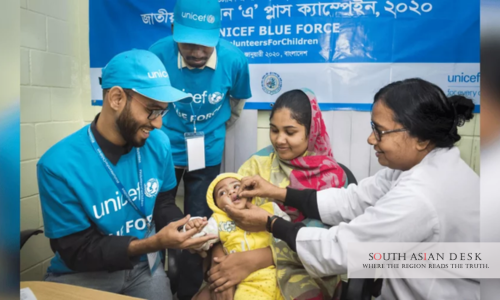
Vitamin A doses have been missed by nearly 20 million children in Bangladesh after repeated delays disrupted the country’s National Vitamin A Plus Campaign, raising concerns over child nutrition and immunity during an ongoing measles outbreak.
The nationwide campaign was originally scheduled for June 10 but was postponed again because the government did not receive the required Vitamin A capsules on time. Health officials are now considering June 27 as a possible new date, although uncertainty remains over whether the supplies will arrive as expected.
The delay has extended a disruption that has lasted more than 14 months. According to the Directorate General of Health Services, the last nationwide Vitamin A Plus Campaign was held in March 2025. Campaign rounds expected in September last year and March this year were not held, leaving millions of children without the routine supplements usually provided twice a year.
Vitamin A Doses Delay Raises Health Concerns
Public health experts have warned that the missed Vitamin A doses could weaken children’s immunity and increase the risk of complications from measles, pneumonia, diarrhoea, malnutrition and vision-related problems.
Vitamin A supplementation is considered one of Bangladesh’s most important child survival interventions. It is usually given to children aged between six and 59 months through nationwide campaigns.
The disruption comes at a difficult time because Bangladesh is also dealing with a measles outbreak. Experts say children who are already deficient in Vitamin A may face more severe complications if they are infected with measles.
Procurement Problems Stall Campaign
The latest delay has been linked mainly to procurement problems.
The health sector’s previous operational plan expired in June 2024, slowing approval and procurement processes. Attempts to buy Vitamin A capsules through open tender reportedly failed multiple times because of limited competition and prices quoted above market rates.
Authorities later moved toward direct procurement through UNICEF and approved funding for 7.1 million capsules, but the shipment has not yet arrived. UNICEF has reportedly indicated that supplies may reach Bangladesh by June 15, allowing officials to tentatively plan the campaign for June 27.
National Vitamin A Plus Campaign Under Pressure
Bangladesh’s National Vitamin A Plus Campaign has long been regarded as a successful public health programme.
The initiative was introduced to combat childhood blindness, malnutrition and preventable child deaths. It later became a nationwide campaign reaching millions of children each year through health centres, community clinics and EPI sites.
In March 2025, the campaign aimed to provide capsules to around 2.26 crore children aged six to 59 months across the country.
Health experts say the long gap has exposed weaknesses in planning, procurement and continuity of essential nutrition services.
Children Could Face Long-Term Risks
The impact of missed supplementation may not be immediately visible, but doctors warn that the consequences could appear over time.
Children from low-income and marginalised communities are especially vulnerable because they are more likely to face poor diets, repeated infections and limited access to healthcare.
Vitamin A helps protect children’s eyesight, supports growth and strengthens the immune system. Without timely supplementation, children who are already undernourished may face higher health risks.
Bangladesh Urged To Resume Campaign Quickly
Health experts have urged authorities to restart the campaign as soon as supplies arrive and to ensure that future rounds are not disrupted.
They say Bangladesh needs stronger procurement planning and a more reliable supply system to protect routine child nutrition services.
For now, the missed Vitamin A doses have become a serious public health concern, especially as the country faces a measles outbreak and millions of children remain without scheduled supplementation.
Published in SouthAsianDesk, June 11, 2026
Follow SouthAsianDesk on X, Instagram and Facebook for insights on business and current affairs from across South Asia.