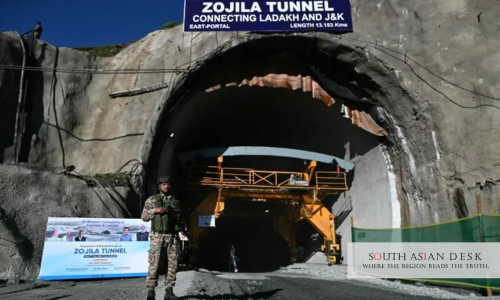
Zojila Tunnel has reached a major construction milestone after engineers broke through the final rock section of the strategic Himalayan project, bringing India closer to year-round access between Jammu and Kashmir and Ladakh.
The breakthrough took place at the eastern portal of the tunnel in Minamarg, Kargil district, with Indian Road Transport and Highways Minister Nitin Gadkari attending the event.
The nearly 14-kilometre bi-directional tunnel is being built between Baltal and Minamarg on National Highway 1 at an estimated cost of about ₹6,800 crore.
Once completed, it is expected to provide all-weather connectivity to Ladakh, a region of strategic importance because of its location near India’s borders with China and Pakistan.
Zojila Tunnel To Improve Ladakh Connectivity
Zojila Tunnel is designed to reduce travel disruption caused by heavy snowfall, avalanches and harsh weather conditions on the existing Zoji La Pass route.
The pass is often shut during winter, cutting off Ladakh from road access through Kashmir for long periods.
The new tunnel is expected to reduce travel time between Sonamarg and Minamarg from nearly two hours to about 30 minutes.
Officials said the project would also improve road safety, reduce fuel use and support faster movement of people, goods and emergency services.
Strategic Himalayan Tunnel Gains Importance
The Zojila Tunnel is part of India’s wider push to improve infrastructure in border and high-altitude regions.
The project is expected to strengthen civilian movement, tourism and trade, while also improving logistics for the Indian Army.
Year-round road access to Ladakh is considered important for military mobility, especially after years of tension between India and China along the Line of Actual Control.
The tunnel will also support faster movement of equipment, supplies and personnel in a region where terrain and weather often make transportation difficult.
Safety Features Planned For The Tunnel
The Zojila Tunnel will include modern safety and monitoring systems.
Officials said the project will have ventilation systems, automatic fire detection, CCTV surveillance and pedestrian cross-passage facilities.
The wider project also includes bridges, culverts, approach roads, snow galleries, avalanche protection structures and other measures designed for harsh mountain conditions.
These features are intended to make the route safer and more reliable than the existing road over the pass.
Project Expected To Support Trade And Tourism
Beyond its strategic value, the tunnel is expected to boost tourism and local economic activity in Jammu and Kashmir and Ladakh.
Improved road access could make it easier for visitors to reach Ladakh, while also helping local businesses, transporters and communities that depend on regular movement of goods.
Officials said the tunnel would improve access to remote areas and support regional development by reducing the impact of winter closures.
India Expands Border Infrastructure
The Zojila breakthrough comes as India continues to expand road and tunnel networks across Himalayan and border regions.
Several projects are under way to improve connectivity between Kargil, Leh, Zanskar and other parts of Ladakh.
New Delhi has also highlighted broader highway development in Jammu and Kashmir as part of its infrastructure push.
For India, the Zojila Tunnel is more than a transport project. It is a major connectivity and security asset that could reshape access to Ladakh once regular traffic begins.
Published in SouthAsianDesk, June 11, 2026
Follow SouthAsianDesk on X, Instagram and Facebook for insights on business and current affairs from across South Asia.