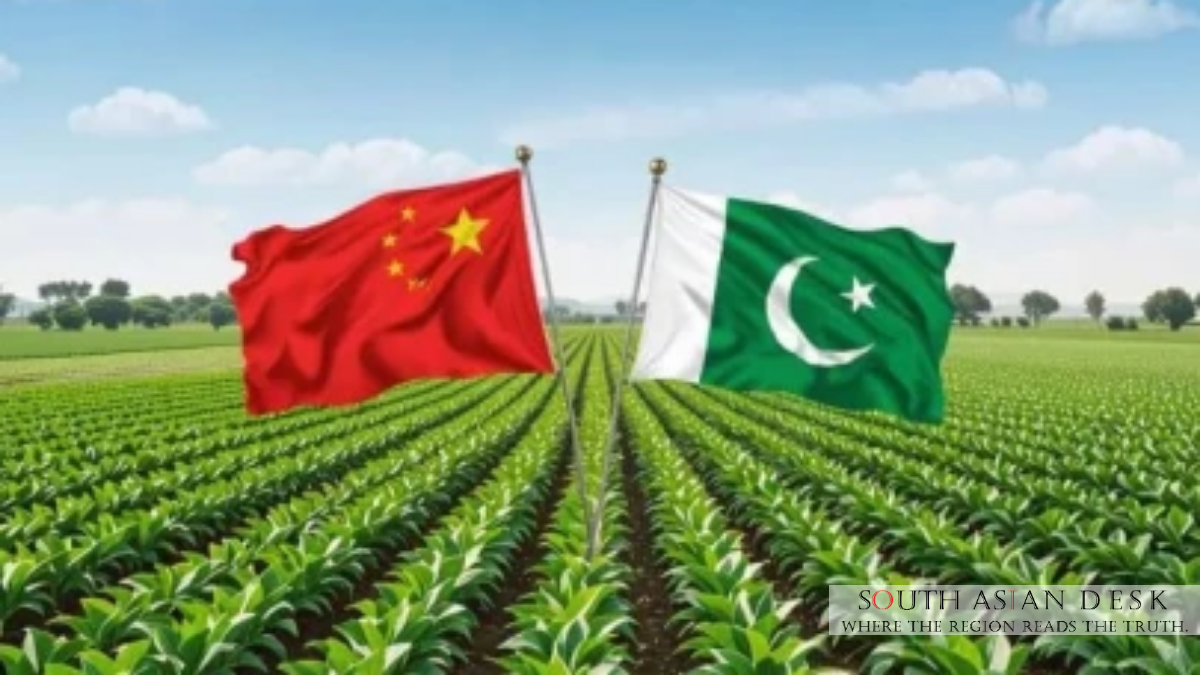
Pakistan Agricultural Exports: Pakistan has announced an ambitious plan to double its agricultural exports by 2035, targeting China and the Gulf region. This initiative is part of the newly unveiled Pakistan Climate Prosperity Plan, which focuses on integrating climate-smart techniques into agriculture.
The plan aims to enhance climate resilience and promote green growth by aligning with the China-Pakistan Economic Corridor (CPEC). This includes upgrading infrastructure such as highways, ports, and energy systems to withstand environmental challenges. A significant development is the creation of Pakistan’s first agricultural trade hub at Gwadar Port, leveraging CPEC connectivity for larger markets and improved cold-chain logistics.
Existing special economic zones will transition into green economic zones, adopting clean energy and circular economy practices to meet international standards and boost export competitiveness. Key targets include reducing post-harvest losses by 20% for wheat, cotton, and rice by 2028, and lowering water consumption in agriculture by 20% through efficient irrigation and precision farming by 2030.
Additional goals include expanding agroforestry to 50,000 hectares by 2030, transporting 50% of perishable exports through modern cold-chain networks by 2035, and innovating rootstock for critical horticulture varieties by 2028. The plan also emphasizes blue carbon initiatives to create new revenue streams from fisheries conservation and optimizing 30% of agricultural subsidies.
This strategic move is expected to significantly boost Pakistan’s agricultural sector, enhancing its competitiveness on the global stage and ensuring sustainable economic growth.
Published in SouthAsianDesk, May 6, 2026
Follow SouthAsianDesk on X, Instagram and Facebook for insights on business and current affairs from across South Asia.