Global forced displacement has reached an historic scale, with at least 117.8 million people, one in every 70 individuals on earth, currently uprooted from their homes due to conflict, violence, human rights abuses and persecution. The figures come from the United Nations High Commissioner for Refugees (UNHCR) annual global trends report, published on 11 June 2026, and represent one of the most comprehensive assessments of the worldwide displacement crisis to date.
In a rare piece of qualified good news, the report confirms that forced displacement has declined for the first time in a decade, registering a fall of approximately four per cent in 2025. The shift has been driven by large-scale returns of refugees and internally displaced persons (IDPs) to their countries of origin. However, UNHCR has been careful to temper any optimism. New and rapidly escalating crises, most notably in Lebanon and Iran, threaten to reverse whatever ground has been gained.
The Scale of Global Forced Displacement in 2025
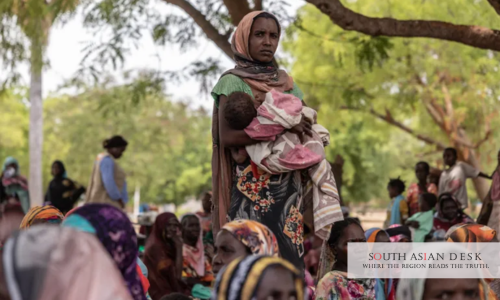
Of the 117.8 million forcibly displaced people recorded by UNHCR at the end of 2025, the largest group, 68.6 million, were internally displaced within the borders of their own countries. A further 28.5 million refugees fell under the direct UNHCR mandate, with nine million people classified as asylum seekers awaiting decisions on their protection claims. An additional 7.2 million were identified as requiring international protection, while six million Palestinian refugees remained under the separate mandate of the United Nations Relief and Works Agency for Palestine Refugees (UNRWA).
The numbers, while reflecting a marginal statistical improvement, offer little comfort on the ground. Displacement at this scale means that entire generations of children are growing up without stable homes, access to consistent education, or the prospect of returning to the communities from which they were driven.
Where Refugees Are Coming From: South Asia Prominent Among Crisis Zones
Almost three-quarters of the world’s refugee population, 72 per cent, originated from just seven countries: Venezuela (6.4 million), Palestine (6 million), Ukraine (5.2 million), Syria (4.9 million), Afghanistan (3.7 million), Sudan (2.8 million), and South Sudan (2.4 million).
Afghanistan’s continued presence on this list is of particular significance to South Asia. Decades of war, occupation, and political instability have produced one of the most protracted refugee situations in modern history. The Taliban’s return to power in August 2021 compounded an already severe humanitarian situation, and Afghan refugees now account for the overwhelming majority of displaced populations in both Pakistan and Iran, the two countries that have borne the greatest regional burden of Afghan displacement.
Pakistan and the South Asian Dimension of the Refugee Crisis
The report places Pakistan among the top seven refugee-hosting nations globally, with approximately 1.3 million registered refugees on its soil, almost all of them Afghans. The figure does not capture the full picture, as significant numbers of unregistered Afghans are believed to reside in Pakistan beyond the reach of formal UNHCR tallies.
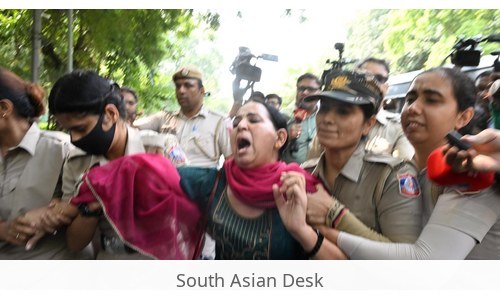
Pakistan’s position as a major host country has come under renewed strain in recent years, as domestic economic pressures and political debates over illegal immigration have led to periodic government-led deportation campaigns targeting undocumented Afghans. Critics and humanitarian organisations have warned that such operations risk returning individuals to environments where their safety cannot be guaranteed, a concern the UNHCR report itself echoes in relation to returns more broadly.
Colombia, Germany, Türkiye, Uganda, Iran, and Chad complete the list of the world’s largest refugee-hosting nations. Notably, 65 per cent of all refugees live in countries directly neighbouring their countries of origin, underscoring that the burden of displacement falls most heavily on nations that are themselves frequently resource-constrained and politically fragile.
A Record Year for Returns, But at What Cost?
The UNHCR report records 2025 as witnessing the largest wave of refugee and IDP returns since the agency began systematic recording. In total, just over 14.7 million people returned to their countries of origin, a 50 per cent increase on 2024 figures. Ninety-two per cent of those returns were concentrated in six countries: the Democratic Republic of Congo (3.6 million), Sudan (3.6 million), Syria (3.3 million), Afghanistan (2 million), Ukraine (718,300), and Myanmar (415,200).
The record return numbers, however, mask a deeply troubling reality. UNHCR has explicitly warned that conditions in many of these countries remain far from suitable for safe reintegration. Returns to Sudan and Afghanistan, in particular, are taking place against a backdrop of active conflict, collapsed public services, and deteriorating security. Voluntary return, the gold standard of durable refugee solutions, is difficult to distinguish in practice from coerced departure when host countries are simultaneously implementing deportation policies and cutting support services for displaced populations.
New Crises Threatening to Unravel Progress
The statistical decline in displacement figures captured in the 2025 data is already being overtaken by events in 2026. Since the outbreak of the US-Israel war on Iran in late March 2026, Israeli military operations have forced more than one million people from their homes, with a further 3.2 million internally displaced across Iran. In Lebanon, a rapidly deepening displacement crisis, driven by renewed Israeli military action following the breakdown of the ceasefire, has added further pressure to an already fragile regional picture.
The UNHCR report, while primarily covering 2025 data, acknowledges these emerging crises and their likely impact on future displacement figures. The agency’s leadership has called for renewed international commitment to durable solutions, not merely managing displacement, but addressing the root causes that produce it.
A Crisis Decades in the Making
The historical trajectory of global displacement makes sobering reading. When the UN Refugee Convention was adopted in 1951 in the aftermath of the Second World War, it sought to protect some 2.1 million refugees across Europe. By 1980, the number exceeded 10 million for the first time, driven by wars in Afghanistan and Ethiopia. The Afghan and Soviet conflicts pushed the figure to 20 million by 1990. The US invasions of Afghanistan and Iraq in 2001 and 2003, combined with civil wars in South Sudan and Syria, pushed the global count above 30 million by the end of 2021. Russia’s full-scale invasion of Ukraine in February 2022 then produced one of the fastest-growing refugee crises since the Second World War, displacing 5.7 million people in under a year.
That the number now stands at 117.8 million, more than fifty times the figure the 1951 Convention was designed to address, is a measure of how comprehensively the international community’s capacity to prevent and resolve displacement has failed to keep pace with the forces generating it.
Published in SouthAsianDesk, June 12, 2026
Follow SouthAsianDesk on X, Instagram and Facebook for insights on business and current affairs from across South Asia.