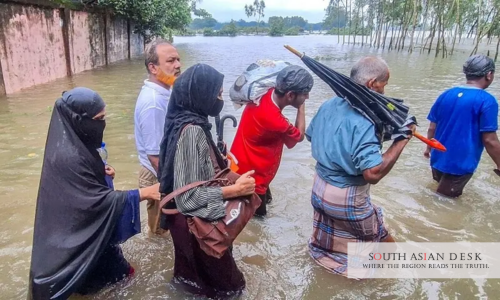
Bangladesh monsoon floods have killed at least 50 people in the past week, as flash floods and landslides triggered by heavy rain displaced thousands and left communities in the southeast struggling for food, clean water and shelter.
The worst-hit area is Chattogram district, where officials said 50 people have died, including 29 who were buried by landslides. Two people remain missing, while around 35,000 residents have moved into government-run shelters.
Authorities have opened about 4,000 shelters for displaced families. Army and border guard personnel have been using boats to deliver food, drinking water and other essential supplies to communities cut off by floodwaters.
Bangladesh monsoon floods hit Chattogram hardest
Bangladesh monsoon floods have caused the heaviest reported damage in Chattogram, where landslides and rising water have disrupted daily life across several areas.
Many homes, kitchens and local roads remain submerged, leaving residents unable to cook or move safely. Shortages of food and safe drinking water have deepened the crisis, particularly in areas where transport links remain blocked.
Officials said landslides accounted for more than half of the deaths in the district. The threat remains serious because saturated hillsides can collapse suddenly after days of continuous rain.
The disaster has also affected burial and funeral arrangements in flooded communities. In one reported case, a family had to carry a relative’s body on a bamboo raft because the local cemetery was under chest-deep water.
Flood shelters fill as residents are displaced
Tens of thousands of residents have been forced from their homes as floodwaters spread across low-lying and hilly areas.
Shelters are providing temporary safety, but large-scale displacement creates urgent needs for food, drinking water, medicine, sanitation and basic health services. Families staying in shelters are often unable to bring enough belongings, livestock or income support with them.
The pressure on relief systems is likely to continue even if water levels begin to fall. Flooded homes may remain unsafe, contaminated water can spread disease and damaged roads can slow the delivery of aid.
Authorities will also need to monitor the risk of waterborne illness once floodwaters recede, especially in areas where latrines, wells and water sources have been contaminated.
Rohingya camps remain at high risk
The monsoon disaster has also affected Rohingya refugee camps in Cox’s Bazar, where landslides killed 15 people last week.
More than 1.2 million Rohingya refugees live in congested shelters built on hillsides cleared of trees. These conditions make the camps highly vulnerable during heavy rain, as unstable slopes can give way with little warning.
The latest deaths underline the continuing risk faced by refugees during the monsoon season. Makeshift shelters, poor drainage and crowded living conditions increase the danger of landslides, flooding and injuries.
Authorities and humanitarian agencies have previously moved some refugees away from high-risk slopes, but relocation remains difficult because of limited space and the size of the camp population.
Forecasters warn risk is not over
The Flood Forecasting and Warning Centre said conditions in southeastern districts may improve soon, but warned that the monsoon remains active over northeastern and northern Bangladesh.
That means further inundation remains possible in other parts of the country. Bangladesh’s flood risk is shaped not only by local rain but also by upstream water flows and river levels across the wider region.
The warning is important because even when floodwaters begin to recede in one area, new rainfall can create pressure elsewhere. Low-lying communities, riverbank settlements and hill districts remain especially vulnerable.
Climate pressure worsens recurring monsoon risk
Bangladesh is highly exposed to floods and landslides because of its low-lying geography, dense river network and seasonal monsoon rainfall.
Scientists have warned that climate change is increasing the frequency and intensity of extreme weather events, making heavy rainfall more damaging in countries already exposed to floods.
The current disaster reflects that recurring vulnerability. Floods, landslides, road damage, displacement and shortages of safe water are not isolated problems. They are part of a repeated monsoon pattern that places poor and marginalised communities at the greatest risk.
For Bangladesh, the immediate priority is rescue and relief. The longer-term challenge is strengthening early warning systems, safer settlements, drainage, hill protection and climate-resilient infrastructure.
Relief response faces difficult days ahead
The Bangladesh monsoon floods have created a major humanitarian challenge, with at least 50 deaths, thousands displaced and many communities still facing shortages of essential supplies.
Relief teams must continue reaching cut-off areas while authorities monitor further rainfall in the north and northeast. The risk of landslides also remains a concern in hilly districts and refugee settlements.
The scale of the crisis shows how quickly monsoon weather can turn into a national emergency. As families wait for water to recede, the focus will remain on saving lives, restoring access and preventing disease in flood-affected communities.
Published in SouthAsianDesk, July 13, 2026
Follow SouthAsianDesk on X, Instagram and Facebook for insights on business and current affairs from across South Asia.