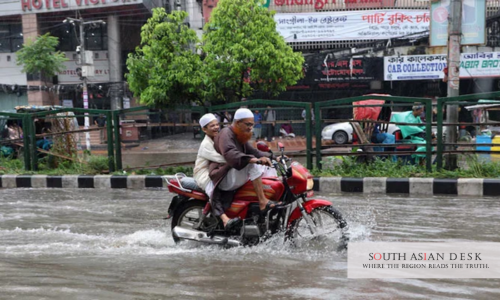
Bangladesh floods have killed at least 44 people and left more than one million stranded after days of torrential monsoon rain triggered widespread flooding and landslides across the country’s southeast.
Authorities said seven districts have been affected: Chattogram, Cox’s Bazar, Bandarban, Rangamati, Khagrachhari, Moulvibazar and Habiganj. The disaster management ministry said 267,918 households have been stranded as floodwaters disrupted daily life, cut off communities and damaged roads, bridges and communication networks.
Relief teams were racing on Saturday to reach isolated areas, but washed-out roads, damaged bridges, power outages and broken communication links slowed the response. Army and navy personnel have been using boats to deliver food, drinking water, medicines and other essential supplies to communities that remain difficult to access.
Bangladesh floods leave families without food and electricity
Bangladesh floods have left many families without electricity, cooking facilities or reliable access to food after floodwaters entered homes and covered kitchens and living spaces with mud.
Residents in affected areas said they had been unable to cook for days. Many families are relying on dry food such as flattened rice, puffed rice and biscuits, while emergency relief supplies remain difficult to deliver in some of the hardest-hit locations.
The situation is particularly severe in low-lying and hilly areas, where heavy rain can quickly produce flash floods, slope failures and road collapses. Floodwater has also damaged homes, crops and small businesses, leaving affected families at risk of deeper economic loss even after the water begins to recede.
The immediate humanitarian needs are clear: safe drinking water, food, medical supplies, electricity restoration, temporary shelter and rapid access to isolated communities.
Landslides add to monsoon disaster
The floods have been accompanied by deadly landslides, including in Rohingya refugee camps in Cox’s Bazar, where 16 refugees were killed earlier this week.
More than one million Rohingya refugees live in camps in Cox’s Bazar, many in makeshift shelters built on steep and deforested hillsides. These conditions make the settlements especially vulnerable during the monsoon season, when prolonged rain can loosen soil and trigger sudden landslides.
The latest deaths show how the flood crisis has become a wider monsoon disaster. In southeastern Bangladesh, communities are facing multiple hazards at once: river flooding, urban waterlogging, flash floods, landslides, road damage and power cuts.
For Rohingya refugees, the risk is particularly acute because crowded camps, fragile shelters and limited drainage systems leave residents exposed to repeated seasonal disasters.
Rescue operations face damaged roads and broken bridges
Rescue and relief work has been slowed by infrastructure damage across affected districts.
Washed-out roads and damaged bridges have made it difficult for aid workers to reach stranded families. In some areas, boats have become the only practical way to deliver food, water and medicine.
Power outages have also complicated the response. Without electricity, families cannot cook, charge phones, pump water or maintain basic communication with relatives and authorities. Broken communication links make it harder for officials to assess needs and direct relief teams to the worst-hit areas.
The government has said it is distributing relief, drinking water and medical supplies, while urging people whose homes have been inundated to move to nearby shelters. However, evacuations can be difficult when families are reluctant to leave homes, livestock and belongings behind.
Chattogram and Cox’s Bazar among worst-hit areas
Chattogram and Cox’s Bazar are among the districts most severely affected by the flooding and landslides.
Chattogram, Bangladesh’s main port city and a major commercial hub, has faced severe disruption from heavy rainfall and waterlogging. Flooding in and around the city can quickly affect transport, markets, homes and supply chains.
Cox’s Bazar faces a different but equally serious challenge. Its coastal and hilly geography, combined with dense refugee settlements, makes it vulnerable to both flooding and landslides. When heavy rain continues for several days, shelters, slopes and access roads can become unstable.
Bandarban, Rangamati and Khagrachhari are also at high risk because of their hilly terrain. Landslides in these districts can be sudden and deadly, particularly where homes are built near unstable slopes.
Monsoon rain deepens Bangladesh’s disaster risk
Bangladesh is one of the world’s most disaster-prone countries. Seasonal monsoon rains regularly cause flooding, river erosion and landslides, particularly in low-lying and hilly areas.
The country’s geography makes it highly vulnerable. Large river systems, dense settlements, coastal exposure and upstream rainfall from neighbouring regions can combine to create severe flooding. When heavy rain falls over several days, drainage systems can be overwhelmed and rivers can rise quickly.
Scientists have warned that climate change is making extreme rainfall more frequent and intense, increasing the scale and severity of disasters in vulnerable countries such as Bangladesh.
This does not mean every flood can be attributed to climate change alone. However, warmer temperatures can increase the amount of moisture in the atmosphere, making heavy rainfall events more damaging when weather systems intensify.
Relief needs likely to grow
The number of stranded households suggests that relief needs could continue to grow in the coming days.
Families affected by floods often need immediate support as well as longer-term assistance. In the short term, they require food, drinking water, medicine, sanitation, temporary shelter and access to health services. Once floodwaters recede, they may need help cleaning homes, repairing damage, recovering livelihoods and preventing disease outbreaks.
Floods can also contaminate drinking water sources and damage latrines, raising the risk of diarrhoeal disease and other waterborne illnesses. Children, older people, pregnant women and people with disabilities are often among the most vulnerable during prolonged displacement.
The government’s ability to deliver relief will depend on road access, coordination with local authorities, availability of boats and the speed at which power and communication links can be restored.
Rohingya camps remain a major concern
The situation in the Rohingya refugee camps remains one of the most sensitive parts of the emergency.
The camps in Cox’s Bazar are densely populated, and many shelters are made from bamboo, tarpaulin and other temporary materials. These structures offer limited protection against heavy rain, slope collapse and strong winds.
Landslides in the camps have repeatedly killed refugees during past monsoon seasons. The latest deaths underline the need for continued relocation from high-risk slopes, stronger drainage, shelter reinforcement and emergency preparedness.
However, moving people from dangerous areas is not always simple. Refugees may fear losing shelter space, aid access or proximity to community networks. Authorities and humanitarian agencies must therefore combine risk reduction with clear communication and practical support.
Economic impact may extend beyond flooded homes
The floods are likely to have an economic impact beyond the immediate damage to homes.
In rural areas, floodwaters can destroy crops, damage livestock, disrupt markets and reduce household income. In urban and peri-urban areas, waterlogging can halt small businesses, affect transport and damage stored goods.
For daily wage workers, even a few days without work can create serious hardship. Families that depend on informal labour, small trade or agriculture may face debt, food insecurity and delayed recovery.
Infrastructure damage can also affect local economies. Broken bridges and damaged roads delay movement of goods, raise transport costs and slow the return to normal commercial activity.
Bangladesh faces difficult recovery task
Bangladesh floods have created a major humanitarian and logistical challenge, with at least 44 deaths, more than one million people stranded and nearly 268,000 households affected across seven districts.
The immediate priority is saving lives, reaching isolated communities and ensuring that food, water and medical supplies reach those most in need. The continued risk of landslides, especially in Cox’s Bazar and the hill districts, means authorities will also need to keep evacuations and warnings active.
The disaster has again exposed the recurring vulnerability of Bangladesh during the monsoon season. Floods, landslides and river erosion are familiar hazards, but their impact becomes more severe when dense settlements, fragile infrastructure and extreme rainfall overlap.
For now, the focus remains on relief and rescue. In the longer term, the crisis will renew pressure for stronger early warning systems, safer settlement planning, resilient infrastructure and greater protection for communities living in flood- and landslide-prone areas.
As monsoon rain continues to threaten vulnerable regions, Bangladesh faces the difficult task of moving from emergency response to recovery while preventing further loss of life.
Published in SouthAsianDesk, July 12, 2026
Follow SouthAsianDesk on X, Instagram and Facebook for insights on business and current affairs from across South Asia.