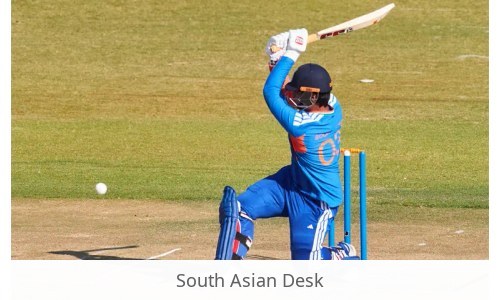
On July 24, 2026, India’s cricket team secured a seven-wicket victory over Zimbabwe at the Harare Sports Club, with 15-year-old Vaibhav Sooryavanshi scoring his maiden T20 International half-century in just 18 balls. This Vaibhav Sooryavanshi T20 fifty marked a historic moment for Indian cricket, showcasing the potential of young talent in cricket and reinforcing the significance of the Zimbabwe cricket match as a T20 International highlights moment.
Vaibhav Sooryavanshi T20 fifty: A Game-Changing Performance
Zimbabwe batted first and posted 125 runs for the loss of 7 wickets in 20 overs. Wessly Madhevere top-scored for Zimbabwe with 39 runs. In response, India’s innings was anchored by Sooryavanshi, who reached his half-century in 18 balls, showcasing aggressive stroke play and composure under pressure. His innings, coupled with disciplined bowling, enabled India to achieve the target with ease. This performance not only secured an India cricket victory but also highlighted the potential of young talent in cricket.
Vaibhav Sooryavanshi T20 fifty: Match Overview
Zimbabwe batted first and posted 125 runs for the loss of 7 wickets in 20 overs. Wessly Madhevere top-scored for Zimbabwe with 39 runs. In response, India’s innings was anchored by Sooryavanshi, who reached his half-century in 18 balls, showcasing aggressive stroke play and composure under pressure. His innings, coupled with disciplined bowling, enabled India to achieve the target with ease. The Zimbabwe cricket match at Harare Sports Club became a T20 International highlights moment, with Sooryavanshi’s rapid fifty dominating the narrative.
Significance of Sooryavanshi’s Performance
Sooryavanshi’s achievement underscores the emergence of young talent in cricket, a trend that has gained momentum in recent years. His performance not only highlights individual brilliance but also reflects the broader strategy of integrating younger players into the national team to ensure sustained success in T20 cricket. With a growing pool of emerging talents, India’s T20 prospects appear increasingly promising. The Vaibhav Sooryavanshi T20 fifty is a testament to the evolving dynamics of the format, where aggressive batting and quick scoring have become essential.
Context of India’s T20 Struggles and Resurgence
India’s victory over Zimbabwe comes at a pivotal moment for the national team, which had faced a three-match losing streak in T20 internationals prior to this encounter. The loss of key players to injuries and the slow adaptation to the T20 format’s fast-paced nature had raised concerns about India’s ability to compete at the highest level. This win, however, signals a potential shift in momentum, with the inclusion of young players like Sooryavanshi offering a fresh dynamic to the team’s approach.
The emergence of Sooryavanshi, who has been part of India’s Under-19 setup since 2024, aligns with the Indian Cricket Board’s (ICB) long-term strategy to cultivate young talent in cricket for global competitions. His rapid rise through the ranks, including a century in the Under-19 Asia Cup in 2025, has positioned him as a key figure in India’s T20 future. This match further validates the ICB’s focus on developing players who can thrive in the high-pressure, high-scoring environment of T20 cricket.
Regional Implications for South Asian Cricket
The match also highlights the competitive landscape of South Asian cricket, where teams like Pakistan, Sri Lanka, and Bangladesh have been consistently challenging India in T20 formats. Zimbabwe, though not a South Asian nation, has historically served as a testing ground for Indian teams preparing for regional tournaments. The victory reinforces India’s dominance in the T20 format while underscoring the need for continued investment in young talent in cricket to maintain this edge.
Broader Trends in T20 Cricket
Sooryavanshi’s 18-ball fifty is not just a personal milestone but also a reflection of evolving trends in T20 cricket. The format has increasingly favored players with aggressive batting styles and the ability to score quickly, traits that Sooryavanshi demonstrated with precision. His innings included six sixes and four fours, showcasing a blend of power and technical skill that is becoming essential for success in the shortest format of the game.
The performance also raises questions about the future of traditional batting techniques in T20 cricket. As teams prioritize strike rotation and boundary hitting, players like Sooryavanshi who can adapt to this style are likely to see increased opportunities in the national team. This shift in strategy is part of a broader global trend, with teams across the world re-evaluating their approaches to T20 batting and bowling.
Follow SouthAsianDesk on X, Instagram and Facebook for insights on business and current affairs from across South Asia.
Sources
- Sooryavanshi 18-ball fifty tops ‘tremendous’ India T20 win against Zimbabwe – aljazeera.com
- Vaibhav Sooryavanshi hits maiden 50 as India thump Zimbabwe in T20 – dawn.com
- Sooryavanshi, Mayank help India end T20I losing streak – cricinfo.com
Image: i.dawn.com