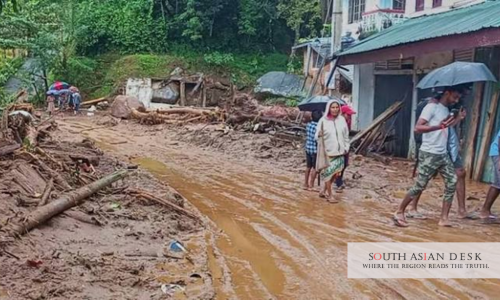
The recent Sri Lanka floods and mudslides have killed at least seven people and forced authorities to shut down schools across the country’s central highlands. Torrential rains battered the mountainous tea-growing region on August 4, 2026, triggering flash floods and landslides that damaged homes, displaced thousands of residents, and overwhelmed emergency response teams already stretched thin from an earlier disaster.
What Caused the Sri Lanka Floods and Mudslides
Heavy monsoon rainfall soaked the hillsides of Sri Lanka’s central districts, saturating slopes that have long been considered vulnerable to collapse. According to Pradeep Kodippili, spokesperson for the country’s Disaster Management Centre, five people died after being buried when mudslides overran two houses, while two others lost their lives in the flooding. The downpours damaged 129 houses and forced nearly 3,500 people to evacuate their homes.
The districts of Nuwara Eliya and Badulla, both known for their steep terrain, bore the brunt of the destruction. These areas sit on slopes that officials have repeatedly flagged as high-risk during the monsoon season, when sustained rain loosens soil and sends it sliding down hillsides with little warning.
Sri Lanka School Closures Across the Central Highlands
As floodwaters rose and mudslides swept through residential areas, officials ordered widespread Sri Lanka school closures in the affected districts. Authorities have not confirmed when classes will resume, saying the decision will depend on how weather conditions develop in the coming days. This is not the first time the region has faced such disruption; a similar wave of closures occurred less than a year earlier during an even deadlier weather event.
A Region Still Recovering from Cyclone Ditwah
The latest disaster has struck a region still trying to rebuild after Cyclone Ditwah, which tore through the same tea-growing belt in November of the previous year. That storm killed nearly 640 people and caused an estimated $4.1bn in damage, making it one of the deadliest weather events in Sri Lanka’s recent history. The fact that another round of flooding and landslides has hit the same communities within roughly nine months highlights how repeatedly extreme weather is testing the country’s disaster response capacity.
Emergency crews have been working around the clock to reach residents cut off by rising water. Local broadcaster Hiru TV showed navy and army personnel wading through submerged streets to rescue stranded families, underscoring the scale of the rescue effort required in the hardest-hit neighborhoods.
Nuwara Eliya Landslides Highlight a Recurring Risk
The Nuwara Eliya landslides are part of a troubling pattern rather than an isolated event. Sri Lanka’s central highlands sit on terrain that becomes increasingly unstable with each successive rainy season, and the compounding damage from back-to-back disasters leaves less time for infrastructure and hillside stabilization efforts to take hold. Homes rebuilt after Cyclone Ditwah were, in some cases, damaged again by this latest round of rain, adding financial and emotional strain to communities already recovering from loss.
Government Response and What Comes Next
The Sri Lanka Disaster Management Centre continues to coordinate rescue and relief operations, with military units deployed to support evacuations and deliver aid to displaced families. Officials say the priority remains getting residents to safety and assessing which areas are too dangerous for people to return to until the ground stabilizes.
For now, the combination of ongoing rainfall and unstable hillsides means the situation could still worsen before it improves. The government has indicated that further updates on school reopenings and relief distribution will depend on how the weather pattern evolves over the next several days.
Conclusion
The Sri Lanka floods and mudslides of early August 2026 have once again exposed how vulnerable the country’s central highlands are to extreme weather, particularly in districts still recovering from Cyclone Ditwah. With seven confirmed deaths, nearly 3,500 evacuees, and schools shut indefinitely, the disaster is a stark reminder of the recurring risks facing communities living on Sri Lanka’s steep, rain-soaked terrain.
Published in SouthAsianDesk, August 6th, 2026
Follow SouthAsianDesk on X, Instagram and Facebook for insights on business and current affairs from across South Asia.