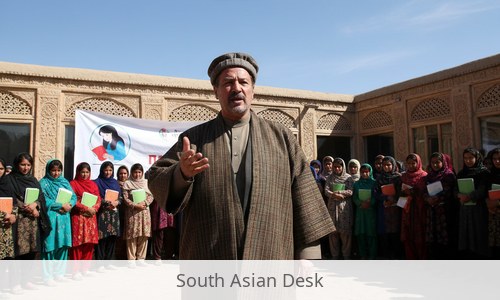
Afghan girls education: On October 11, 2026, former Afghan President Hamid Karzai called for the reopening of schools and universities for girls in Afghanistan on the International Day of the Girl, emphasizing the global responsibility to empower Afghan girls. His remarks highlight the ongoing challenges faced by Afghan girls under Taliban rule, particularly regarding education and empowerment. The International Day of the Girl, observed annually on October 11, serves as a critical platform to address systemic barriers to girls’ education, including the restrictive Taliban education policies that have severely limited access to formal schooling.
Afghan girls education: International Response to Karzai’s Call
Karzai’s statements have drawn attention from international organizations such as UNESCO Afghanistan, which has long advocated for girls’ education in Afghanistan. While no formal response has been issued yet, the call underscores the need for renewed diplomatic efforts to address the crisis. The United Nations has previously expressed concern over the Taliban’s education policies, with UNESCO estimating that 2.4 million girls are currently barred from secondary education. This figure represents a stark regression from pre-2021 levels, when girls’ enrollment in secondary schools had steadily increased under previous administrations. UNESCO Afghanistan has repeatedly urged the Taliban to reverse their ban on girls’ education, citing the long-term consequences of denying girls access to learning opportunities.
Current State of Girls’ Education in Afghanistan
UNESCO reports that 2.4 million girls in Afghanistan are currently excluded from secondary education, a figure that has risen sharply since the Taliban’s return to power. Khaama Press notes that concerns over child marriage and other risks facing girls in Afghanistan continue to grow under Taliban rule. These challenges are compounded by the lack of access to formal education, which has left many girls vulnerable to early marriage and limited future opportunities. The situation underscores the urgent need for girls empowerment in Afghanistan through systemic educational reforms. In rural areas, where resources are scarce and cultural barriers are entrenched, the impact of the education ban is particularly severe. Families in these regions often face pressure to marry off daughters early, further entrenching cycles of poverty and gender inequality.
The Role of International Advocacy and Local Resistance
Despite the Taliban’s strict policies, local communities and international advocates continue to push for the protection of girls’ rights. Organizations such as UNESCO Afghanistan have partnered with local NGOs to provide alternative education programs, including mobile schools and community-based learning initiatives. These efforts, however, remain limited in scope and face significant logistical and political challenges. Karzai’s call for international action on the International Day of the Girl reiterates the urgency of addressing the educational disparities faced by Afghan girls. The international community must continue to prioritize this issue, ensuring that girls in Afghanistan have access to education and the opportunities it provides. The situation remains a critical test of global commitment to girls’ rights and empowerment. As Karzai emphasized, the empowerment of Afghan girls is not just a local issue but a global responsibility that requires sustained attention and action.
Conclusion
The crisis in Afghan girls’ education is a multifaceted challenge that demands coordinated efforts from local leaders, international organizations, and global citizens. Karzai’s advocacy on the International Day of the Girl highlights the importance of sustained pressure on the Taliban to reverse their education policies. UNESCO Afghanistan and other entities must continue to leverage their platforms to amplify the voices of Afghan girls and their families. The path to restoring girls’ education in Afghanistan is fraught with obstacles, but it is essential for the country’s future and the broader goal of girls empowerment in Afghanistan. As the international community reflects on this issue, it must remain vigilant and committed to ensuring that no girl is denied her right to learn.
Follow SouthAsianDesk on X, Instagram and Facebook for insights on business and current affairs from across South Asia.