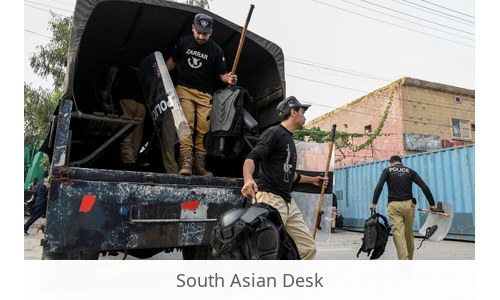
Khyber Pakhtunkhwa internet disruptions have been reported following the declaration of a state of emergency in the region on 2026-10-12. NetBlocks confirmed widespread internet connectivity issues across the province, coinciding with the suspension of the provincial government led by Imran Khan’s Pakistan Tehreek-e-Insaf (PTI) party. The unrest has triggered mass protests, with thousands of PTI supporters marching through Khyber Pakhtunkhwa to demand the release of Imran Khan. In response, the federal government imposed governor’s rule in the province, while military forces were deployed to Peshawar to manage the political unrest in Pakistan.
Khyber Pakhtunkhwa Internet Disruptions: Political Context
The Khyber Pakhtunkhwa internet disruptions reflect broader political instability in Pakistan, particularly concerning the actions of the PTI party and the government’s response to public dissent. The declaration of emergency rule in Khyber Pakhtunkhwa followed the suspension of the provincial government, a key demand of the PTI-led coalition. Critics argue that the imposition of governor’s rule undermines democratic processes in the region, exacerbating tensions between the federal government and local political factions. The military deployment in Khyber Pakhtunkhwa has further complicated the situation, raising concerns about the balance between security and civil liberties.
Impact on Civil Society
The Khyber Pakhtunkhwa internet disruptions have hindered communication and organization among protestors, limiting their ability to coordinate demonstrations and share information. With internet connectivity issues persisting, activists have struggled to mobilize support and document the unfolding events. The military’s presence in civilian areas has raised concerns about civil liberties and governance, with some warning of potential long-term implications for political mobilization in the region. As the situation evolves, the role of digital infrastructure in shaping public discourse remains a critical factor in assessing the impact of the unrest.
Broader Implications of the Pakistan Emergency Declaration
The Pakistan emergency declaration has not only affected Khyber Pakhtunkhwa but has also drawn attention to the broader political landscape of the country. The suspension of the provincial government and the imposition of governor’s rule have sparked debates about the rule of law and the separation of powers. Analysts suggest that the federal government’s actions may be seen as a preemptive measure to quell the Imran Khan protests, which have gained momentum across the nation. However, this has also led to accusations of authoritarian overreach, with human rights organizations expressing concern over the potential erosion of democratic norms.
Military Deployment in Khyber Pakhtunkhwa and Regional Stability
The military deployment in Khyber Pakhtunkhwa has been a focal point of the crisis, with troops stationed in key cities like Peshawar to maintain order. While the government has justified this move as necessary for security, critics argue that it could further alienate the local population and fuel resentment. The presence of military forces in civilian areas has also raised questions about the long-term implications for regional stability. Historically, the military has played a significant role in Pakistan’s political landscape, and its involvement in this crisis has reignited discussions about its influence over civilian governance.
Internet Connectivity Issues and Their Role in the Crisis
The internet connectivity issues in Khyber Pakhtunkhwa have had a profound impact on the ability of citizens to access information and engage in public discourse. With major platforms and social media networks experiencing outages, the flow of real-time updates has been disrupted, making it difficult for both locals and international observers to track the situation. This has also affected the ability of journalists and activists to report on the ground, raising concerns about the suppression of free speech. The reliance on digital infrastructure in modern political movements underscores the significance of maintaining internet access during times of crisis.
The Imran Khan Protests and Their National Significance
The Imran Khan protests have become a symbol of resistance against perceived political manipulation and have drawn support from various segments of society. As the former prime minister faces legal challenges, his supporters argue that the government is targeting him for political reasons. The protests have also highlighted the deepening divide between the PTI and the ruling coalition, with each side accusing the other of undermining national unity. The situation has further complicated the already fragile political environment in Pakistan, with the potential for further unrest if tensions are not addressed.
Follow SouthAsianDesk on X, Instagram and Facebook for insights on business and current affairs from across South Asia.
Sources
- Internet Disruptions Reported in Pakistan’s Khyber Pakhtunkhwa After Emergency Declaration – khaama.com
- Pakistan deploys military to Peshawar after emergency rule declared – ariananews.af
- President’s Trophy matches shifted out of Peshawar and Abbottabad – cricinfo.com
Image: p.imgci.com