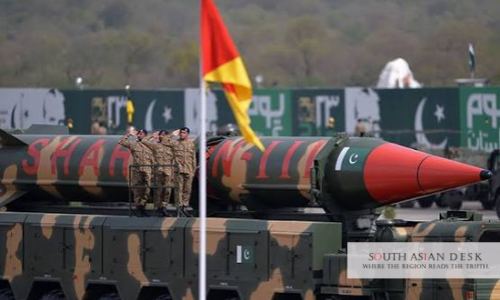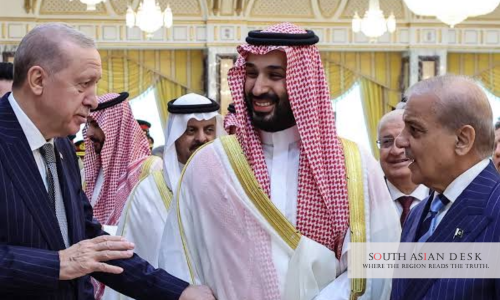
The Makkah Joint Defence Agreement was signed on Friday in the holy city of Makkah, bringing Pakistan, Saudi Arabia and Turkiye together under a single collective security framework. Under the terms of the deal, an armed attack against any one of the three states will be treated as an attack against all of them, marking one of the most significant defence arrangements in the region in recent years.
The agreement was signed by Prime Minister Shehbaz Sharif, Saudi Crown Prince and Prime Minister Mohammad bin Salman, and Turkish President Recep Tayyip Erdogan at the Al-Safa Palace. Their signatures were formalised in a joint statement released simultaneously by Pakistan’s Foreign Office and Saudi Arabia’s official press agency, SPA.
What the Makkah Joint Defence Agreement Covers
According to the joint statement, the Pakistan Saudi Arabia Turkiye defence pact reflects the three countries’ shared commitment to strengthening collective security and promoting peace, stability and prosperity in the region and beyond. The core clause of the agreement establishes that the pact is intended to strengthen collective deterrence against any act of aggression, stipulating that any armed attack against one of the three states will be regarded as an attack against them all.
The statement also noted that the deal provides for the enhancement of all aspects of defence cooperation among the three nations. Officials described the agreement as being guided by longstanding historical ties, bonds of brotherhood, Islamic solidarity and shared strategic interests built on decades of existing defence cooperation.
The signing took place during the Makkah Summit for Joint Defence, where the three countries reviewed their broader relations along with several other issues of mutual interest. Pakistan’s delegation at the ceremony included Chief of Defence Forces and Army Chief Field Marshal Asim Munir, Deputy Prime Minister and Foreign Minister Ishaq Dar, and Defence Minister Khawaja Asif. Defence and foreign ministers from Saudi Arabia and Turkiye were also present. After the signing, photographs released by Saudi media showed the leaders offering prayers at Al-Safa Palace overlooking the Holy Kaaba.
Shehbaz Sharif Calls It a ‘Shield of Peace’
Prime Minister Shehbaz Sharif described the agreement as a historic pact, noting that the three countries are united by faith, friendship and a shared commitment to peace and security. In a post on social media platform X, he said he was honoured to sign the agreement alongside the Saudi crown prince and the Turkish president, and expressed hope that it would act as a shield of peace for generations while bringing prosperity to the three nations and the wider Muslim world. He also credited Field Marshal Asim Munir for his efforts in bringing the agreement together.
Saudi Foreign Minister Faisal bin Farhan said the signing underscored the depth of the fraternal and strategic relations between the three countries. He added that the agreement marked an important milestone in defence cooperation and reflected a shared desire to coordinate efforts against challenges affecting regional security. According to him, the pact embodies a shared political will to safeguard security, support a stable regional environment and pave the way for further development.
No Threat to Any Country, Say Saudi and Turkish Officials
Saudi Arabia’s Deputy Minister for Public Diplomacy, Rayed Krimly, said the agreement does not represent an effort to build a military axis or a sectarian bloc, and clarified that it is not connected to any nuclear ambitions or arms race. He said the pact is instead focused on building sustainable capabilities. He further noted that the deal does not threaten the security of any country in the region, does not represent an escalation of tensions between any two states, and does not replace any existing bilateral or multilateral agreements between the signatories.
Turkish President Erdogan echoed similar sentiments, stating that the pact targets no country and remains open to the participation of other friendly nations that seek peace, prosperity and stability in the region. Writing on the Turkish social media platform NSosyal, Erdogan said the agreement is based on the principle of collective deterrence and would strengthen security and defence cooperation, joint defence industry projects and counterterrorism efforts. He added that the agreement reaffirms the right to self-defence as outlined under Article 51 of the UN Charter, and that Turkiye would continue to favour resolving conflicts through dialogue and diplomacy, in line with international law and its vision of regional ownership.
Why the Tripartite Defence Agreement Matters
The tripartite defence agreement signed in Makkah signals a deepening of military and strategic cooperation between three influential Muslim-majority nations at a time of heightened regional uncertainty. By formally committing to treat an attack on one member as an attack on all, Pakistan, Saudi Arabia and Turkiye have created a framework that goes beyond routine diplomatic cooperation and into shared defence commitments.
The Shehbaz Sharif Makkah summit also served as a platform for the three governments to discuss broader areas of mutual interest beyond defence, suggesting that the relationship built through this agreement could extend into other spheres of cooperation in the coming years. With officials from all three countries stressing that the pact is open to other nations and not aimed at any particular state, the coming months will likely reveal whether additional countries choose to join this emerging alliance.
Published in SouthAsianDesk, August 8th, 2026
Follow SouthAsianDesk on X, Instagram and Facebook for insights on business and current affairs from across South Asia.