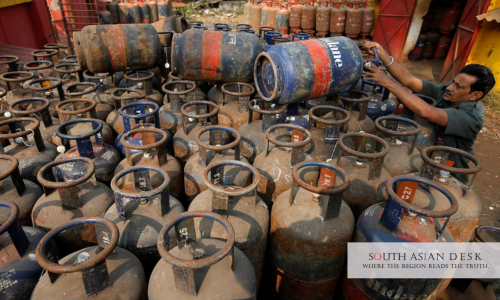
India has introduced maximum daily LPG production targets for its state-run and private refineries, a move aimed at safeguarding domestic supplies of cooking gas after the Middle East war disrupted imports from the Gulf. According to a government order dated August 13, the country’s refiners and upstream oil and gas companies have been assigned a combined output ceiling of 63,810 metric tons of liquefied petroleum gas per day, a figure more than double India’s domestic LPG production for the financial year that ended on March 31, 2026.
The order, issued by the Petroleum and Natural Gas Ministry, sets facility-level limits for 21 refineries and upstream producers, covering both public and private sector operators. It gives the government a standing mechanism to direct companies to raise their cooking gas output whenever supply from abroad comes under strain, rather than relying on temporary emergency directives issued on an ad hoc basis. Officials have said the targets will be reviewed every January and July, with revisions to account for new production capacity, additional refinery output and technological upgrades.
Why India Needed New LPG Production Targets
Before the outbreak of the US-Israeli war against Iran, India sourced roughly 90 percent of its cooking gas imports from the Middle East. The conflict disrupted shipping through the Strait of Hormuz, a critical corridor for regional energy exports, and exposed how heavily India’s household fuel supply depended on a single, volatile source. The disruption forced authorities to intervene as early as March, when refineries were instructed to divert petrochemical feedstocks toward LPG production and industrial and commercial sales were temporarily suspended to protect household stocks.
That earlier intervention proved effective in the short term, with domestic LPG production rising by 28 percent within five days of the initial order, according to the Petroleum and Natural Gas Ministry. The new framework issued in August effectively converts those emergency measures into a permanent policy tool, allowing the government to mandate higher cooking gas output at short notice rather than negotiating fresh terms each time supplies tighten.
How the Targets Are Divided Among Refiners
Under the order, 18 refineries operated by public sector companies have been assigned a combined production target of 31,470 tonnes of LPG per day, while the remaining volume is spread across private refiners and upstream producers. Reliance Industries Ltd has received the largest individual allocation, with its domestic-market-focused refinery in Jamnagar, Gujarat, tasked to produce 18,000 tonnes daily. The company’s separate export-oriented refinery at the same complex was not assigned a target. Nayara Energy, which runs the Vadinar refinery in Gujarat and counts Russia’s Rosneft among its backers, has been set a target of 4,480 tonnes per day.
Companies covered by the order are also required to maintain adequate infrastructure for storing and transporting LPG, whether through their own networks or via railways and road tankers, to ensure the specified volumes can actually reach consumers rather than remaining stranded at production sites.
Continued Exposure to Middle East Supply Risks
Even with the new domestic production framework in place, India remains exposed to developments in the Gulf given the scale of its historical reliance on Middle Eastern cooking gas. The government has responded in part by encouraging households to shift toward piped natural gas, which was comparatively less affected by the Strait of Hormuz disruption, and by adjusting the frequency with which households could book LPG cylinder refills during the height of the shortage.
By formalising LPG production targets for individual refiners and upstream producers, New Delhi is signalling that it intends to treat domestic supply security as an ongoing policy priority rather than a temporary response to the current conflict. Whether the targets prove sufficient will likely depend on how long disruptions to Gulf shipping routes persist and how quickly India can further diversify its cooking gas supply chain, including through increased imports from the United States and other non-Middle Eastern sources.
Published in SouthAsianDesk, August 17th, 2026
Follow SouthAsianDesk on X, Instagram and Facebook for insights on business and current affairs from across South Asia.