The US-Iran peace deal deadline set under a Pakistan-brokered diplomatic framework expired on Monday, with negotiations stalled and no publicly confirmed extension of the arrangement between Washington and Tehran. The 60-day window had been established to give the two sides time to negotiate a final agreement ending their war, but talks have failed to produce a settlement within that period.
Origins of the Islamabad Memorandum of Understanding
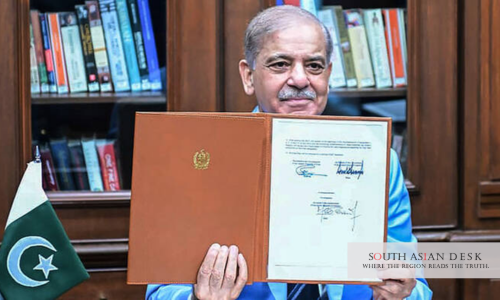
The deadline traces back to the Islamabad Memorandum of Understanding, signed on June 17 following mediation efforts by Pakistan and Qatar. The agreement temporarily raised hopes of ending a conflict that began in February and had already disrupted energy markets and shipping across the Gulf by the time the memorandum was signed.
The 14 point document declared an immediate and permanent termination of military operations and set out commitments covering the Strait of Hormuz, the United States naval blockade, sanctions, Iran’s nuclear programme and frozen Iranian assets, with the intention that these details would be incorporated into a comprehensive final settlement. The memorandum itself stated that Iran and the United States committed to negotiating and achieving a final deal within a maximum of 60 days, extendable with mutual consent.
Following the signing, high level talks involving the United States, Iran, Pakistan and Qatar began in Switzerland, with the parties establishing working groups on nuclear issues, sanctions, and monitoring and dispute resolution, alongside a communication channel designed to prevent incidents in the Strait of Hormuz.
US-Iran Peace Deal Deadline – Talks Unravel as Deadline Approaches
The agreement quickly came under strain as Washington and Tehran accused each other of violations, and military hostilities resumed in July. This left the Strait of Hormuz once again at the centre of an increasingly dangerous confrontation between the two countries.
The status of the 60-day deadline itself became a point of dispute in the days leading up to its expiry. Pakistani government sources told Turkiye’s Anadolu news agency last week that Washington and Tehran had agreed to extend the negotiating period beyond August 17, though the length of any extension had not been determined. Iran subsequently rejected that account. Iranian Foreign Minister Seyed Abbas Araghchi was quoted by the semi official ISNA news agency as saying that the United States had violated the memorandum and that fighting had resumed, meaning there was no ceasefire in place that required extending.
As of Monday morning, Pakistan, the United States and Iran had not jointly confirmed either a final agreement or an extension of the negotiating period. Pakistan and Qatar are nonetheless continuing efforts to restore diplomacy between the two sides. Araghchi said over the weekend that the two mediating countries were facilitating an exchange of messages between Washington and Tehran, while stressing that these contacts did not amount to formal negotiations and that Iran had not yet decided to resume direct talks with the United States.
Pakistan has repeatedly called for a diplomatic resolution to the conflict, saying last week that it was making extensive efforts through both direct and indirect channels to bring the two sides back to the negotiating table. Pakistani Interior Minister Mohsin Naqvi also held talks with Araghchi in Iran last week as part of Islamabad’s continued mediation efforts.
The Strait of Hormuz Standoff
The Strait of Hormuz remains at the centre of the conflict and represents one of the most significant obstacles to a lasting settlement. Before the war began, roughly a fifth of global oil supplies passed through the narrow waterway connecting the Gulf with the Arabian Sea, making it one of the most strategically important shipping routes in the world.
Traffic through the strait remains severely disrupted, contributing to higher global energy prices and raising concerns about the reliability of supplies from Gulf producers. Shipping has slowed further in recent days following attacks on tankers and renewed threats from both Washington and Tehran. According to Reuters, only five vessels passed through the strait on Saturday and none on Sunday, compared with 31 vessels the previous weekend. Brent crude rose as high as 89.40 dollars a barrel on Monday amid growing concern over the stalled peace effort and continued disruption to Gulf supplies.
Iran has restricted shipping through Hormuz throughout the conflict, while the United States has maintained a naval blockade on Iranian ports. Tehran has demanded sanctions relief, the release of frozen Iranian assets, an end to US military attacks and threats, and compensation for damage caused during the war before normal shipping activity can resume. Washington, for its part, has accused Iran of failing to honour its commitments to reopen the waterway and has threatened additional economic pressure in response.
Iran and Oman have separately held discussions regarding arrangements for shipping routes through Hormuz, though Tehran has said that progress on these technical discussions does not amount to an agreement to fully reopen the strait.
Continued Diplomatic Uncertainty
Tensions across the Gulf remain elevated as the deadline passes without resolution. An Iranian Revolutionary Guard official said, as the 60-day period reached its conclusion, that Tehran could shift toward a more offensive military posture, a statement that signals continued risk of escalation even as Pakistan, Qatar, Oman and other regional actors persist in efforts to revive the diplomatic process.
With no confirmed agreement or extension in place, attention now turns to whether Pakistan and Qatar’s ongoing mediation can succeed in bringing Washington and Tehran back into direct negotiations, or whether the expiry of the deadline marks a further deterioration in an already fragile and closely watched conflict.
Published in SouthAsianDesk, August 18th, 2026
Follow SouthAsianDesk on X, Instagram and Facebook for insights on business and current affairs from across South Asia.