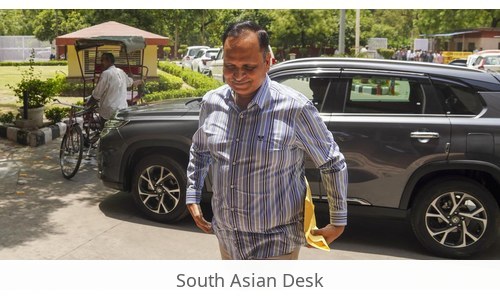
Delhi court corruption case: On August 19, 2026, Delhi court sent Satyendar Jain and four others to judicial custody in connection with a corruption case involving a sewage plant tender. The ruling follows Jain’s arrest by the Enforcement Directorate on May 30, 2022, in a money laundering investigation linked to the tender process.
Delhi court corruption case: Political Implications for AAP
Satyendar Jain, a senior leader of the Aam Aadmi Party (AAP), was relieved of his ministerial portfolio following his arrest. His judicial custody underscores growing scrutiny of AAP’s governance practices, particularly in public procurement. The AAP, which rose to prominence on an anti-corruption platform, now faces internal and external challenges as this case intersects with broader questions about transparency in public contracts. Party leaders have not publicly commented on the ruling, though internal factions reportedly remain divided on how to address the fallout.
Analysts suggest this development could test the party’s ability to reconcile its ideological foundations with the realities of governance in a politically charged environment. The case also raises questions about the AAP’s oversight mechanisms for high-profile projects, given that Jain previously held key roles in urban development and infrastructure. The political implications of corruption in this case are significant, as it challenges the AAP’s narrative of clean governance.
Context of Corruption in South Asia
Corruption allegations against public officials are not unique to Delhi. Similar cases have emerged across South Asia, including Bangladesh’s 2023 infrastructure tender scandal and Pakistan’s ongoing investigations into energy sector graft. These cases highlight systemic challenges in enforcing accountability for public contracts, though regional responses vary in transparency and legal rigor. In Bangladesh, the 2023 scandal involved allegations of kickbacks in road construction projects, leading to the prosecution of several senior officials.
Meanwhile, Pakistan’s energy sector investigations have focused on irregularities in power plant contracts, with some cases resulting in convictions. The Delhi case, however, stands out for its connection to a sewage plant—a critical infrastructure project that directly impacts public health and sanitation. Corruption allegations South Asia reveal a pattern of challenges in holding officials accountable for public projects, with the Delhi sewage plant tender case serving as a focal point for scrutiny.
Legal Ramifications
The Enforcement Directorate’s investigation centers on alleged irregularities in the 2021 sewage plant tender, which reportedly involved inflated costs and uncompetitive bidding. Jain claims he was not in charge of the ministry at the time, citing his incarceration following his 2022 arrest. Legal experts suggest the case could set a precedent for prosecuting high-profile corruption in Delhi’s political circles.
The judicial custody decision reflects the court’s willingness to act on evidence presented by the Enforcement Directorate, which has been increasingly active in targeting financial misconduct linked to public projects. The case also highlights the role of the Prevention of Money Laundering Act (PMLA) in India, which allows for the seizure of assets and prosecution of individuals involved in illicit financial transactions. If convicted, the accused could face significant penalties, including imprisonment and asset forfeiture. The outcome of this case may influence future investigations into similar tenders, particularly in sectors where public-private partnerships are common.
Broader Governance Challenges
The sewage plant tender case is part of a larger narrative about governance in Delhi, where infrastructure projects have frequently been scrutinized for inefficiencies and mismanagement. The AAP’s tenure has seen both praise for its initial reforms and criticism for its handling of complex projects. This case may prompt a reevaluation of procurement processes, including the need for stricter oversight and transparency measures.
Additionally, the involvement of multiple individuals in the case suggests a potential network of accountability, though the extent of their roles remains under investigation. The judicial custody of Jain and his associates also signals the judiciary’s role in addressing corruption, a function that has been increasingly emphasized in recent years through initiatives like the Lokpal and Lokayuktas Act, which aims to combat corruption at the highest levels of government.
Follow SouthAsianDesk on X, Instagram and Facebook for insights on business and current affairs from across South Asia.
Sources
- Delhi court sends Satyendar Jain, 4 others to judicial custody in corruption case – thehindu.com
- “Was In Jail When Tender Floated”: Satyendar Jain To Court After Arrest In Corruption Case – ndtv.com
- AAP leader Satyendar Jain sent to judicial custody in sewage plant tender case – indianexpress.com
Image: th-i.thgim.com