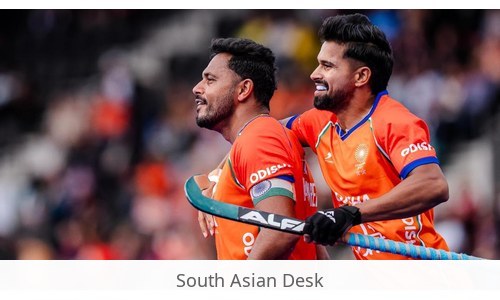
Hockey World Cup 2026: On August 19, 2026, India secured a crucial 5-3 victory over Pakistan in the Hockey World Cup match, advancing to the next round of the tournament. The win, achieved despite a challenging second quarter, underscores the competitive spirit between the two nations in international sports. This result not only marks a significant milestone for Indian hockey but also highlights the enduring rivalry that has defined South Asian sporting encounters for decades.
Hockey World Cup 2026: Key Players’ Performance
India’s Harmanpreet scored two penalty-corner goals, while Abhishek contributed with two goals, playing pivotal roles in securing the victory. Their performances highlighted India’s tactical depth and resilience against a formidable opponent. Harmanpreet, a veteran player known for his precision in penalty corners, capitalized on defensive lapses to open the scoring, while Abhishek’s clinical finishing in the final quarter sealed the win. The duo’s combined efforts ensured India maintained a lead that Pakistan struggled to overcome despite a spirited second-half push.
The match also showcased the evolving dynamics within the India hockey team. Younger players stepping into key roles complemented the experience of seasoned stars, reflecting a balanced approach to team composition. This blend of youth and experience has been a hallmark of India’s recent campaigns, allowing them to adapt to high-pressure scenarios while maintaining consistency in critical moments.
Match Context and Significance
This match continues a storied rivalry in hockey between India and Pakistan, a sport with deep cultural resonance in both nations. Hockey has long been a unifying force in South Asia, with both countries producing world-class talent and competing fiercely on the international stage. The intensity of this encounter was palpable, with fans from both nations following the match closely, underscoring the sport’s role as a diplomatic and competitive bridge between South Asian nations.
The victory also has broader implications for the tournament structure. India’s win in Pool D, where they finished second with six points, ensures their progression to the knockout stages of the Hockey World Cup 2026. England, who topped the pool with nine points from three consecutive victories, will face India in the next round, setting up a high-stakes clash that could determine the tournament’s trajectory. This progression reflects India’s strong performance in the group stage, where they demonstrated both offensive flair and defensive solidity.
The match’s significance extends beyond the tournament itself. In a region where sports often serve as a neutral ground for cross-border engagement, this victory reinforces the potential for hockey to foster mutual respect and competition. The Indian and Pakistani teams have historically shared a complex relationship, marked by both rivalry and mutual admiration for the sport’s traditions. This match, therefore, is not just a sporting event but a symbolic moment in South Asian sports diplomacy.
Regional Implications and Future Outlook
India’s advancement to the next round of the Hockey World Cup 2026 highlights the growing strength of South Asian teams on the global stage. The tournament, held in a year marked by regional sporting milestones, has seen increased participation and investment from nations across the continent. For India, this win is a testament to the progress made in developing hockey infrastructure, coaching, and youth programs over the past decade.
Looking ahead, the upcoming knockout stages will test India’s ability to maintain momentum. The team’s performance in the group stage, characterized by a blend of tactical discipline and individual brilliance, will need to be replicated against higher-ranked opponents. The challenge of facing England in the next round presents an opportunity for India to assert itself as a dominant force in international hockey.
The broader context of the result also includes the participation of other South Asian nations, such as Bangladesh and Sri Lanka, who have been making strides in the sport. This collective progress underscores a regional shift toward greater investment in hockey, with governments and private entities collaborating to enhance training facilities and grassroots development.
Published in SouthAsianDesk, 2026-08-19.
Follow SouthAsianDesk on X, Instagram and Facebook for insights on business and current affairs from across South Asia.
Sources
- Hockey World Cup: India passes Pakistan test, moves into the next round – thehindu.com
- India rout Pakistan at Hockey World Cup 2026 to qualify for second round – aljazeera.com
- India defeat Pakistan 5-3 in Hockey World Cup match, qualify for next round – indianexpress.com
Image: th-i.thgim.com