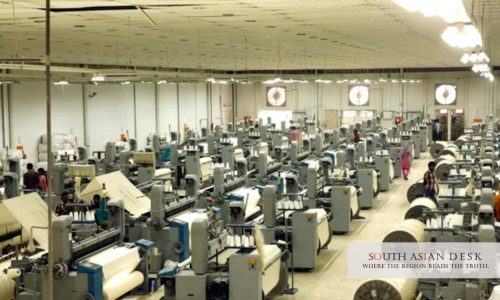
Factory closures in Bangladesh have intensified over the past two years, driven by a severe convergence of natural gas and electricity shortages, declining global export orders, mounting debt service pressures and ongoing labor unrest. The combined effect has triggered widespread shutdowns and worker retrenchments across the country’s core industrial belts, raising fresh concerns about the stability of one of South Asia’s largest manufacturing economies.
Data compiled through August 2026, drawn from Industrial Police records, trade body figures from the Bangladesh Garment Manufacturers and Exporters Association (BGMEA) and the Bangladesh Knitwear Manufacturers and Exporters Association (BKMEA), along with field reports, points to a systemic contraction unfolding on two distinct tracks. The first involves permanent factory closures that eliminate tens of thousands of jobs outright. The second involves indefinite furloughs and operational slowdowns that leave hundreds of thousands of workers in prolonged economic uncertainty.
Scale of Factory Closures in Bangladesh Across Industrial Zones
A total of 457 industrial units have permanently closed across seven primary industrial zones. This figure includes 108 export-oriented plants affiliated with BGMEA, 35 with BKMEA, 8 with the Bangladesh Textile Mills Association (BTMA) and 19 operating under the Bangladesh Export Processing Zones Authority (Bepza). A further 287 non-apparel manufacturing units have also shut their doors.
Between January and August 2026 alone, 95 factories permanently closed across three major industrial belts, namely Gazipur, Savar-Ashulia and Narayanganj-Narsingdi, resulting in 61,881 direct job losses. Gazipur bore the brunt of this contraction, accounting for 54 closures and 45,732 lost jobs, or nearly 74 percent of the total job losses recorded across the three belts. Savar-Ashulia-Dhamrai followed with 18 factory closures and 10,127 job losses, while Narayanganj-Narsingdi recorded 23 closures and roughly 6,022 job losses.
Separate analysis of BKMEA data for the first half of 2026 shows that 27 member factories permanently ceased operations, contributing to 19,188 workers being laid off or retrenched across 80 affiliated plants.
Energy Crisis in Bangladesh Deepens Industrial Strain
The energy crisis in Bangladesh has emerged as one of the most acute drivers of these closures. Acute gas pressure drops, at times falling to zero or minimal PSI, forced short-term closures or extended leaves across 700 to 800 factories in Gazipur in early August alone. A further 99 gas-dependent plants in Bhaluka, Mymensingh, have been operating at less than half of their normal capacity.
Industry leaders stress the importance of distinguishing between different categories of disruption when assessing the scale of the crisis. These include total operational termination resulting in job losses and liquidation liabilities, plants closed under labor law provisions or following unrest, emergency leave triggered by energy shortages affecting essential equipment such as boilers, and active factories cutting shifts or halting new hiring to manage reduced order volumes.
Mohammad Hatem, president of BKMEA, noted that while a permanent shutdown differs from a temporary leave caused by utility deficits, prolonged energy shortages tend to produce the same long-term outcome. He explained that fixed costs such as salaries, bank interest and utility demand charges continue even when machinery sits idle, and that reliance on emergency fuels like diesel or LPG pushes production costs beyond what buyers are willing to pay. According to Hatem, financially vulnerable units will inevitably shift from temporary leave to permanent closure unless gas supply is restored on a predictable basis.
RMG Sector Job Losses Threaten Export Competitiveness
The RMG sector job losses tied to this downturn extend beyond immediate unemployment figures, with industry representatives warning of longer-term damage to Bangladesh’s export competitiveness. Mohiuddin Rubel, founder and chief executive of Bangladesh Apparel Voice and a former BGMEA director, cautioned against viewing the energy crisis as merely a short-term fuel bottleneck. He argued that factories operating under capacity struggle to deliver shipments on schedule, which erodes buyer trust and encourages international buyers to redirect orders to competing manufacturing nations.
This dynamic, in turn, starves affected plants of cash flow, creating a cycle that can push otherwise viable businesses toward permanent closure. Rubel noted that when a factory locks its doors for good, the consequences ripple outward, affecting worker families, local commercial ecosystems and national export revenue alike.
Declining Export Orders Compound Financial Pressures
Declining export orders have placed additional strain on manufacturers already grappling with energy shortages and rising operational costs. The table below, compiled from Industrial Police and trade body data, illustrates how these pressures have played out across the three most affected belts between January and August 2026.
| Industrial Region | Permanently Closed Units | Primary Sectors Impacted | Estimated Direct Job Loss | Primary Drivers of Closure |
|---|---|---|---|---|
| Gazipur | 54 Factories | RMG, Spinning, Washing/Dyeing | 45,732 Workers | Unresolved labor disputes, gas supply failures, large park closures |
| Savar-Ashulia-Dhamrai | 18 Factories | Knitwear, Sweaters, Outerwear | 10,127 Workers | Working capital shortages, gas pressure under 2.5 PSI, unfulfilled order deadlines |
| Narayanganj-Narsingdi | 23 Factories | Home Textile, Printing, Dyeing | Approximately 6,000 Workers | Acute cash flow strain, bank credit contraction, high dependence on utility-intensive processing |
| Total (3 Belts) | 95 Factories | Export and Primary Textile | 61,881 Workers | Systemic overhead versus revenue collapse |
Policy Measures Proposed to Stem the Crisis
Industry experts and trade representatives have called for a series of immediate policy interventions to address the crisis. These include the provision of binding daily timetables for gas pressure availability, allowing factory managers to plan shift operations without risking damage to raw materials during mid-process outages. They have also urged temporary bank loan rescheduling and working capital support for small and medium-sized enterprise suppliers facing order delays caused by utility disruptions.
Additional recommendations include fast-tracking legal and financial mediation between factory owners, labor representatives and the relevant ministry to settle unpaid wages and service benefits before disputes escalate into indefinite plant shutdowns. Industry representatives have also called for gas supply to be reallocated toward primary textile, dyeing and spinning clusters that feed directly into the core garment export value chain.
As Bangladesh’s manufacturing sector continues to navigate this convergence of pressures, the coming months are likely to determine whether targeted policy responses can stabilize an industry that remains central to the country’s export economy and broader employment landscape.
Published in SouthAsianDesk, August 23rd, 2026
Follow SouthAsianDesk on X, Instagram and Facebook for insights on business and current affairs from across South Asia.