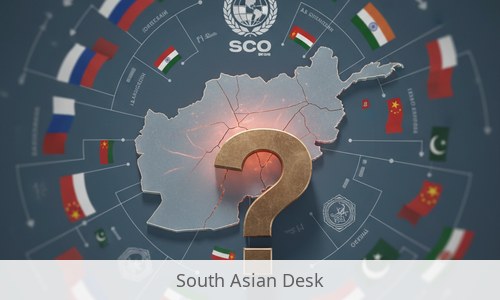
Afghanistan’s future in the Shanghai Cooperation Organization (SCO) remains uncertain amid significant geopolitical shifts, impacting Afghanistan SCO future and regional stability. The SCO, a key platform for security and economic cooperation in South Asia, faces questions about Afghanistan’s evolving role in the organization. With its strategic location at the crossroads of Central and South Asia, Afghanistan’s participation—or absence—has long been a focal point for regional stability Afghanistan and South Asia geopolitics. The SCO’s ability to address shared challenges, from counterterrorism to cross-border trade, hinges on the inclusion of a country that has historically been both a stabilizing force and a source of volatility in the region.
Impacts on Regional Security and the Afghanistan SCO future
Afghanistan’s uncertain status in the SCO could disrupt security cooperation among member states. Neighboring countries, including Pakistan and Iran, have expressed concerns about instability along borders, particularly in light of shifting alliances and internal dynamics within Afghanistan. The SCO’s effectiveness in addressing cross-border threats, such as terrorism and narcotics trafficking, may depend on Afghanistan’s active participation. Historically, the SCO has relied on Afghanistan’s cooperation to combat groups like the Taliban and other militant factions that have operated across borders. However, the current political landscape in Afghanistan, marked by internal power struggles and external pressures, has raised doubts about its capacity to engage meaningfully with the SCO.
The SCO’s security mechanisms, including intelligence sharing and joint military exercises, are designed to address transnational threats. Yet, without Afghanistan’s full integration, these initiatives risk becoming fragmented. For instance, Pakistan has long advocated for a more inclusive approach to regional security, emphasizing the need for dialogue with all Afghan stakeholders. Similarly, Iran has sought to leverage its influence in Afghanistan to counterbalance Western and Gulf state interests in the region. The absence of a unified Afghan government capable of engaging with the SCO could exacerbate these tensions, leading to a more fragmented regional security architecture.
Broader Implications of the SCO’s Evolving Role
The SCO’s objectives include enhancing regional security and economic development, with Afghanistan’s strategic location making it a pivotal player. However, geopolitical tensions and internal challenges in Afghanistan complicate its engagement with the organization. The SCO’s ability to adapt to these changes will determine its relevance in South Asia geopolitics. Afghanistan’s inclusion in the SCO is not merely symbolic; it is critical for the organization’s vision of a cohesive, cooperative South Asia. The country’s geographic position, straddling Central and South Asia, makes it a natural hub for trade routes and energy corridors, which are central to the SCO’s economic development agenda.
The SCO has increasingly focused on economic integration, with initiatives such as the Eurasian Economic Union and the Belt and Road Initiative (BRI) aiming to connect South Asian markets with Central Asia and beyond. Afghanistan’s participation could facilitate these efforts, providing a bridge for infrastructure projects and trade corridors. However, the country’s political instability and lack of a stable governance structure have hindered its ability to engage in such initiatives. The SCO’s evolving role may thus depend on whether Afghanistan can stabilize its internal dynamics and re-engage with regional partners.
The geopolitical shifts affecting Afghanistan SCO future are also influenced by external actors. The United States, China, and Russia have all sought to shape Afghanistan’s future, with varying degrees of influence. China, in particular, has emphasized the importance of regional stability for its economic interests in Central Asia, while Russia has historically viewed Afghanistan as a strategic buffer against Western influence. These external dynamics further complicate Afghanistan’s position within the SCO, as the country navigates competing interests and priorities.
Follow SouthAsianDesk on X, Instagram and Facebook for insights on business and current affairs from across South Asia.
Sources
- Saar: Afghanistan’s uncertain future in SCO – ariananews.af
- Trump administration announces ‘economic D-day’ sanctions on Iran – aljazeera.com