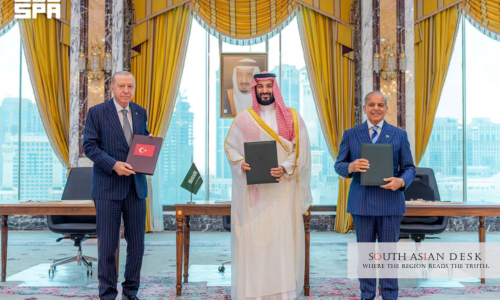
Bangladesh is weighing whether to join the Mecca pact, a mutual defence agreement signed earlier this month between Saudi Arabia, Turkey and Pakistan, in a step that could significantly complicate its foreign relations, particularly with neighbouring India. The prospect comes at a time when ties between Dhaka and New Delhi are already under strain, raising questions about how far Bangladesh is prepared to go in aligning itself with a Middle Eastern security bloc.
Relations between the two South Asian neighbours have grown tense in recent months, with Bangladesh accusing Indian border forces of forcibly pushing people across the frontier, even as Dhaka continues to press New Delhi for the extradition of former Prime Minister Sheikh Hasina, who has lived in exile in India since her ouster during a protest movement in August 2024.
What Is the Mecca Pact and Who Has Signed It?
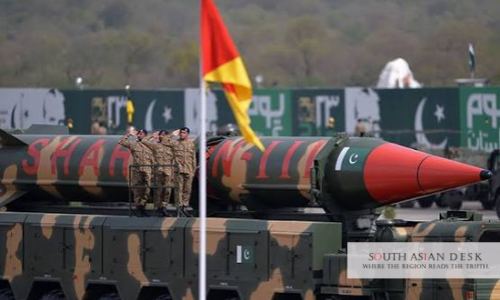
The Mecca pact was signed this month by Saudi Arabia, Turkey and Pakistan in the Saudi holy city of Mecca, and is modelled closely on NATO’s collective-defence principle. Under its terms, the three countries pledged that an armed attack on any one member would be treated as an attack on all, a commitment forged against the backdrop of heightened regional tension that has already brought Iranian missile fire across parts of the Middle East.
Turkey, which fields NATO’s second-largest army, has said the alliance with nuclear-armed Pakistan and top oil exporter Saudi Arabia remains open to expansion, a stance that appears to have paved the way for Bangladesh’s invitation.
Bangladesh’s Invitation and the Government’s Response
According to Bangladesh’s junior Foreign Minister, Humayun Kabir, the country has been approached to consider joining the arrangement. “If there is a security arrangement among Islamic nations in the Middle East, it is not unusual for us to consider participating. It is being viewed positively,” Kabir told reporters on Monday, adding that Bangladesh’s leadership, particularly Prime Minister Tarique Rahman, had been invited to take part.
A source within Bangladesh’s foreign ministry told Reuters that Saudi Arabia had formally extended the invitation to Dhaka, though the source, who spoke on condition of anonymity, did not specify when the offer was made. The embassies of Saudi Arabia, Turkey and Pakistan in Bangladesh did not immediately respond to requests for comment on the matter.
Risks for Bangladesh Foreign Policy and the Economy
Analysts say that formally joining a military alliance would represent a significant departure from Bangladesh’s long-standing foreign policy approach, which has traditionally sought to avoid rival geopolitical camps in order to protect investment flows, sustain export markets and maintain working relationships with competing global powers. That balancing act has underpinned an economy heavily dependent on exports of readymade garments, most of which are shipped to Britain, the European Union and the United States, alongside remittances from millions of Bangladeshi workers abroad, many of them based in the Middle East.
Geopolitical analyst Kollol Kibria warned that formal alliance membership could complicate Bangladesh’s relationships not only with India but also with China, Iran, Japan, Kuwait, Oman, Qatar, Russia, the United Arab Emirates and the United States. “These relationships would not automatically break, but once Bangladesh joins a military bloc, the question of which side Bangladesh is on becomes much harder to avoid,” Kibria said.
Complications for Bangladesh-India Relations
The timing of the invitation is particularly delicate given the current state of Bangladesh-India relations under Rahman’s six-month-old government, despite efforts on both sides to preserve cordial ties. Rahman has yet to decide whether he will visit India, his spokesperson said this month, as Dhaka continues to await a response from New Delhi on its extradition request for Hasina. Bangladesh has previously called for a “propitious environment” before any such visit could take place, after Hasina addressed journalists in New Delhi earlier this month in remarks that Dhaka publicly criticised.
For its part, India’s foreign ministry has said only that it is closely following developments related to the Mecca pact in West Asia, offering no direct comment on Bangladesh’s potential membership. Analysts believe New Delhi is unlikely to welcome the prospect of Bangladesh joining a security alliance that includes Pakistan, a country India regards as its principal regional rival, though they note that Dhaka will ultimately have to weigh the broader economic and strategic trade-offs involved in such a decision.
What Comes Next
Asif Shahan, a professor of development studies at Dhaka University, cautioned that even the perception of aligning with the Mecca pact could introduce risk for Bangladesh’s export-driven economy, which depends on stable commercial and diplomatic relationships across a wide range of partners. “If Bangladesh joins this alliance, several countries, including India, will not be pleased,” Shahan said, though he added that this consideration alone should not determine Dhaka’s ultimate decision.
With no formal commitment yet made, Bangladesh appears to be treating the invitation as a matter requiring careful deliberation rather than immediate action. How the government eventually decides is likely to serve as an important signal of the direction Bangladesh intends to take in balancing its religious, economic and strategic ties across South Asia and the wider Middle East in the years ahead.
Published in SouthAsianDesk, August 26th, 2026
Follow SouthAsianDesk on X, Instagram and Facebook for insights on business and current affairs from across South Asia.