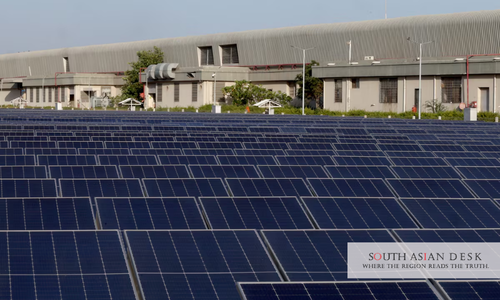
India has proposed mandatory battery storage for renewable projects commissioned after July 1, 2027, under draft regulations released by the Central Electricity Authority (CEA), a statutory body operating under the Ministry of Power. The proposal is designed to ensure that solar and wind generated electricity can be stored and dispatched when needed, rather than lost to the grid during periods of surplus output.
Under the draft rules, ground-mounted solar and onshore wind projects commissioned after the July 2027 deadline would be required to install co-located energy storage systems equivalent to at least 10 percent of the plant’s installed capacity, with a minimum storage duration of two hours. For a 100 megawatt solar or wind project, this would translate into a minimum of 10 megawatts of storage capacity capable of holding electricity for two hours, equivalent to 20 megawatt-hours. The requirement is set to become more stringent for projects commissioned between July 2029 and June 2031, with the minimum storage duration rising to four hours while the 10 percent capacity threshold remains unchanged.
Addressing Solar and Wind Curtailment in India
The push toward solar and wind curtailment reduction lies at the heart of the CEA’s proposal. India has expanded its renewable energy capacity rapidly in recent years, but grid operators have increasingly been forced to curb output when generation exceeds what the transmission network can absorb or dispatch. According to figures cited in the draft proposal, India curbed nearly 14 percent of its solar power output between April and June this year, largely due to surplus clean energy generated during daytime hours combined with limited transmission infrastructure to carry that power to where it is needed.
Clean energy think tank Ember has estimated that grid and transmission constraints accounted for nearly two thirds of all renewable energy curtailment in the country during the first quarter of the year, amounting to roughly 300 gigawatt-hours of lost output. In a separate assessment published in June, Ember said India needs approximately 10 gigawatt-hours of battery storage capacity immediately to prevent curtailment in situations where the existing coal fleet cannot ramp down below its technical minimum generation threshold. Battery storage systems address this problem by absorbing surplus electricity generated during peak solar hours and releasing it later, typically during the evening when demand rises but solar output falls away.
Central Electricity Authority Regulations and Grid Stability
The Central Electricity Authority regulations form part of a broader draft titled the Central Electricity Authority (Technical Standards for Construction of Electric Plants and Electric Lines) 2nd Amendment Regulations, 2026. Beyond the storage mandate, the draft also proposes that renewable energy power plants commissioned after July 1, 2027 be required to equip at least 15 percent of their inverters with grid-forming control capabilities. The regulations further specify that all power conversion systems within battery energy storage systems must incorporate grid-forming control to meet the relevant technical standards.
Grid-forming inverter technology differs from conventional grid-following inverters in that it can independently establish and maintain voltage and frequency references, rather than simply tracking signals already present on the grid. As renewable energy’s share of India’s overall power mix continues to rise, industry experts view grid-forming capabilities as increasingly important for maintaining stability across a system that is becoming less reliant on the inertia traditionally provided by large coal and gas turbines.
Scale of India’s Renewable Energy Ambitions
The proposed storage mandate arrives as India works toward an ambitious target of doubling its renewable energy capacity to 500 gigawatts by 2030. The country currently ranks as the world’s third-biggest solar power generator, a position that has brought both opportunity and operational strain, as evidenced by the scale of curtailment recorded in recent months. More than 8,133 gigawatt-hours of solar energy, equivalent to roughly one and a half days of the entire country’s power consumption, has reportedly gone unused due to grid constraints, underscoring the urgency behind the CEA’s proposed intervention.
India’s battery storage sector has faced its own challenges in recent years. The country has tendered out 83 gigawatt-hours of battery storage capacity since 2021, according to the India Energy Storage Alliance, though only around 36 gigawatt-hours of that has been awarded so far, with 18 gigawatt-hours currently under construction. Industry analysts have separately raised concerns about record-low bids submitted for battery storage tenders, warning that unsustainably low pricing could threaten the viability and safety of some projects, a factor that regulators will likely need to weigh as the mandatory storage requirement moves toward implementation.
What the Draft Regulation Means for Developers
For developers, the proposed regulation signals a fundamental shift in how new solar and wind projects will need to be planned and financed from 2027 onward. Rather than treating storage as an optional add-on, the draft rules would embed it as a core technical requirement alongside generation capacity, with costs and engineering considerations to be factored into project design from the outset. The phased approach, moving from two hours of minimum storage duration to four hours by 2029, gives developers a defined timeline to adjust procurement and construction plans accordingly.
The Central Electricity Authority’s draft proposal remains open for the standard consultation process before any regulation becomes final, and stakeholders across the renewable energy and power sectors are expected to submit feedback in the coming weeks. If adopted largely as proposed, the mandatory battery storage for renewable projects requirement would represent one of the most significant regulatory shifts in India’s clean energy sector in recent years, aimed squarely at ensuring that the country’s rapid renewable buildout translates into reliable, dispatchable power rather than curtailed generation.
Published in SouthAsianDesk, September 5th, 2026
Follow SouthAsianDesk on X, Instagram and Facebook for insights on business and current affairs from across South Asia.