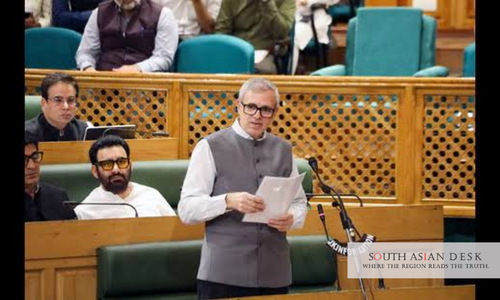
The Jammu and Kashmir statehood resolution, proposed by Chief Minister Omar Abdullah, has sparked significant political tensions in the region. On September 25, 2026, Abdullah moved a resolution for full statehood restoration in the Jammu and Kashmir Assembly, a proposal that immediately triggered protests from 29 BJP legislators. The lawmakers tore the resolution and stormed the Well of the House, leading to a brief adjournment of the assembly session. The move, which references a 2002 autonomy report, has reignited debates over governance and autonomy in Jammu and Kashmir. This development underscores the deepening regional politics and the fragile balance of power in the region.
Jammu and Kashmir statehood resolution: Political Reactions
The BJP’s opposition to the resolution was immediate and forceful. Twenty-nine legislators disrupted the assembly proceedings by tearing the document and marching to the Well of the House, a symbolic act of defiance against the statehood proposal. Other political stakeholders, including regional parties and civil society groups, have expressed mixed reactions. Some have called for renewed dialogue on autonomy, while others have emphasized the need for stability in the region. The resolution has also drawn attention from national political observers, who note its potential to reshape power dynamics in Jammu and Kashmir. Analysts suggest that the move could further complicate political tensions in J&K, navigating competing interests.
Historical Context of Statehood in J&K
The push for statehood in Jammu and Kashmir is rooted in a complex history of autonomy and governance. The 2002 autonomy report, which outlined recommendations for greater self-rule, remains a flashpoint for political debate. The BJP has historically opposed such measures, arguing that they undermine national unity and federal structure. Conversely, regional parties and pro-autonomy advocates view statehood as a means to address longstanding grievances over governance and representation. The current resolution by Omar Abdullah echoes earlier proposals, but its timing and the BJP’s reaction have intensified the political standoff. This historical context highlights the challenges of balancing regional autonomy with national integration.
The debate also reflects broader questions about the future administrative and political structure of Jammu and Kashmir. Supporters of restoration argue that statehood could strengthen local representation, while opponents remain concerned about its implications for governance and national cohesion. The issue is therefore likely to remain a significant point of political discussion.
Implications for Regional Politics
The resolution could have significant implications for governance in Jammu and Kashmir, potentially altering the balance of power between local and national authorities. If implemented, it may lead to changes in administrative structures, legislative powers, and the region’s relationship with the central government. Analysts suggest that the move could also influence broader regional politics, particularly in the context of South Asia’s evolving geopolitical landscape. However, the BJP’s strong opposition raises questions about the feasibility of such a resolution gaining traction in the current political climate.
The Road Ahead: Challenges and Prospects
The Jammu and Kashmir statehood resolution has sparked a wave of political activity, with Omar Abdullah’s proposal serving as a catalyst for renewed discussions on autonomy. The BJP protests, while disruptive, reflect the party’s entrenched position against any moves perceived as undermining federal unity. Meanwhile, regional parties and civil society groups continue to advocate for greater self-governance, framing the resolution as a step toward addressing historical inequities. The J&K Assembly‘s role in this process remains pivotal, as it serves as the primary forum for legislative action and political negotiation. However, the path to implementation needs consensus among stakeholders.
Follow SouthAsianDesk on X, Instagram and Facebook for insights on business and current affairs from across South Asia.
Sources
- Omar Abdullah brings Statehood resolution in J&K Assembly amid loud protests by BJP MLAs – thehindu.com
- “Don’t Need BJP Certificate”: Omar Abdullah Moves J&K Statehood Resolution – ndtv.com
Image: th-i.thgim.com