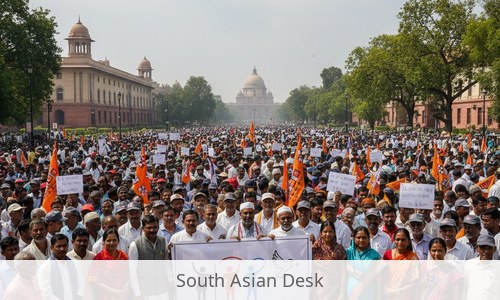
Delhi protest security measures have been intensified as authorities implement internet curbs and shut down markets and Metro stations in anticipation of the protest organized by the Citizens for Justice and Peace (CJP) at Jantar Mantar. The measures reflect heightened security preparations for what has been dubbed ‘Jantar Mantar 2.0,’ signaling ongoing tensions surrounding civil rights and governance in India. This event underscores the complex interplay between government response to protests and the protection of civil liberties in India, with Delhi protest security measures drawing both support and criticism from various quarters.
Delhi protest security measures: Government Response
Delhi authorities have canceled dozens of trains bound for the city as part of security measures. Markets and Metro stations in key areas have been closed, while internet services have been restricted in parts of the city. These actions follow the CJP’s announcement of the protest, which has drawn attention to broader concerns about public dissent and state response mechanisms. The government response to protests has increasingly involved preemptive measures, including internet restrictions in Delhi, to manage large gatherings and prevent disruptions. Such strategies, while aimed at ensuring public safety, have sparked debates about their proportionality and impact on daily life.
Implications for Civil Liberties
The government’s measures raise questions about the balance between security and civil liberties in India. While authorities justify the steps as necessary for crowd control, critics argue that internet restrictions and transport closures may disproportionately impact public access to information and movement. The protest, part of a broader movement for accountability, underscores the complex dynamics between state power and civic engagement in India. The protest has sparked debates about civil liberties in India, with activists highlighting the potential for such actions to suppress dissent. Legal experts have weighed in, emphasizing the need for transparency in the implementation of these measures to ensure they align with constitutional rights.
Historical Context and CJP’s Role
The CJP Jantar Mantar protest is not an isolated event but part of a long-standing tradition of demonstrations at this historic site, which has been a focal point for political activism in Delhi. The Citizens for Justice and Peace, a prominent rights group, has a history of organizing protests on issues ranging from judicial reforms to electoral transparency. This particular protest, however, has drawn heightened scrutiny due to its scale and the extensive security measures deployed. The group’s call for ‘Jantar Mantar 2.0’ has been interpreted as a symbolic continuation of past movements, with participants seeking to amplify their demands for accountability and reform.
Impact on Daily Life and Public Perception
The internet restrictions in Delhi have affected not only protesters but also ordinary citizens reliant on digital connectivity for work, education, and communication. Businesses in the affected areas have reported disruptions, and residents have expressed frustration over the inconvenience. Meanwhile, the government has defended its actions, stating that the measures are necessary to prevent potential violence and ensure the safety of all citizens. This stance has been met with mixed reactions, with some supporting the need for security and others criticizing the lack of dialogue with protest organizers.
Broader Implications for Governance
The situation in Delhi highlights the challenges faced by governments in balancing security concerns with the protection of civil liberties. As protests become more frequent and organized, authorities are increasingly adopting measures that prioritize control over engagement. This approach, while effective in preventing immediate disruptions, risks alienating segments of the population and undermining trust in governance. The government’s response to the protests in Delhi serves as a case study for how states navigate the delicate line between maintaining order and respecting democratic freedoms.
Follow SouthAsianDesk on X, Instagram and Facebook for insights on business and current affairs from across South Asia.