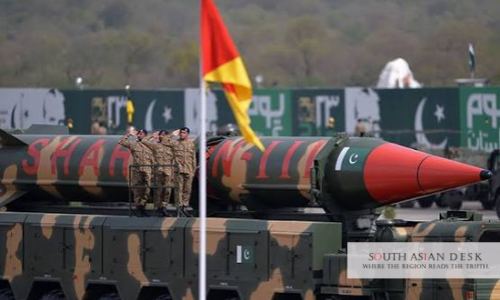
Pakistan’s nuclear deterrence remains a cornerstone of its national security strategy, as highlighted by Tahir Andrabi, Pakistan’s permanent representative to the United Nations in Geneva, during the UN General Assembly’s First Committee debate on disarmament on 2026-10-11. Andrabi emphasized that Pakistan will maintain its nuclear deterrence policy and military capability to defend against perceived security threats, while explicitly stating its stance against an arms race with India.
Pakistan’s nuclear deterrence: Pakistan’s Nuclear Deterrence Policy
Andrabi’s remarks underscore Pakistan’s longstanding commitment to nuclear deterrence as a strategic pillar of its national security. The policy, rooted in historical tensions with India, aims to ensure that Pakistan retains the capacity to deter potential aggression through its nuclear arsenal. This stance aligns with Pakistan’s broader military doctrine, which prioritizes maintaining a credible minimum deterrent against perceived existential threats.
The implications of this policy for regional security remain complex. While Pakistan asserts its nuclear capabilities are solely for defensive purposes, India has consistently viewed such posturing as escalatory. The South Asia geopolitical tensions continue to shape the nuclear policy in South Asia, with both nations maintaining large conventional forces alongside their nuclear arsenals. This dynamic reflects the delicate balance of power in India-Pakistan relations, where nuclear deterrence serves as both a shield and a potential flashpoint.
India’s Response
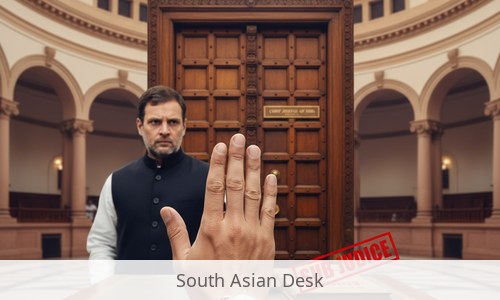
India’s response to Pakistan’s statements included a rebuttal asserting that it would not bow to nuclear blackmail. The Indian position, articulated through diplomatic channels, emphasizes that its military modernization efforts are aimed at ensuring regional stability and countering perceived threats from Pakistan. India has repeatedly called for confidence-building measures and dialogue to reduce tensions, though its own nuclear doctrine remains ambiguous on first-use scenarios.
The Indian government has also highlighted its commitment to a no-first-use policy, though this remains uncodified in official documents. This ambiguity has fueled speculation about India’s strategic intentions, particularly in light of its growing defense partnerships and military exercises with other regional actors. The Tahir Andrabi UN statement further underscores the need for transparency in nuclear policy in South Asia, as both nations navigate the risks of escalation.
Geopolitical Context
The statements from both Pakistan and India reflect the ongoing geopolitical tensions in South Asia, particularly regarding nuclear capabilities and military posturing. The region’s nuclear dynamics have been shaped by historical conflicts, including the 1971 and 1999 wars, as well as the 2016 Uri attacks and subsequent cross-border skirmishes. These events have reinforced the mutual security concerns that underpin both nations’ nuclear policies.
The broader geopolitical landscape also includes the influence of external actors, such as China and the United States, which have varying interests in South Asia’s stability. China’s strategic partnership with Pakistan, including the China-Pakistan Economic Corridor (CPEC), has further complicated the regional balance of power, while the U.S. has sought to engage both nations in nuclear risk reduction initiatives. The arms race with India remains a critical concern, as both nations continue to invest in advanced military technologies.
The evolving nuclear policy in South Asia is also influenced by global disarmament trends and the Non-Proliferation Treaty (NPT) framework. However, both Pakistan and India have historically resisted full compliance with the NPT, citing their strategic needs and regional security challenges. This divergence has contributed to the persistent instability in India-Pakistan relations, with nuclear deterrence serving as a double-edged sword that both deters aggression and heightens the risk of miscalculation.
As the region grapples with these challenges, the role of multilateral diplomacy and confidence-building measures becomes increasingly vital. The Tahir Andrabi UN statement highlights the importance of dialogue in addressing mutual security concerns, while also emphasizing the need for transparency in nuclear policy in South Asia. The ongoing tensions between Pakistan and India underscore the delicate balance required to prevent escalation in a region where nuclear deterrence remains a defining feature of national security strategies.
Follow SouthAsianDesk on X, Instagram and Facebook for insights on business and current affairs from across South Asia.