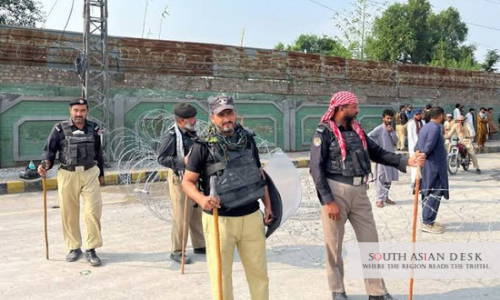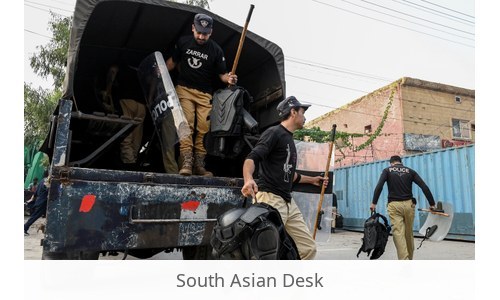
Pakistan army deployment has escalated in Khyber Pakhtunkhwa following President Asif Ali Zardari’s declaration of a state of emergency on October 12, 2026. The move suspends the provincial government under emergency rule, with Chief Minister Sohail Afridi and several cabinet members detained, along with hundreds of Pakistan Tehreek-e-Insaf (PTI) supporters. This development underscores the growing tension between civilian governance and military involvement in politics, as the federal government asserts control over the region.
Pakistan Army Deployment: Political Ramifications
The detention of PTI leaders and supporters has intensified political tensions in Khyber Pakhtunkhwa, with the Khyber Pakhtunkhwa emergency marking a significant escalation in political unrest in Pakistan. Khaama Press reports that Chief Minister Sohail Afridi and several cabinet members were detained under the emergency rule, which grants the federal government expanded authority over provincial governance. This development could have lasting implications for civil administration in the region, particularly as PTI remains a dominant political force in the province.
Public reaction has been mixed, with some citizens expressing support for the government’s actions while others criticize the suspension of democratic processes. The deployment of military personnel in key areas of Khyber Pakhtunkhwa has also raised concerns about the potential militarization of governance in the region. Asif Ali Zardari’s declaration of emergency rule highlights the government’s response to the PTI party detention and broader political instability.
Historical Context
Military involvement in politics is not new to Pakistan, with previous interventions such as the 1977 Operation Clean Sweep and the 1999 coup illustrating the cyclical nature of military influence in governance. The current situation in Khyber Pakhtunkhwa bears similarities to these historical episodes, though the legal and political frameworks differ significantly. Analysts note that such measures often reflect broader power struggles between federal and provincial authorities, particularly in regions with strong regional political identities.
The emergency rule in Khyber Pakhtunkhwa marks a departure from recent trends of civilian-led governance. The Pakistan army deployment in the region has reignited debates about the balance of power between military and civilian institutions, echoing past instances where military authority overshadowed democratic processes. This situation raises questions about the long-term stability of political institutions in Pakistan.
Regional Implications and Public Sentiment
The Khyber Pakhtunkhwa emergency has sparked a wave of public discourse, with citizens divided on the government’s decision to deploy the military. Some argue that the move is necessary to restore order and prevent further unrest, while others view it as an overreach that undermines democratic principles. Local businesses and community leaders have expressed concerns about the economic impact of the deployment, fearing disruptions to trade and daily life in the region.
In Peshawar, the capital of Khyber Pakhtunkhwa, residents have reported increased military presence in key areas, including government buildings and public spaces. This has led to heightened security measures, with checkpoints and surveillance becoming more prevalent. Meanwhile, political analysts suggest that the deployment may be a strategic move to consolidate federal authority in a region historically known for its political volatility.
International Reactions and Regional Stability
The Pakistan army deployment has drawn attention from regional and international stakeholders, with neighboring countries closely monitoring the situation. Analysts note that the move could have implications for regional stability, particularly in light of ongoing security challenges in the region. The deployment also raises questions about the role of the military in addressing political crises, a topic that has been debated for decades in Pakistan.
International observers have expressed concern over the potential militarization of governance, emphasizing the importance of maintaining democratic institutions. However, some regional analysts argue that the federal government’s actions may be a necessary response to the PTI party detention and the broader political unrest in Pakistan.
Conclusion
The Pakistan army deployment in Khyber Pakhtunkhwa represents a significant development in the country’s political landscape. As the federal government continues to assert control over the region, the balance of power between military and civilian institutions remains a critical issue. The Khyber Pakhtunkhwa emergency underscores the complexities of governance in a region marked by political instability and historical tensions.
Follow SouthAsianDesk on X, Instagram and Facebook for insights on business and current affairs from across South Asia.
Sources
- Saar: Pakistan deploying army in KP – ariananews.af
- Pakistan Detains PTI Leaders as Emergency Rule Escalates Standoff With Imran Khan – khaama.com
- President’s Trophy matches shifted out of Peshawar and Abbottabad – cricinfo.com
Image: p.imgci.com