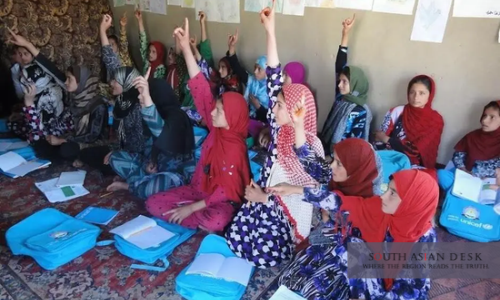
The Afghanistan child marriage issue remains a critical talking point as the country’s Ministry of Vice and Virtue reports progress in preventing forced and underage marriages, while UNICEF continues its call to action to protect girls and end the practice. On October 13, 2026, the Ministry announced efforts to prevent several cases of child marriage in the past five months, coinciding with the International Day of the Girl Child on October 11, which highlighted ongoing challenges such as educational exclusion and vulnerability to forced marriages under Taliban rule.
Afghanistan child marriage: Ministry of Vice and Virtue’s Initiatives
The Ministry’s spokesperson, Saif-ul-Islam Khyber, stated that attempts were made to prevent the marriages of two girls aged six and eight. These efforts align with the Ministry’s broader mandate to enforce Islamic law and regulate social conduct. However, the effectiveness of these measures remains under scrutiny, particularly in light of the restricted access to education for girls in Afghanistan. The Ministry of Vice and Virtue’s role in preventing child marriage is a focal point of both domestic and international attention, as the practice persists despite official efforts.
The Ministry has also launched community awareness campaigns in rural areas, where child marriage rates are highest. These campaigns emphasize the legal and religious implications of the practice, though critics argue that enforcement is inconsistent. Local officials report that while some families comply with the Ministry’s directives, others continue to circumvent restrictions by registering marriages under false names or in neighboring provinces. This highlights the complex interplay between policy implementation and cultural norms in Afghanistan.
UNICEF’s Call to Action
UNICEF has reiterated its urgent call to action to protect girls in Afghanistan, emphasizing the need for international support to combat child marriage. The International Day of the Girl Child, marked on October 11, served as a reminder of the critical need to address systemic issues such as educational exclusion and the risks faced by young girls. UNICEF’s advocacy underscores the importance of multilateral cooperation to safeguard girls’ rights and ensure their access to education, which is a key factor in preventing child marriage.
In a recent statement, UNICEF highlighted that girls’ education in Afghanistan is not only a human right but also a critical tool for reducing child marriage rates. The organization has partnered with local NGOs to distribute educational materials and provide safe spaces for girls to learn, despite the Taliban’s restrictions. However, these efforts face significant challenges, including limited funding and security risks for educators.
Impact of Educational Exclusion
UNESCO estimates that 2.4 million girls in Afghanistan are currently barred from secondary education. This exclusion significantly increases their vulnerability to child marriage, as lack of education is a key driver of early marriage in the region. The Ministry of Vice and Virtue’s initiatives, while aimed at curbing forced marriages, must be contextualized within the broader challenge of ensuring girls’ access to education. Without addressing the root causes, such as the lack of girls’ education in Afghanistan, efforts to prevent child marriage may remain limited.
The Taliban’s policies have further exacerbated this crisis by banning girls from attending school beyond the sixth grade. This has created a generation of young women with limited opportunities, making them more susceptible to early marriage as a means of survival. International donors have expressed concern over the long-term consequences of this policy, warning that it could perpetuate cycles of poverty and gender inequality.
The Path Forward
Addressing the Afghanistan child marriage issue requires a multifaceted approach that combines legal enforcement, community engagement, and international support. The Ministry of Vice and Virtue’s efforts, while commendable, must be strengthened with greater resources and oversight. At the same time, UNICEF’s call to action underscores the need for global solidarity in protecting girls’ rights and promoting girls’ education in Afghanistan.
The International Day of the Girl Child serves as a powerful reminder of the urgency of this issue. It is a call to action for governments, organizations, and individuals to prioritize the protection of girls and the promotion of their education. Only through sustained commitment can the cycle of child marriage be broken, ensuring a brighter future for Afghanistan’s girls.
Follow SouthAsianDesk on X, Instagram and Facebook for insights on business and current affairs from across South Asia.
This report focuses on child marriage in Afghanistan and the verified developments surrounding it.