Pakistan warns India against ill-advised aggression after remarks by Indian Defence Minister Rajnath Singh, with Islamabad saying on Friday that it remains fully prepared to defend itself against any threat. The statement was delivered at the Foreign Office’s weekly press briefing in Islamabad and adds a fresh strain to relations between the two nuclear-armed neighbours.
Why Pakistan Warns India Against Ill-Advised Aggression
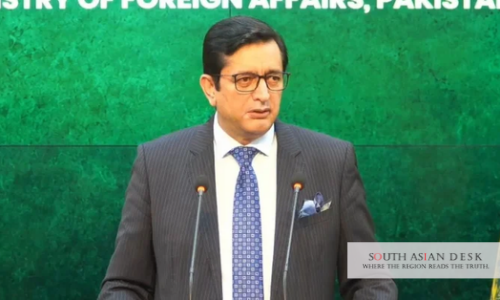
Foreign Office spokesperson Sajjad Haider Khan said Pakistan was ready to safeguard its sovereignty and territorial integrity and would respond forcefully to any act of aggression. He urged New Delhi to abandon what he described as dangerous rhetoric.
The warning followed comments by Rajnath Singh, who said any future terrorist attack originating from Pakistan would draw a stronger response from India. Khan rejected the remarks, saying they carried a threat of Indian aggression against Pakistan. He described them as a reflection of a “hegemonistic mindset” that, in his words, posed risks to regional peace and stability in South Asia.
The spokesperson added that Pakistan’s restraint and its commitment to peace should not be mistaken for weakness. The report does not include a response from the Indian government to Friday’s statement.
The Background of the May 2025 Conflict
Khan referred directly to last year’s confrontation, urging India to draw appropriate lessons from it. The two countries fought a brief conflict in May 2025 that followed the Pahalgam attack in Indian-administered Kashmir, in which 26 tourists were killed.
India blamed Pakistan-based militants for the attack. Pakistan denied any involvement and called for a neutral investigation. India later launched missile strikes inside Pakistan, which Islamabad described as unlawful and unprovoked, and which it says killed civilians and security personnel. India has said its strikes targeted militant infrastructure.
Pakistan says it shot down eight Indian fighter jets during the fighting, including three Rafales. That figure is Pakistan’s account and was repeated by the spokesperson’s government in this week’s coverage, but it should be treated as a claim by one party to the conflict. The fighting ended on May 10, 2025, with a ceasefire. Pakistani officials credit the United States with brokering it, while Indian officials have said it was agreed directly between the two militaries.
Competing Narratives on Security
The exchange illustrates how differently the two governments describe the same events. Islamabad presents its position as defensive, stressing readiness rather than intent. New Delhi, through Singh’s remarks, has framed its stance as one of deterrence against cross-border terrorism.
Both positions rest on a shared premise that any renewed confrontation would carry serious consequences. Analysts frequently point out that the combination of nuclear capability and unresolved disputes makes miscalculation a persistent concern, a point echoed in the spokesperson’s call for responsible conduct to secure lasting peace.
Other Announcements From the Briefing
The briefing was not limited to security matters. Khan also said the Foreign Office is digitising and automating its apostille services to improve efficiency, transparency and accessibility. According to the spokesperson, electronic attestation has been launched through the ministry’s portal, and the transition to electronic apostille services is under way.
He said eligible applicants could be exempted from physical appearances, subject to prescribed safeguards, a step intended to help overseas Pakistanis in particular. He described the initiative as a “massive leap forward” and said Deputy Prime Minister Ishaq Dar had personally steered it. An inquiry into alleged irregularities in attestation services is also under way, with findings to be announced on completion.
What Happens Next
The immediate question is whether New Delhi will respond publicly to the Foreign Office’s remarks or to the characterisation of Singh’s comments. Neither government has signalled any move toward dialogue, and the rhetoric on both sides has remained firm.
For now, the episode shows that the aftermath of the May 2025 conflict continues to shape official language in both capitals. The way each side interprets last year’s events, and the lessons it draws from them, is likely to influence statements on security for some time.
Follow SouthAsianDesk on X, Instagram and Facebook for insights on business and current affairs from across South Asia.
This article is based on reporting by The News International.