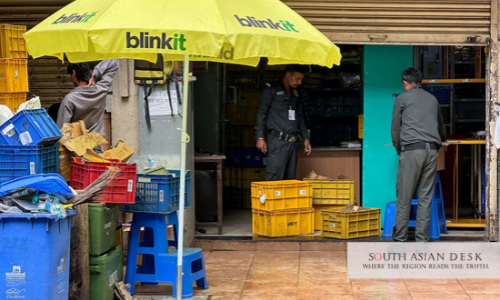
Expired food products probe has intensified in Maharashtra after the state’s Food and Drug Administration (FDA) named executives associated with Reliance Retail, Reliance Consumer, Blinkit and Zomato Hyperpure in an investigation into allegations that expired, damaged and customer-rejected food items were diverted back into the consumer market. The investigation has raised serious questions about food disposal procedures, supply chain accountability and the enforcement of food safety regulations in India.
According to case documents reviewed by Reuters, officials inspecting warehouses found that companies could not provide verifiable evidence that expired food products handed to disposal contractors had actually been destroyed. Investigators allege that some goods intended for disposal may instead have passed through unlicensed sorting yards and intermediaries before reaching retailers and consumers.
Blinkit chief executive Albinder Dhindsa is among the executives named in the investigation. The case also involves personnel associated with Reliance’s retail and consumer businesses and Eternal’s Blinkit and Hyperpure units. The companies had not immediately responded to Reuters’ requests for comment at the time of publication.
The Maharashtra FDA has suspended the licences of five establishments connected to the investigation, three associated with Reliance businesses and two linked to Eternal. The case marks another significant development in the state’s broader effort to strengthen food safety enforcement across retail, quick commerce and food distribution operations.
Expired Food Products Probe Raises Concerns Over Disposal Procedures
The Maharashtra FDA’s investigation centres on whether food products designated for destruction were properly disposed of or diverted into channels where they could be sold again.
Under appropriate food safety procedures, expired or otherwise unfit products must be removed from sale and handled in accordance with applicable regulations. Businesses and their contractors need reliable documentation showing what was collected, how it was transported and whether destruction or another legally authorised disposal method was completed.
According to the case documents reviewed by Reuters, FDA officials found that company representatives could not provide verifiable proof that contractors had destroyed the stock entrusted to them. In one instance involving a Zomato Hyperpure warehouse, a company representative identified a disposal contractor whom officials were unable to trace.
These findings have placed the reliability of contractor records and disposal arrangements under scrutiny. If businesses cannot verify what happens to products removed from their warehouses, regulators may struggle to determine whether potentially unsafe goods have been permanently taken out of circulation.
Maharashtra FDA chief Tukaram Mundhe told Reuters that any attempt to divert expired, damaged or consumer-rejected products intended for destruction back into the market required strict scrutiny and accountability.
The investigation will need to establish which products were involved, how they moved through the alleged disposal network and whether particular individuals or businesses violated food safety laws.
Blinkit Food Safety Investigation Examines Alleged Resale Network
The Blinkit food safety investigation forms part of a wider inquiry into the handling of expired goods by major retail and quick commerce distribution operations.
According to the FDA’s allegations, the suspected process began when warehouses transferred expired, damaged or rejected food products to disposal contractors. Some products were allegedly passed to unlicensed sorting yards, where packages that appeared suitable for sale were separated and sent to brokers or retailers.
The alleged route extended from company warehouses to disposal agencies, unlicensed sorting facilities, intermediaries and, ultimately, consumers. Investigators are examining whether the system intended to remove unsafe products from circulation was instead used to return some goods to commercial channels.
The allegations are particularly significant for quick commerce businesses, which rely on extensive warehouse and delivery networks to fulfil orders rapidly. Such systems can move products between storage facilities, local distribution points and customers within short periods, making effective inventory controls and traceable disposal records essential.
However, the allegations do not establish that every company or executive named in the case personally knew about or authorised any unlawful activity. Individual responsibility will depend on the evidence gathered by investigators and any subsequent legal proceedings.
The investigation will also need to determine how the alleged network operated, who controlled the disposal arrangements and whether existing monitoring systems failed to identify irregularities.
Reliance Retail Food Safety Under Regulatory Scrutiny
Reliance Retail and Reliance Consumer, both associated with billionaire Mukesh Ambani’s business group, are among the businesses affected by the Maharashtra FDA’s action.
The investigation raises questions about how large retailers supervise expired stock across warehouses and distribution facilities. Businesses operating at scale need systems that can identify products approaching their expiry dates, remove unsuitable goods from sale and maintain a clear record of their final disposal.
Where external contractors handle expired inventory, companies also need effective oversight of those contractors. Merely transferring stock to a disposal agency does not, by itself, demonstrate that the products have been destroyed.
According to the Reuters report, officials could not verify that contractors had completed the required disposal of stock at some inspected facilities. The FDA has consequently examined whether existing procedures and records were sufficient to ensure that expired goods did not return to the market.
The suspension of three licences associated with Reliance businesses underscores the potential operational consequences of the investigation. The company and its relevant units will have to address regulatory concerns through the applicable procedures.
The case also illustrates why compliance systems need to extend beyond warehouse operations. Suppliers, contractors, transporters and downstream intermediaries may all play a role in determining whether rejected products remain safely outside the consumer market.
Maharashtra FDA Suspends Five Establishment Licences
The Maharashtra FDA suspended the licences of five establishments on Thursday, October 15, according to the case documents cited by Reuters. Three were associated with Reliance businesses and two with Eternal, the parent company of Blinkit and Zomato.
Separate reporting by Indian media said the FDA had registered a police case naming 10 individuals, including company executives, employees and people associated with disposal and supply operations. Authorities also seized food stock valued at approximately 4.8 million rupees during enforcement activity in the Thane and Pune districts.
The enforcement action reflects the state’s increasingly assertive approach to food safety violations. Under FDA chief Tukaram Mundhe, regulators have also targeted restaurants and food outlets over hygiene concerns and licensing issues.
Licence suspension can prevent an establishment from carrying out regulated food business activities while compliance concerns are addressed, subject to the applicable legal process. Such action is intended to reduce immediate risks and encourage businesses to meet required standards.
The investigation’s outcome will depend on the evidence collected, including stock records, disposal certificates, contractor details, invoices and documentation of movements between facilities.
Authorities will need to establish whether the products were unlawfully resold, whether disposal records were falsified and which individuals, if any, were responsible for the alleged violations.
Expired Food Products in India Highlight Wider Consumer Risks
The expired food products probe has brought broader concerns about consumer protection and the traceability of packaged goods into focus.
Food that has passed its labelled expiry date may no longer meet the manufacturer’s intended safety or quality standards. The level of risk varies according to the product, storage conditions and the nature of the date label, but products that are legally required to be withdrawn from sale must not be returned to consumers through improper channels.
The alleged diversion of expired or rejected goods is especially concerning because consumers generally have no practical way to verify a product’s complete history. They depend on retailers, manufacturers, distributors and regulators to ensure that food offered for sale meets applicable requirements.
If goods intended for destruction are returned to the market, the practice can undermine confidence in product labels, inventory controls and food safety enforcement. It may also create unfair competition for businesses that comply with regulations and bear the cost of proper disposal.
Effective traceability can help authorities identify affected batches, determine where products were distributed and prevent further sales when a safety concern emerges. Accurate records also make it easier to investigate irregularities and establish accountability across the supply chain.
For consumers, the case serves as a reminder to check product labels, packaging integrity and storage conditions. Nevertheless, the primary responsibility for ensuring that unfit products do not reach customers rests with businesses and the regulatory system.
Quick Commerce Companies Face Greater Compliance Pressure
India’s quick commerce sector has expanded rapidly, promising the delivery of groceries and household essentials within short periods. That growth has increased the importance of managing large inventories across warehouses and local fulfilment centres.
Companies such as Blinkit operate in a highly time-sensitive environment, but speed cannot replace appropriate quality controls. Products must be stored correctly, monitored for expiry dates and removed from inventory when they are no longer suitable for sale.
The current investigation highlights the importance of ensuring that rejected stock is not simply transferred out of a warehouse without a verifiable final outcome. Disposal contractors should be properly identified, their operations documented and their performance monitored.
Businesses can strengthen their controls through digital inventory tracking, documented handovers, auditable destruction records and independent checks where appropriate. Such measures can help identify discrepancies between the stock recorded as discarded and the material actually handled by contractors.
Regulators, meanwhile, need sufficient inspection capacity and reliable mechanisms for investigating complaints. Clear procedures for reporting violations and protecting consumers can support more effective enforcement.
The case does not establish that quick commerce itself caused the alleged violations. Rather, it highlights the importance of ensuring that fast-moving distribution systems remain subject to effective safety and accountability standards.
What Happens Next in the Food Safety Investigation?
The immediate priority for the Maharashtra FDA and police is to establish the facts behind the suspected diversion of expired food products. Investigators will need to review records, trace contractors and intermediaries, identify the products involved and determine whether the goods reached retailers or consumers.
The suspended establishments may also face further regulatory scrutiny, depending on the findings and the applicable legal procedures. The companies involved will have an opportunity to respond through the relevant processes, and allegations against named individuals must be assessed on the evidence.
The case could have implications for how major retailers and quick commerce operators manage expired inventory throughout India. If the investigation confirms significant weaknesses in disposal practices, businesses may face pressure to introduce stricter verification procedures and improve oversight of third-party contractors.
For regulators, the challenge is to ensure that enforcement action produces lasting improvements rather than isolated penalties. Better documentation, routine audits and clear accountability for disposal operations could help reduce the risk of expired goods re-entering commercial circulation.
The investigation also highlights the need for transparent communication with consumers about confirmed risks and any products that may require withdrawal or recall.
Expired Food Products Probe Puts Accountability at the Centre
The expired food products probe has raised serious questions about whether food intended for destruction was properly removed from circulation and whether companies could adequately verify the actions of their contractors.
Maharashtra’s FDA has suspended five establishment licences and launched an investigation involving personnel associated with major retail and quick commerce businesses. The alleged movement of products through disposal agencies, unlicensed sorting yards and intermediaries has made supply chain traceability a central issue.
The allegations remain subject to investigation, and the naming of executives does not by itself establish individual guilt. Authorities must determine what happened to the products, whether laws were breached and who was responsible for any wrongdoing.
The broader lesson for India’s food industry is that safety obligations do not end when expired goods leave a warehouse. Businesses must be able to demonstrate that such products are handled lawfully and do not return to shelves through undocumented channels.
For consumers, retailers and regulators alike, the case underscores the importance of reliable records, effective inspections and clear accountability throughout the food supply chain.
Follow SouthAsianDesk on X, Instagram and Facebook for insights on business and current affairs from across South Asia.