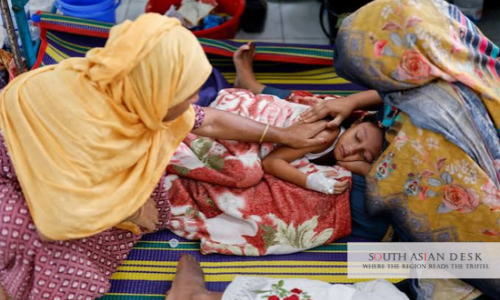
Bangladesh measles outbreak figures have exposed serious weaknesses in childhood vaccination, healthcare access and emergency preparedness, prompting health experts to warn that other countries could face similar crises if immunisation programmes deteriorate. According to the World Health Organization (WHO), Bangladesh recorded more than 202,000 suspected measles cases and 1,147 reported deaths between mid-March and October 9, 2026, making it the country with the highest number of suspected cases worldwide during the period.
Of the reported infections, approximately 22,000 were laboratory-confirmed, while 94 per cent of the reported deaths occurred among children younger than five. The figures highlight the disproportionate impact of the outbreak on young children, particularly those who have not received the recommended vaccinations.
A Reuters investigation published on October 17 identified declining vaccination coverage, gaps in health data, inadequate preparation and failures to reach vulnerable families as important factors behind the crisis. The findings have raised concerns about the resilience of public health systems and the risks associated with allowing routine immunisation programmes to weaken.
Mark Jit, a WHO vaccine adviser and professor at New York University’s School of Global Public Health, described Bangladesh’s experience as a warning to every country. He stressed that preventing an outbreak through vaccination is safer, less expensive and more effective than responding after widespread transmission has begun.
Bangladesh Measles Outbreak Exposes Declining Vaccination Coverage
Bangladesh had previously made substantial progress in childhood immunisation. WHO and UNICEF estimates indicated that measles vaccination coverage in 2024 reached 96 per cent for the first dose and 93 per cent for the second dose.
However, coverage declined in 2025 amid political turmoil, disruptions to healthcare services and difficulties maintaining routine vaccination activities. WHO and UNICEF estimated that first-dose coverage fell to 90 per cent, while second-dose coverage declined to 86 per cent.
These levels were below the approximately 95 per cent coverage recommended to prevent sustained measles transmission. Because the virus is highly contagious, even relatively small gaps in vaccination can allow infections to spread rapidly through communities where many people remain susceptible.
The decline also demonstrates why maintaining immunisation coverage requires consistent investment rather than occasional emergency campaigns. Children need to receive vaccines at the appropriate ages, while health authorities must identify those who miss scheduled doses and ensure that they can access follow-up vaccination.
Political instability and healthcare worker strikes contributed to interruptions in Bangladesh’s routine programme. Vaccine orders were delayed, and follow-up activities that normally help reach children missed during regular visits were disrupted.
These setbacks weakened a system that had previously achieved comparatively high vaccination coverage, leaving more children vulnerable when measles began spreading.
Why the Emergency Vaccination Campaign Failed to Reach Every Child
Bangladesh launched an emergency vaccination campaign in April and May 2026 in an effort to contain the outbreak. The programme reached nearly 20 million children, representing a substantial mobilisation of healthcare resources.
However, subsequent findings indicated that millions of children may have been missed. Weak vaccination records, incomplete information about eligible children and inadequate preparation made it difficult to identify all those who needed protection.
The problem was not simply the number of vaccine doses administered. Health authorities also needed reliable information about the children targeted by the campaign, including those living in remote communities or outside established healthcare networks.
According to the Reuters investigation, campaign preparations were rushed, with some readiness checks reduced. Discrepancies in vaccination data further complicated assessments of how many children had actually received the required doses.
WHO and UNICEF have also raised concerns about the reliability of official immunisation statistics. Some preliminary figures for earlier years suggested that the number of doses administered exceeded the estimated target population, indicating possible errors in population estimates or reporting.
Reliable data is essential for public health planning. Without accurate records, authorities can mistakenly conclude that vaccination targets have been achieved while entire communities remain unprotected.
Bangladesh has since launched another campaign aimed at reaching 3.4 million children who were previously missed. Its success will depend on identifying unvaccinated children, communicating effectively with families and ensuring that vaccines reach communities with limited access to healthcare.
Sylhet Measles Outbreak Highlights the Cost of Poor Healthcare Access
The northeastern Sylhet region has been among the areas severely affected by the outbreak. Reports from the region have highlighted how delayed outreach and limited access to vaccination can have devastating consequences for families.
Reuters reported the death of two-year-old Arman Hossain, who had not been vaccinated against measles. He died in July, approximately 24 hours after being admitted to hospital. His family had to sell its three-wheeled auto-rickshaw to pay for treatment.
His father, Amin Mia, said health workers had not reached their remote village in time to offer vaccinations. The family later lost its son to a disease that routine immunisation could have helped prevent.
Another case involved nine-month-old Labiba Akter, who died in June. Her father said the family had not been informed that she was eligible for vaccination under the emergency programme, which lowered the vaccination age from nine months to six months.
These accounts demonstrate the importance of proactive healthcare outreach. A vaccine programme cannot protect children who are unaware of available services or who live beyond the practical reach of healthcare workers.
Remote settlements, transport difficulties, financial pressures and limited access to reliable information can all prevent families from obtaining preventive healthcare. Addressing these barriers requires more than supplying vaccines to hospitals and clinics. Health services must also reach households that are least likely to seek care independently.
WHO Warns of the Dangers of Falling Below Herd Immunity Thresholds
Measles is among the most contagious vaccine-preventable diseases. The virus can spread rapidly through respiratory particles, making high levels of population immunity essential to preventing outbreaks.
The WHO recommends maintaining approximately 95 per cent coverage with two doses of measles-containing vaccine to interrupt sustained transmission. This threshold helps protect not only vaccinated individuals but also people who cannot be vaccinated or who do not develop sufficient immunity after vaccination.
When coverage falls, the number of susceptible people increases. Once the virus enters a community, it can spread through households, schools and other settings where people have frequent contact.
The Bangladesh measles outbreak illustrates how quickly the consequences of declining coverage can emerge. Even after years of progress, disruptions to routine services left gaps that an emergency campaign could not fully close.
The risks are particularly serious for infants who are too young to have completed the recommended vaccination schedule and children affected by malnutrition or other health conditions.
Measles can cause complications including pneumonia, severe diarrhoea and inflammation of the brain. Although many patients recover, the disease can be fatal, especially where access to timely medical care is limited.
Vaccination remains the most effective preventive measure. Treating cases after transmission has occurred cannot replace the protection provided by a functioning immunisation programme.
Healthcare Workforce Shortages Add to the Crisis
The outbreak has also exposed wider weaknesses in Bangladesh’s public health infrastructure. Reuters reported significant shortages of healthcare personnel, with approximately one-third of healthcare positions unfilled, alongside gaps in records covering children who needed vaccination.
Staff shortages can undermine both routine immunisation and emergency responses. Healthcare workers must administer vaccines, maintain records, identify missed children, communicate with parents and monitor suspected infections. When staffing is inadequate, these responsibilities become more difficult to fulfil consistently.
The simultaneous dengue outbreak has placed additional pressure on the healthcare system. Hospitals treating children with measles have had to operate under difficult conditions while also responding to other demands for medical care.
Overcrowded facilities can complicate infection control and place further pressure on clinical staff. They also increase the burden on families who may have to travel long distances or spend scarce resources to obtain treatment.
Strengthening the healthcare system therefore requires sustained funding, adequate staffing, dependable vaccine procurement and effective disease surveillance. Emergency resources are important during outbreaks, but they cannot compensate indefinitely for weaknesses in routine services.
What Other Countries Can Learn from Bangladesh
The Bangladesh measles outbreak offers several lessons for governments seeking to protect their populations against vaccine-preventable diseases.
First, vaccination coverage must remain a continuous public health priority. Countries that achieve high coverage cannot assume that progress will continue automatically. Political instability, service interruptions, supply shortages and declining public confidence can quickly reverse earlier gains.
Second, health authorities need reliable and regularly updated vaccination records. Accurate information enables officials to identify children who have missed doses, direct resources towards underserved communities and measure whether campaigns are reaching their intended populations.
Third, communication with families is essential. Parents need clear information about when children should be vaccinated, where services are available and why completing the recommended schedule matters. Outreach must be adapted to local conditions, particularly in remote areas.
Finally, governments should prepare for outbreaks before they occur. Adequate staffing, vaccine supplies, transport arrangements and emergency planning can help health systems respond rapidly when cases emerge.
The lessons are relevant even in countries with established vaccination programmes. Rising vaccine hesitancy in some wealthier nations has created additional concerns, while under-resourced health systems in other countries may struggle to maintain coverage even when families want to vaccinate their children.
Bangladesh’s Fight Against Measles Requires Sustained Action
Bangladesh’s response now centres on reaching children missed by earlier campaigns, improving vaccination records and restoring routine immunisation services. The government’s latest campaign aims to reach 3.4 million previously missed children, but logistical challenges and healthcare workforce shortages remain significant obstacles.
The scale of the outbreak demonstrates that emergency action alone cannot immediately reverse the consequences of years of declining coverage. Children who have already contracted measles cannot be protected retroactively, and some families have suffered irreversible losses.
The priority must therefore be to close vaccination gaps, strengthen healthcare access and ensure that future campaigns are supported by reliable data and adequate preparation.
For other countries, Bangladesh’s experience is a reminder that public health achievements require sustained attention. High vaccination rates depend on functioning health services, trusted communication and the ability to reach every eligible child.
The outbreak is not merely a national emergency. It is a warning about what can happen when preventive healthcare weakens and vulnerable communities are overlooked. Maintaining strong immunisation programmes remains one of the most effective ways to protect children, reduce avoidable deaths and prevent similar crises elsewhere.
Follow SouthAsianDesk on X, Instagram and Facebook for insights on business and current affairs from across South Asia.