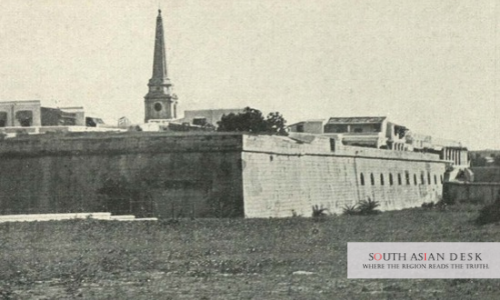
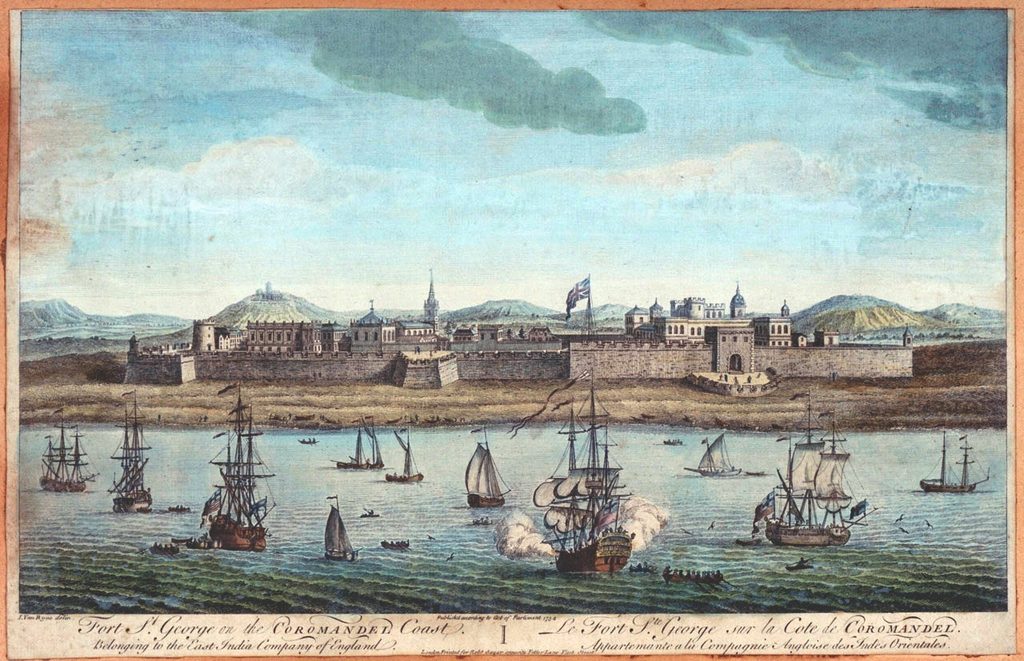
British colonial rule in South Asia traces its administrative and military roots to a single fortified outpost on the Coromandel Coast: Fort St. George in present-day Chennai. Recognised as the first fort the British built in the Indian subcontinent, Fort St. George transformed a modest coastal enclave into the nerve centre of the East India Company (EIC) and, eventually, the citadel of the British Raj. However, woven into its grand imperial architecture is a complex, shadowed legacy—one defined as much by pioneering civic institutions as by autocratic tyranny, corruption, and active participation in the global slave trade.
From European Rivalries to the Founding of Madras
By the early seventeenth century, the Coromandel Coast was already an arena of intense European commercial rivalry. Portuguese traders had established a factory at Santhome in 1522 near the ancient tomb of Saint Thomas the Apostle (present-day Santhome Cathedral), while Dutch merchants fortified their positions at Pulicat in 1612 and later at Sadras Fort. Seeking a permanent, secure stronghold on the eastern coast to export calico textiles and trade in Asian spices, British East India Company factor Francis Day negotiated a critical land lease on August 22, 1639. The grant for the coastal village of Madrasapattinam was secured from Damarla Chennappa (or Venkatadri) Nayak, a chieftain under the Vijayanagara ruler Peda Venkataraya, along with an annual tribute of 600 pounds paid to the Qutb Shahi rulers of Golconda to preserve regional stability.
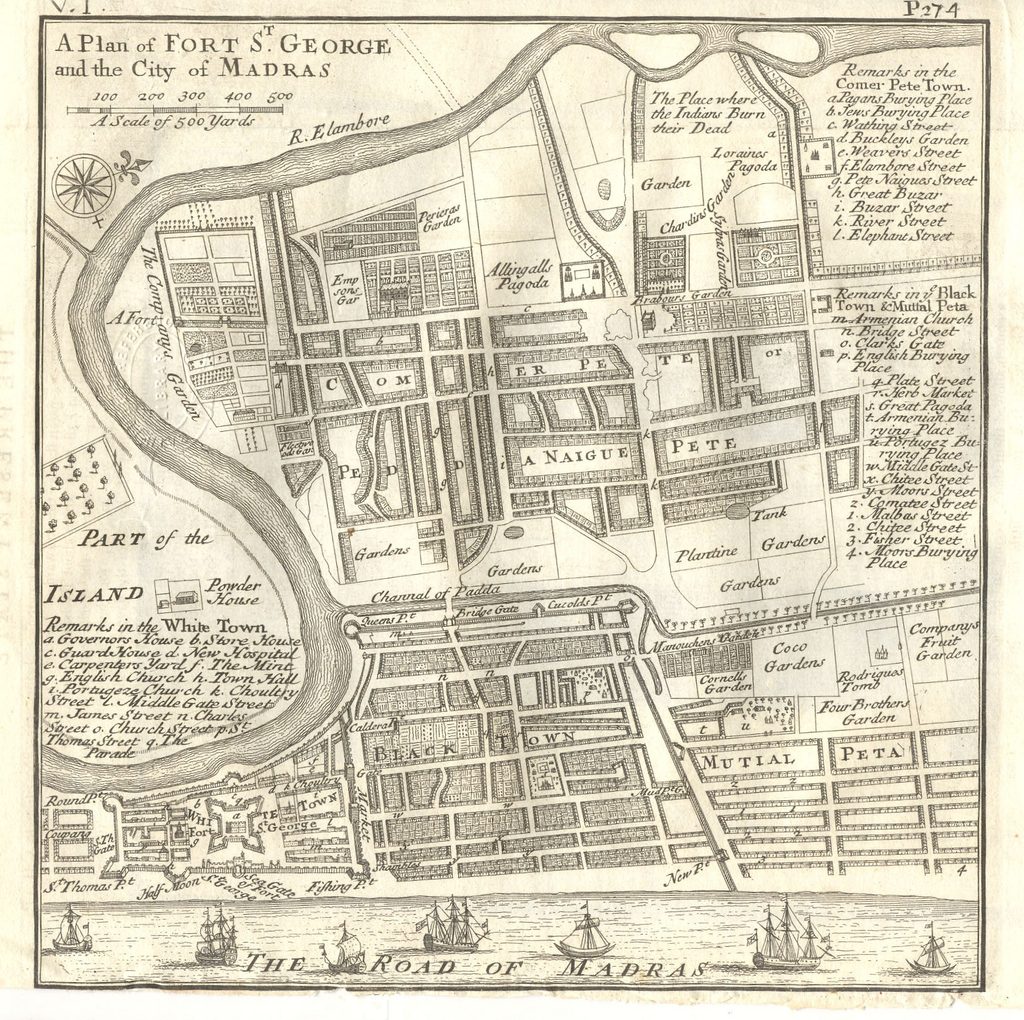
Construction of the fortified trading post began immediately, and upon its completion on St. George’s Day, April 23, 1644, the complex was officially named Fort St. George. To manage the expanding economic ecosystem, a distinct urban division emerged: the fortified interior housing European personnel became known as White Town, while the burgeoning external settlements of local weavers, artisans, merchants, and labourers formed Black Town. This dual structure laid the structural and demographic foundations for the metropolis of modern Chennai.
The Tyranny and Dark Record of Elihu Yale
As trade flourished, Fort St. George attracted ambitious men seeking wealth in EIC service. Chief among them was Elihu Yale, who arrived in Madras in 1672 as a young clerk on a modest EIC salary. Over two decades, Yale systematically rose through the colonial hierarchy, ultimately serving as Governor-President of Fort St. George from 1687 to 1692. During his decade in power, Yale amassed an enormous personal fortune through private commerce in textiles, diamonds, and precious gems—yet historical research reveals that a substantial portion of his wealth was extracted directly from human trafficking.
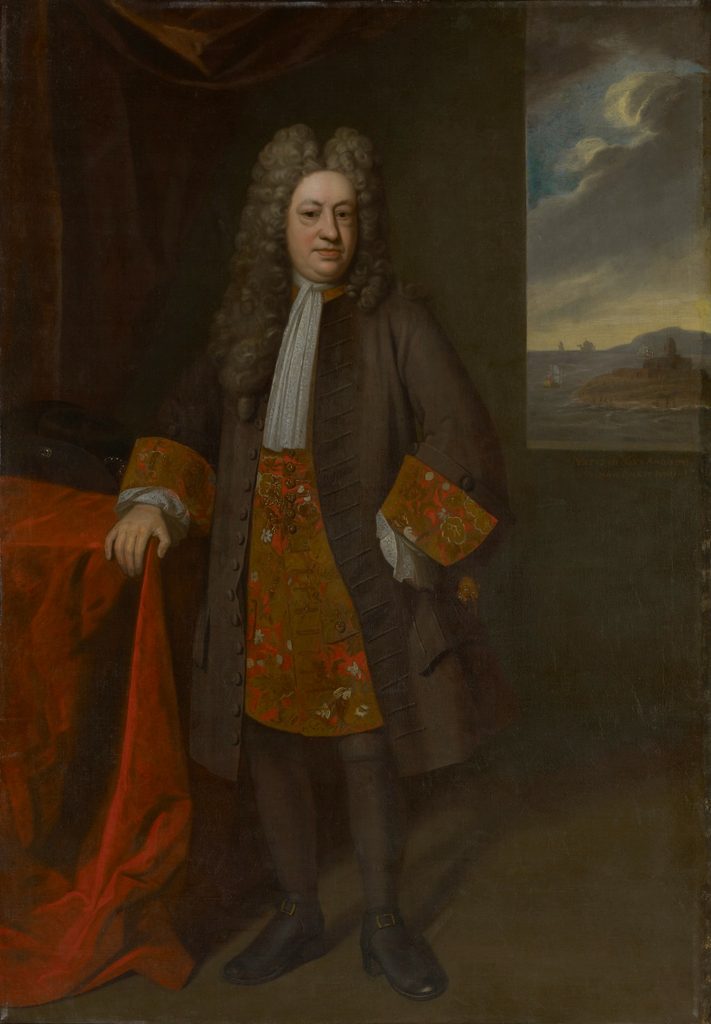
When a devastating famine struck southern India in the 1680s, Yale and fellow EIC officials ruthlessly exploited the widespread starvation by purchasing hundreds of destitute local inhabitants and shipping them as forced labour to British colonies such as Saint Helena and Sumatra. As governor, Yale enforced a strict company directive mandating a minimum quota of 10 enslaved people to be carried on every outbound European vessel. Under his direct administrative oversight, Fort St. George exported over 665 enslaved human beings in a single month in 1687 alone.
Yale’s governance was marked by autocratic cruelty and avarice. Colonial records document that he ordered the hanging of an Indian stable groom simply for riding one of his favourite horses without permission. His tenure was so rife with corruption, illegal private speculation, and arbitrary governance that the East India Company officially sacked him in 1692. Furthermore, several council members who dared to oppose his misdeeds or report his embezzlement died under mysterious circumstances within a year of his removal.
Returning to London in 1699 as a fabulously wealthy “nabob” (Nawab/ Ruler), Yale lived a lavish life. Between 1713 and 1721, he responded to financial appeals from Cotton Mather by donating hundreds of books, artwork, textiles, and merchandise to the struggling Collegiate School in Connecticut (New Haven, USA). The sale of these goods raised funds to construct a new three-story building, prompting the institution to rename itself Yale College (now Yale University) in his honour. Yet, his dark record remained etched in material history: an infamous 18th-century group portrait depicts Yale surrounded by associates while being served by an enslaved child wearing a silver locking collar. Even in his private affairs, Yale maintained his spiteful nature, leaving an unfulfilled draft entry in his final will titled “To My Wicked Wife”. His three-year-old son, David, who died in Madras, remains buried in a historic tomb on the compound of what is today the Madras High Court / Law College campus.
Civic Milestones, Sieges, and Imperial Expansion
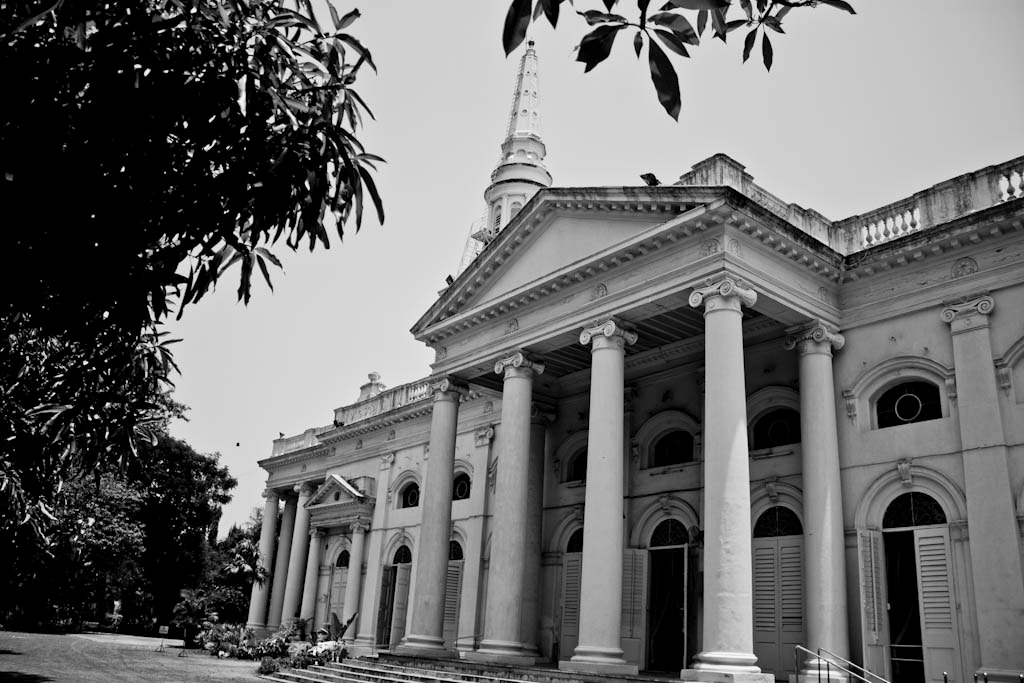
Beyond the shadow of Yale’s presidency, Fort St. George served as the incubator for major civic, religious, and military developments in South Asia. In 1680, St. Mary’s Church was consecrated within the fort walls as the first British-built Protestant church in India—a project to which Elihu Yale personally contributed 20 gold pagodas (roughly three-quarters of his official annual salary at the time). Eight years later, in 1688, the Madras Municipal Corporation—the very first municipal body in India—was formally established in the fort courtyard.
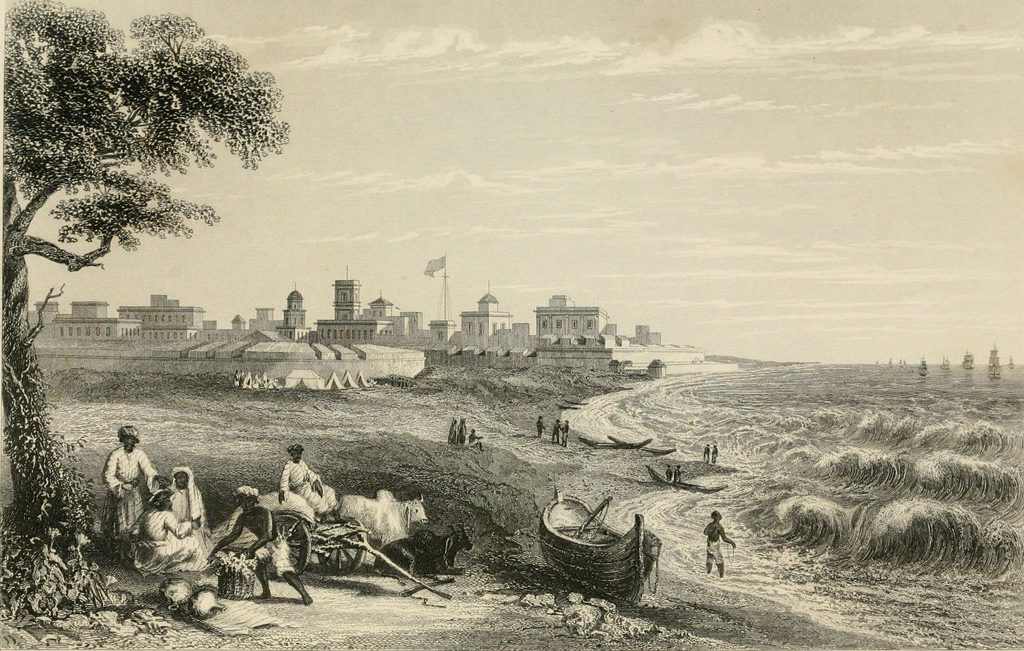
Throughout the eighteenth century, the fort found itself at the epicentre of global and regional geopolitical conflicts. During the First Carnatic War in 1746, French forces under Admiral La Bourdonnais captured Fort St. George, holding it until it was restored to British rule under the Treaty of Aix-la-Chapelle in 1749. Two decades later, in 1769, the formidable cavalry of Hyder Ali, the ruler of Mysore, reached the very gates of the fort during the First Anglo-Mysore War (1767–1769), forcing the British to sign the Treaty of Madras.
It was also within Fort St. George that major historical figures and scientific endeavours began. Robert Clive started his career here as an unassuming EIC clerk in 1744 before rising to military prominence, ending up as ‘Clive of India’. He was married inside St. Mary’s Church. Decades later, in 1802, the ambitious Great Trigonometrical Survey, which mapped the entire Indian subcontinent with scientific precision, officially commenced its operations from Fort St. George and Madras.
From Freedom Struggle to the Power Centre of Tamil Nadu
In the twentieth century, Fort St. George transitioned from an instrument of imperial control to a symbol of national liberation. On January 26, 1932, during the Indian independence movement, freedom fighter K. Bhashyam ‘Arya’ courageously climbed the fort’s 148-foot teakwood flagstaff, tore down the British Union Jack, and hoisted the Indian national tricolour, earning a prison sentence for his act of defiance.
Post-independence (1947), Madras was officially renamed Chennai in 1998, thus embracing the title derived from Chennapatnam—the historical settlement adjacent to the fort named in honour of Damarla Chennappa Nayakudu (16th-century Nayaka chieftain and military commander). Today, Fort St. George stands as a living bridge between past and present. It serves as the administrative nerve centre of Tamil Nadu, housing the Tamil Nadu State Secretariat—including the 10-story Namakkal Kavignar Maligai—alongside an Archaeological Survey of India (ASI) Museum situated in a historic 1795 building that once housed the Madras Bank and public assembly halls.
Ultimately, Fort St. George stands as a profound physical symbol of the dualities that defined British colonial rule across South Asia. As the first fort built by the British in the Indian subcontinent, it served as both an incubator for modern civic institutions and a staging ground for predatory commercial expansion, corporate corruption, and human trafficking. Today, as it houses the administrative nerve centre of Tamil Nadu alongside a preserved museum of colonial artefacts, Fort St. George remains not merely a relic of imperial power, but a living testament to the complex global history that continues to shape both local governance and global memory.
Follow SouthAsianDesk on X, Instagram and Facebook for insights on business and current affairs from across South Asia.
More by the Author: