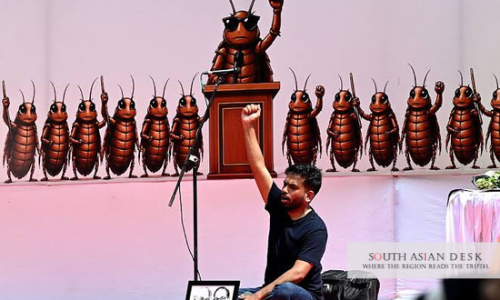
Cockroach movement leaders Saurav Das and Ashutosh Ranka were ordered released by a New Delhi court on Wednesday, a week after they were detained for demonstrating at a historic protest site in violation of a ban. A special executive magistrate court directed their release from Tihar Jail after the two furnished written undertakings that they would not breach the peace. The order is the latest development in a protest campaign that has tested the Indian authorities’ handling of youth-led dissent. dailyexcelsior
Why the Two Leaders Were Detained
The two men belong to the Cockroach Janta Party (CJP), which has been demonstrating against the country’s election chief. Das and Ranka were among 14 people who scaled barricades on October 13 to enter the Jantar Mantar observatory in central Delhi, a day after it was removed from a list of designated protest sites. The group unfurled the national flag and chanted slogans demanding the resignation of the chief election commissioner before police detained them. whblwhbl
The proceedings were initiated by the Parliament Street police under Sections 126 and 170 of the Bharatiya Nagarik Suraksha Sanhita, and the two were first remanded to judicial custody for five days on October 14. That custody was extended by two more days on Monday. dailyexcelsiorwhbl
What the Court Decided on the Release of Cockroach Movement Leaders
The release of the Cockroach movement leaders followed a hearing before a magistrate exercising executive powers, not a trial court. The court held that further judicial custody was not necessary at this stage in view of the assurances given before it. Both men expressed faith in the judiciary and promised not to commit any breach of peace, and they and their sureties were directed to appear on the next date of hearing. The legal website Live Law was the first to report the order, as Reuters noted. dailyexcelsiordailyexcelsior
A Pattern of Detentions and Conditional Releases
The decision is not the first time a court has freed the group’s leadership shortly after police action. Founder Abhijeet Dipke, along with Das and Ranka, was detained when their flight from Mumbai landed in the capital on October 10, ahead of a planned mass protest. They were released the next day on the condition that they commit no breach of peace for one year. Al Jazeeracanberratimes
Dipke was detained again on Friday, October 16, before a planned march at Connaught Place. A Delhi court ordered his release the following day on a bond of Rs 50,000. The repeated use of preventive detention has drawn criticism. Opposition leaders accused the government of stifling dissent, and the UN High Commissioner for Human Rights called for the immediate and unconditional release of all those arbitrarily detained. India’s foreign ministry rejected the UN’s approach as selective and described its statement as unwarranted interference in the country’s internal affairs. Delhi Court Orders Conditional Release of Cockroach Janta Party Founder Abhijeet Dipke A Day After Arrest +3
The Cockroach Janta Party and the Voter List Revision
Dipke launched the CJP online in May 2026 as political satire, with a name that parodies that of the ruling Bharatiya Janata Party. The movement was founded after a judge’s remarks described unemployed young people as cockroaches, and it calls itself a satirical political movement. It evolved from an online joke into a pressure group, and its street protests over exam paper leaks culminated in the resignation of the education minister. Cockroach Janta Party +2
The current campaign centres on the voter list revision carried out nationwide by the Election Commission of India. Media reports say the exercise has removed more than 133 million names from electoral lists. A core demand of the movement is the resignation of Chief Election Commissioner Gyanesh Kumar, while the commission and the BJP deny the allegations. Opposition parties have long alleged that legitimate voters are being struck off the rolls. indian court frees cockroach movement leaders +2
What Comes Next
The release does not end the matter. The two men remain bound by their undertakings and must attend further hearings. The wider dispute over electoral rolls also remains unresolved. India’s next general election is not due until 2029, but Uttar Pradesh, the most populous state, goes to the polls next year, which gives both the protesters and the authorities reason to expect further confrontations over the coming months. arynews
Follow SouthAsianDesk on X, Instagram and Facebook for insights on business and current affairs from across South Asia.