The Nepal climate fund allocation announced this week will give the country $20 million from the United Nations’ loss and damage fund, following the devastating flood along its border with China’s Tibet region in August. The government said late on Thursday that it would receive the aid, though the sum represents less than 1 per cent of what the country needs to recover, according to Reuters.
What the Fund Has Approved
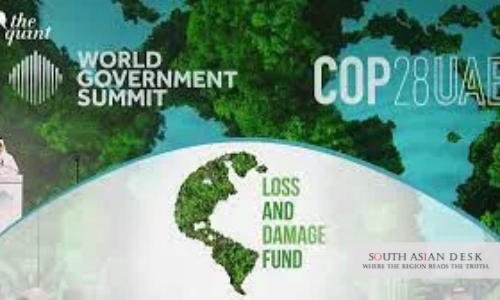
The money comes from the Fund for Responding to Loss and Damage (FRLD), which exists to help vulnerable countries cope with climate-related disasters. Nepal’s Ministry of Agriculture, Forests and Environment said the support was intended to help address the severe damage caused by the disaster.
The fund’s board agreed on Thursday to set aside $20 million, plus $1.6 million in administrative costs, at an extraordinary meeting, Climate Home News reported. Some outlets described the allocation as provisional. Nepal had sought the assistance in a letter to the fund in August, less than a week after the flood. Agriculture, Forests and Environment Minister Gita Chaudhary and Finance Minister Swarnim Wagle jointly wrote to the fund on August 31, requesting urgent help.
Maheshwar Dhakal, a senior official at Nepal’s climate ministry, told the board the decision showed solidarity with the victims and offered them hope that they were not alone.
The Human and Economic Toll of the August 26 Flood
The August 26 flood killed about 1,500 people, and more than 5,000 remain missing, according to Reuters. Official data show that about 60,000 people from 15,000 families were affected.
Losses to infrastructure are estimated at about $2.7 billion. The damage includes roads, bridges, schools and 13 hydropower plants. Early official estimates suggest that reconstruction costs could exceed $4.7 billion, while Climate Home News put the recovery bill at about $4.8 billion. Against figures of that scale, the Nepal climate fund contribution covers only a small fraction of the need.
Limits of the Loss and Damage Fund
The size of the award reflects the constraints of the fund itself. According to Climate Home News, the loss and damage fund has only about $350 million to allocate, with a current cap of $20 million per project. Nepal’s allocation therefore reaches the maximum currently permitted.
Board members were united in approving the money, but representatives of developed and developing countries were divided over how far the decision should set a precedent for the fund’s long-term way of operating. Wealthy nations cautioned against treating the Nepal decision as a template, while others argued that it showed the fund could respond quickly to a major disaster.
Reaction From Climate Finance Advocates
Reaction to the decision has been mixed. Raju Pandit Chhetri, the lead climate finance negotiator for the least-developed countries at the UN climate negotiations, welcomed the decision as evidence that international cooperation could deliver a timely response to vulnerable countries.
Others questioned the scale of support. Harjeet Singh of the Satat Sampada Climate Foundation said Nepal needed billions of dollars to rebuild but had been offered assistance only in millions. His comments highlight a broader debate in climate finance over whether existing mechanisms are large enough to match the losses suffered by countries that contribute little to global emissions.
Nepal’s Argument on Climate Responsibility
The question of responsibility has been central to Nepal’s own message. Prime Minister Balendra Shah, 36, said in his maiden speech to the United Nations in September that the disaster served as a warning to the world. He blamed climate change for the flood despite his country’s negligible emissions.
That argument lies at the heart of the loss and damage concept, which holds that countries least responsible for global warming should receive support when they suffer its worst effects.
What Comes Next
With reconstruction needs measured in billions and the fund’s resources limited, Nepal is likely to seek further support from other donors and development partners. For the fund, the decision is an early test of how it balances speed, scale and precedent, and how far it can stretch its limited resources when disasters of this magnitude occur. For the thousands of families still waiting for news of missing relatives and for homes to be rebuilt, the immediate challenge remains turning international pledges into tangible recovery.
Follow SouthAsianDesk on X, Instagram and Facebook for insights on business and current affairs from across South Asia.