The Diamer-Bhasha Dam contract for hydro-mechanical works, valued at Rs133.18 billion, was signed on Saturday by the Pakistan Water and Power Development Authority (Wapda) and the Power China-IKAN Joint Venture. The agreement, known as the HM-1 contract, marks a significant procurement step for one of the country’s largest water and energy projects.
Signing Ceremony at Wapda House
According to a Wapda spokesperson, the agreement was signed at Wapda House in Lahore. Arif Ali, the Diamer-Bhasha Dam Project Chief Engineer and Project Director, signed on behalf of the authority. Ling Jianke, the authorised representative of the joint venture, signed for the contractor.
The ceremony was attended by Wapda Chairman retired Lt Gen Muhammad Saeed, along with the authority’s members for finance and for water and power. The chief executive officer of the Diamer-Bhasha Development Company was also present, as was a delegation from the joint venture led by the chairman of Power China International Group Limited. Representatives of the project consultants completed the list of attendees.
What the Hydro-Mechanical Package Covers
The HM-1 contract covers the project’s hydro-mechanical equipment and hydraulic steel structures. The scope includes the manufacture, supply and installation of gates and steel structures that will control water flows at the dam.
The equipment will be installed at several locations. These include the flushing tunnels on both banks, the power intakes and the dam outlets. The Diamer-Bhasha Dam contract also extends to steel lining, hoisting and pumping systems, and related electrical works.
In practical terms, such equipment is central to how a large dam operates. Gates and steel structures determine how water is released, how sediment is flushed and how flows are directed to power generation facilities. The wording of the agreement indicates that the package is not limited to supply, as it also includes installation and the associated electrical and mechanical systems.
A Priority Project for Water, Food and Energy Security
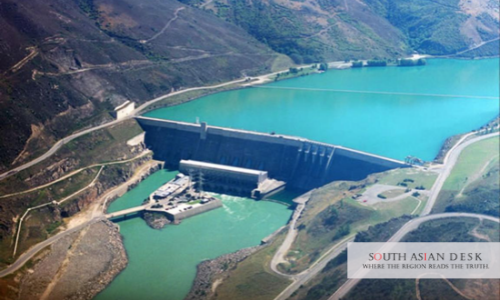
The Wapda spokesperson described the Diamer-Bhasha Dam as a priority project of the federal government, intended to ensure the country’s water, food and energy security. The dam is being built across the Indus River, 40 kilometres downstream of Chilas.
Once completed, the project is expected to have a gross water storage capacity of 8.1 million acre-feet and an installed power generation capacity of 4,500 megawatts. Those figures underline why the scheme is regarded as a cornerstone of long-term planning for both irrigation supply and electricity generation.
Construction Has Been Advancing
The signing follows recent progress on the main structure. Dawn reported in September that a major milestone had been reached with the formal start of extraction and transportation of pozzolan material from Gini in Diamer. The material will be processed for use in Roller-Compacted Concrete (RCC) for the main dam, after which RCC placement is due to formally begin at the site.
The same report noted that the Diamer-Bhasha Dam Project has been divided into two main components: the main dam and other associated sub-structures. The latest agreement falls within the equipment side of that structure, supplying the mechanical systems that will operate alongside the concrete works.
That report also said local elders and Ulema had described the dam as instrumental to the socio-economic uplift of the area and had reaffirmed their support for its expeditious completion. Commissioner Diamer-Astore Division Azim Ullah and the Diamer Basha Development Company’s chief executive, Dr Nazakat Hussain, stated their resolve to strengthen coordination to speed up construction.
What Remains Unclear
The announcement did not specify a timeline for delivery or installation under the HM-1 contract, nor did it detail how the Rs133.18 billion will be financed. Neither did it say when the dam is expected to be completed. Those details will be of interest to observers tracking the project’s cost and schedule.
For now, the Diamer-Bhasha Dam contract represents a concrete commitment to the fitting-out of the dam’s critical water control systems. As construction of the main structure moves forward, the arrival of the hydro-mechanical package will be an important indicator of how quickly the project advances from civil works toward operation.
Follow SouthAsianDesk on X, Instagram, and Facebook for insights on business and current affairs from across South Asia.