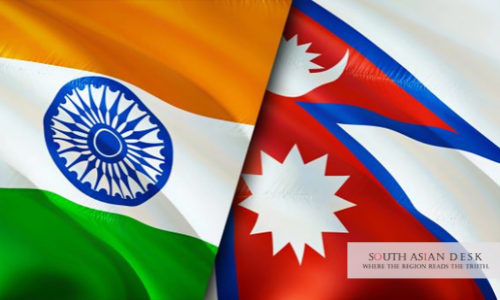
Nepal-India border security will be the central subject of talks this week as the heads of the two countries’ paramilitary forces meet in Kathmandu for the 10th annual coordination meeting between Nepal’s Armed Police Force (APF) and India’s Sashastra Seema Bal (SSB). Cross-border crime is among the key issues on the agenda, according to APF officials cited by The Kathmandu Post.
The three-day meeting begins on Tuesday and concludes on Thursday with the signing of agreed minutes. Narayan Dutta Poudyal, inspector general of the APF, and Sanjay Singhal, director general of the SSB, will lead their respective delegations. Mr Singhal is also expected to pay courtesy calls on Home Minister Sudan Gurung, Home Secretary Kedarnath Sharma and other officials during his visit.
Agenda Covers Crime, Boundaries and Disaster Response
A senior APF official said the meeting will address a wide range of security concerns, including the movement of third-country nationals, boundary-related issues, human trafficking, cross-border criminal activity and coordination between the two forces in border areas. Joint border patrols, the maintenance of boundary pillars, disaster preparedness and response, and action against illicit substances are also due to be discussed.
The two sides will additionally review earlier agreements, consider inter-agency coordination and discuss plans for future cooperation. Officials said the talks would explore ways to strengthen coordinated border management, prevent transnational crime and improve the sharing of intelligence in real time along the 1,751-kilometre frontier. Officials from various ministries and departments will also take part.
Why Nepal-India Border Security Remains a Priority
The two countries share an open border that eases the movement of people and goods and reflects close social, economic and cultural ties. A home ministry official told The Kathmandu Post that the same openness also creates challenges, among them human trafficking, drug smuggling, customs evasion, illegal trade and the movement of third-country nationals. In the official’s view, the annual meeting offers a chance to review emerging security concerns, assess progress on earlier agreements and develop practical measures that improve border management while still allowing legitimate cross-border movement.
Concern about the passage of third-country nationals featured at the previous meeting as well, when both sides agreed to monitor such movement across the frontier. According to an official quoted by the newspaper, the Indian side had raised the movement of Chinese and Pakistani nationals through Nepali border areas, while Nepal had shared its own concerns about Rohingya refugees and Bangladeshi nationals. The official added that such movement had slowed down recently.
Border Posts and Boundary Pillars
The forces operate extensively along the border. The Armed Police Force has established 244 outposts along Nepal’s boundary with India, while India operates more than 400 posts. The two forces also cooperate in repairing and maintaining boundary pillars, including in the Kalapani area of Darchula and in Susta in Nawalparasi West. Both areas have been long-standing points of attention in bilateral discussions on the boundary.
Nepal’s Expectations
Nepal is expected to ask for greater cooperation from India in tackling drug trafficking and the smuggling of goods across the border. It is also expected to seek more effective mechanisms for exchanging information so that these problems can be addressed more quickly. Corruption, customs evasion and smuggling are likely to feature alongside joint patrols and the upkeep of boundary pillars. Joint responses to natural disasters, preparing personnel for emergencies that may affect both sides of the border, and efforts against the trafficking of drugs, alcohol and other substances are also on the programme.
A Mechanism With a Record of Interruptions
The annual coordination mechanism was established in 2012, though meetings have been interrupted by various circumstances, including the Covid-19 pandemic. It serves as a bilateral channel through which the two security forces exchange information, review commitments made earlier and coordinate their responses to security challenges along the open border.
The outcome of this year’s meeting will be recorded in the agreed minutes to be signed on Thursday. Whether the discussions produce firmer arrangements on intelligence sharing and the monitoring of third-country nationals will be a key test of how effectively the two forces can manage Nepal-India border security while keeping the frontier open for ordinary traffic.
Follow SouthAsianDesk on X, Instagram and Facebook for insights on business and current affairs from across South Asia.