The Angoor Adda border firing on Tuesday night killed one civilian and injured five members of a single family in Pakistan’s South Waziristan district, in the latest incident to show how fragile Pak-Afghan border tensions remain. According to officials cited by Dawn, Afghan forces opened fire on Pakistani border posts and nearby residential areas, and a mortar round struck the family’s home.
What Happened Near Angoor Adda
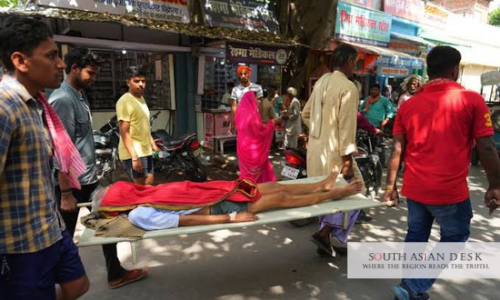
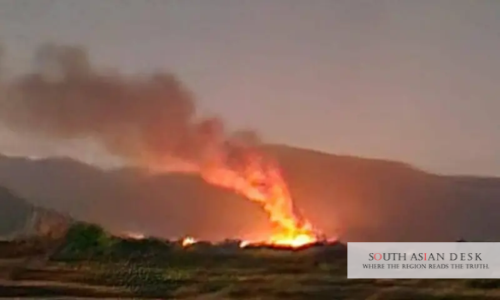
Officials said the firing originated from posts inside Afghan territory and targeted Pakistani border positions with sniper, small and heavy weapons. Khyber Pakhtunkhwa Information Adviser Samar Haroon Bilour, citing security sources, said a shell landed on a house in the civilian population, wounding five members of the same family and killing one civilian. The deputy commissioner of Lower South Waziristan said that civilian houses and Angoor Adda Bazaar had come under fire on the night of October 27, and that many shops were damaged.
Pakistan’s Response Along the Frontier
Security sources told Dawn that Pakistani forces launched an immediate retaliatory action, engaging multiple Afghan Taliban border posts, mortar positions and defensive bunkers with small and heavy arms, including artillery. The sources said the response forced the Afghan Taliban to abandon their posts and that Pakistani forces retained complete control of the border area. The Express Tribune reported that troops remained on high alert and that the military response was continuing.
These accounts come from officials and security sources and could not be independently verified. None of the reports reviewed carried a response from Kabul to this particular incident.
Why the Angoor Adda Border Firing Matters to Local Communities
Angoor Adda is one of the most sensitive crossings on the frontier. Dawn describes it as a key trade route and one of the main points of public movement between the two countries. It is also one of five major crossings between Pakistan and Afghanistan, alongside Torkham, Chaman-Spin Boldak, Ghulam Khan and Kharlachi, according to Radio Free Europe/Radio Liberty.
For residents, the consequences are immediate and personal. Dawn’s report noted that violations from the Afghan side have become routine, creating fear among the local tribal population and disrupting trade and daily life. The latest incident is not the first to affect civilians in the area. In late April, security sources said mortar shells fired from across the border injured five people in an Angoor Adda village, including four children and a woman. Repeated cross-border firing in South Waziristan has left families living with the constant possibility that their homes could be hit.
A Wider Pattern of Pak-Afghan Border Tensions
The latest violence unfolded against a long and turbulent backdrop. The Express Tribune, citing a Reuters timeline, reported that open fighting between the two countries began in October 2025. Islamabad accuses the Afghan Taliban of harbouring militants who carry out attacks inside Pakistan, a charge Kabul denies, describing militancy as its neighbour’s domestic problem.
The confrontation has moved through several phases since then. Pakistan launched Operation Ghazab Lil Haq around the end of February after renewed clashes along the border. The two sides agreed to a week-long ceasefire on the eve of Eidul Fitr on March 18, following requests from Turkiye, Saudi Arabia and Qatar. In April, Pakistan presented three core demands to the Afghan Taliban during talks in Urumqi, China, including that Kabul formally declare the Tehrik-e-Taliban Pakistan a terrorist organisation, dismantle its infrastructure and provide verifiable proof of having done so.
Military action has continued in recent weeks. Pakistan carried out what it called calibrated air strikes against suspected hideouts near the Afghan border and conducted intelligence-based ground operations on September 21, which authorities said killed 37 militants following a series of deadly attacks in Khyber Pakhtunkhwa. On September 24, Information Minister Attaullah Tarar said Pakistan had struck 10 locations in Afghanistan with precision aerial and drone strikes after drones launched from Afghan territory entered Pakistani airspace.
The Economic Cost of a Closed Frontier
The tensions have also had a heavy economic effect. Border crossings have been largely shut to trade since the fighting erupted in October 2025. Dawn reported in July that the prolonged closure of Torkham had hit businesses in Landi Kotal hard, with traders describing the worst slump in years. Khan Jan Alokozay, a founder of the Pakistan-Afghanistan Joint Chamber of Commerce and Industry, told Radio Free Europe/Radio Liberty that monthly trade between the two countries stood at about $200 million before the closure.
Outlook
For now, the Angoor Adda border firing adds to a pattern of violence that has repeatedly drawn civilians into the conflict. With talks yet to produce a lasting settlement and both sides holding firmly to their positions, residents of South Waziristan and other border districts are likely to remain exposed until Islamabad and Kabul find a durable way to de-escalate Pak-Afghan border tensions.
Follow SouthAsianDesk on X, Instagram and Facebook for insights on business and current affairs from across South Asia.