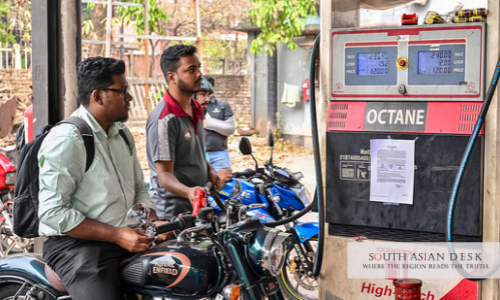
Fuel theft at filling stations in Dhaka continues to cost motorists money, with a recent government inspection finding that customers at one pump received 530 millilitres less fuel for every 10 litres they paid for. The discovery, reported by Dhaka Tribune, suggests that repeated inspections and fines have so far failed to deter operators who tamper with their equipment.
What the Inspection Found
BSTI Executive Magistrate Md Mahbubul Islam told Dhaka Tribune that inspectors recently uncovered the shortfall at Ms Pouro Filling Station in Sayedabad. At that rate of under-delivery, a customer buying 200 litres would receive about 10.6 litres less than the quantity paid for, assuming the same shortfall throughout the transaction.
The Daily Sun reported that the Bangladesh Standards and Testing Institution shut all five dispensing units at the Jatrabari filling station after the mobile court operation. The octane unit was supplying more than 530ml less per 10 litres, while the four diesel units were short by 330, 300, 340 and 320 millilitres respectively. The mobile court fined the station a total of Tk3 lakh in five separate cases under the Weights and Measures Standards Act, 2018.
Why BSTI Raids Have Not Stopped the Problem
The Sayedabad case is not the first. According to Dhaka Tribune, the institution has previously taken enforcement action against several stations, including Mecca Filling Station in Badda and City Filling Station at Sat Rasta, imposing fines ranging from Tk50,000 to Tk3 lakh. The magistrate acknowledged that despite earlier raids and penalties, the theft persists. He said operations had shown that fuel theft occurs at filling stations of all sizes across the capital, and that customers often have little means of detecting it.
The pump owners’ own representatives concede the issue. BPPOA President Mohammad Nazmul Haque told Dhaka Tribune that fuel theft remains a problem despite government inspections. He said the association had informed the government and that, while BSTI raids were being carried out, they had not stopped the practice.
Consumers Allege Larger Losses
Motorists interviewed by the newspaper described shortfalls that were even greater than the one recorded at Sayedabad. Consumers have reported suspected shortages at pumps in Badda, Rayer Bazar, Sat Rasta and other parts of Dhaka, and some said they had received nearly one litre less for every 10 litres purchased. Because the nozzle and meter readings appear normal to the customer, such losses are difficult to prove without calibrated testing equipment.
Fines under the 2018 law have been modest relative to the potential gains from short-measuring fuel at high volume. A station that sells thousands of litres a day could recover a fine of Tk50,000 or even Tk3 lakh within a short period if it continues to under-deliver by a few per cent, which may explain why penalties alone have not changed behaviour.
Earlier Warnings About Measurement and Oversight
Concerns about accurate measurement in the fuel sector are not new. In October 2025, the Bangladesh Petroleum Dealers, Distributors, Agents and Petrol Pump Owners Association (BPPOA) wrote to the Bangladesh Petroleum Corporation complaining about fuel quality from depots, and said that fuel dispensed was not being measured correctly, according to Prothom Alo. The corporation’s chairman told the newspaper that irregularities would remain unless the marketing process was fully automated, and said flow meters were being installed at depots. In August 2025, the corporation had directed its three distribution companies to replace manual rod-based measurement with automated systems and to carry out regular inspections.
Those reports concerned losses higher up the supply chain, but they highlight a broader pattern in which weak measurement controls create opportunities for theft at several stages before fuel reaches the customer.
A Difficult Year for Fuel Consumers
The latest findings arrive after a turbulent period for Bangladesh’s fuel market. Earlier this year, supply disruptions linked to the crisis in the Middle East led to long queues, rationing for motorcyclists and government drives against illegal hoarding. In such an environment, motorists who already struggle to find fuel are particularly vulnerable to being shortchanged when they do reach a pump.
Fuel Theft at Filling Stations: What Needs to Change
Consumer advocates and pump owners alike appear to agree that inspections alone are insufficient. Stronger deterrents, such as higher penalties for repeat offenders, licence suspensions, randomised and more frequent checks, and tamper-proof sealed dispensers with regular third-party calibration, could address the root of the problem. Consumers who suspect short delivery can also lodge written complaints with the Directorate of National Consumers’ Right Protection, which has previously triggered BSTI action in individual cases.
Until enforcement becomes more consistent and costly for offenders, fuel theft at filling stations is likely to remain a hidden tax on Dhaka’s motorists, and BSTI raids will continue to uncover only a fraction of the shortfall.
Follow SouthAsianDesk on X, Instagram and Facebook for insights on business and current affairs from across South Asia.
Read More: