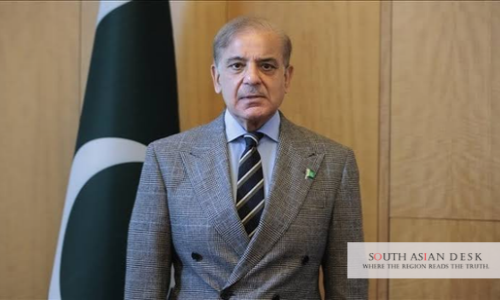
Pakistan LPG policy reforms are under review after Prime Minister Shehbaz Sharif constituted an eight-member ministerial committee to examine proposed changes to the country’s liquefied petroleum gas (LPG) sector. The move follows objections from industry stakeholders over plans to transfer pricing responsibilities from the Oil and Gas Regulatory Authority (Ogra) to state-owned enterprises (SOEs).
The proposed reforms seek to restructure LPG imports, pricing and the distribution of locally produced gas. They come at a time when supply disruptions have driven up market prices, raising concerns about affordability and the availability of the fuel, particularly for lower-income households.
According to a report published by Dawn on October 31, the committee has been given one month to review the proposed changes and submit a comprehensive report to the prime minister. Its review will also cover cylinder standards and the model for distributing locally produced LPG. Dawn
Pakistan LPG Policy Reforms and the Proposed Pricing System
The Petroleum Division’s proposed framework would allow SOEs, including Pakistan State Oil (PSO), Sui companies, Pak-Arab Refinery Company (PARCO) and Pakistan LNG, to enter the LPG import business and assume a greater role in determining prices.
Under the proposed system, monthly LPG prices would be based on import-parity pricing, which links domestic prices to the cost of importing the fuel. The calculation would incorporate Saudi Aramco’s free-on-board (FOB) rates, alongside actual import premiums, freight, insurance, incidental expenses and applicable import taxes.
The proposal would also remove Ogra’s role in issuing monthly price notifications for locally produced and imported LPG. Instead, designated state-owned companies would determine prices and supply the product to the private sector.
The government’s proposal retains monthly price adjustments, but changes the mechanism through which prices are calculated and communicated. It also proposes that the financial offers submitted by bidders would not be published on the Public Procurement Regulatory Authority website, citing the need for greater participation by larger market players.
The proposed framework has attracted criticism from industry representatives, who argue that the state-owned companies have limited experience in LPG imports. They have also questioned whether transferring pricing responsibilities to commercial entities would provide sufficient transparency and protect consumers from higher costs. Dawn+1
LPG Prices in Pakistan Rise Amid Supply Disruptions
The proposed reforms come amid a widening gap between official and market prices. According to reported market rates cited by Dawn, an 11.57-kilogram LPG cylinder was selling for between Rs6,000 and Rs7,200, compared with Ogra’s notified price of Rs3,296.
The increase has been attributed to supply disruptions, including the suspension of operations at the Iran border and a decline in imports through sea routes. The resulting shortage has placed additional pressure on households and businesses that rely on LPG for cooking and other domestic needs.
The price difference has also raised questions about the effectiveness of existing price regulation. While the proposed reforms aim to establish a more structured pricing mechanism, stakeholders have argued that the new arrangement must address supply constraints rather than simply transfer pricing authority to state-owned companies.
The government’s review will therefore be significant in determining whether the proposed changes can improve market stability without increasing the financial burden on consumers. Dawn
Proposed LPG Subsidies for Low-Income Consumers
One of the central features of the proposed LPG policy 2026 is the creation of a Producer-Price Differential Fund to finance targeted subsidies for vulnerable consumers.
Under the proposed arrangement, locally produced LPG would be priced according to Saudi Aramco’s monthly contract price, adjusted for the propane-butane ratio. The difference between this producer price and PSO’s base price would be deposited into a dedicated fund.
The federal government would use the fund to provide financial assistance to eligible consumers through the Benazir Income Support Programme (BISP). The fund would be audited by the Auditor General of Pakistan, with the stated objective of ensuring that subsidies reach households most in need of support.
The proposal also seeks to increase the minimum margins of LPG marketing and importing companies from Rs35,000 to Rs50,000 per tonne. These margins have remained unchanged since the 2016 LPG policy. The revised margins would remain subject to competition, with Ogra and the Competition Commission of Pakistan responsible for preventing collusion among industry participants.
The proposed subsidy mechanism is intended to balance the interests of local producers and consumers. However, its effectiveness will depend on the transparency of the fund, the accuracy of its pricing calculations and the ability of the government to identify eligible beneficiaries. Dawn
LPG Policy 2026: Distribution of Locally Produced Gas
The proposed reforms also seek to change how locally produced LPG is allocated between state-owned marketers and private-sector bottlers.
Under the proposed framework, 10 per cent of locally produced LPG would be reserved for state-owned marketers to supply Gilgit-Baltistan, the Northern Areas and other remote regions. The allocation would support distribution through cylinders and existing air-mix plants.
The remaining 90 per cent would be allocated to prequalified bottlers through monthly auctions. A minimum price would be established at five per cent of PSO’s import-parity price.
The proposed arrangement is intended to improve the distribution of locally produced LPG while ensuring that consumers in remote and hilly regions retain access to the fuel. The Petroleum Division has previously stated that transparent and competitive allocation of locally produced LPG is a government priority, particularly in addressing the concentration of supplies among a limited number of market players. Dawn+1
However, the allocation mechanism has also been the subject of legal and policy disputes. Earlier in October, the prime minister rejected a proposal to proceed with LPG auctions without an appropriate legal and policy framework. The government subsequently reiterated its intention to pursue a competitive allocation mechanism, subject to the applicable legal framework and ongoing court proceedings. Dawn ePaper+1
What the Review Could Mean for Consumers
The committee’s review will determine whether the proposed LPG policy reforms can address the concerns of industry stakeholders while improving affordability and supply.
A key issue will be whether the proposed import-parity pricing mechanism can provide a reliable benchmark for domestic LPG prices. Linking prices to international rates and actual import costs may offer a more structured approach, but it could also expose consumers to fluctuations in international prices and import expenses.
The proposed transfer of pricing responsibilities to SOEs raises additional questions about accountability. Since these companies would participate in imports and play a role in determining prices, the final framework will need to establish clear rules for transparency, competition and the verification of costs.
The committee will also have to consider the concerns of private-sector stakeholders, who have called for a greater role in the LPG import business and questioned the proposed reliance on Saudi Aramco’s pricing benchmark.
The government has not yet announced a final decision on the proposed changes. The committee’s report is expected to inform the next steps in the policy process, including the structure of LPG pricing, the allocation of locally produced supplies and the proposed subsidy mechanism.
For consumers, the central question remains whether the reforms will help narrow the gap between official and market prices while ensuring a dependable supply of LPG. The outcome of the review will be important in determining whether the proposed framework can deliver these objectives without placing additional pressure on household budgets.
Follow SouthAsianDesk on X, Instagram and Facebook for insights on business and current affairs from across South Asia.
Read More: